All NewsEducationTVBrokers
Equities & FundsCrypto & Digital AssetsAI & TechnologyBusiness & CorporateUS Politics & PolicyGeopolitics & Global RiskMacro, Rates & FXCommodities & EnergyEuropean Politics & MarketsAsia-PacificReal Estate & Property
All NewsHome
← Back to US Politics & Policy

China Blocks G20 Consensus on Export Strategy

Created at 1 Sep · 11:47 PM3 sources↑ Market-relevant2 events
IN SHORT

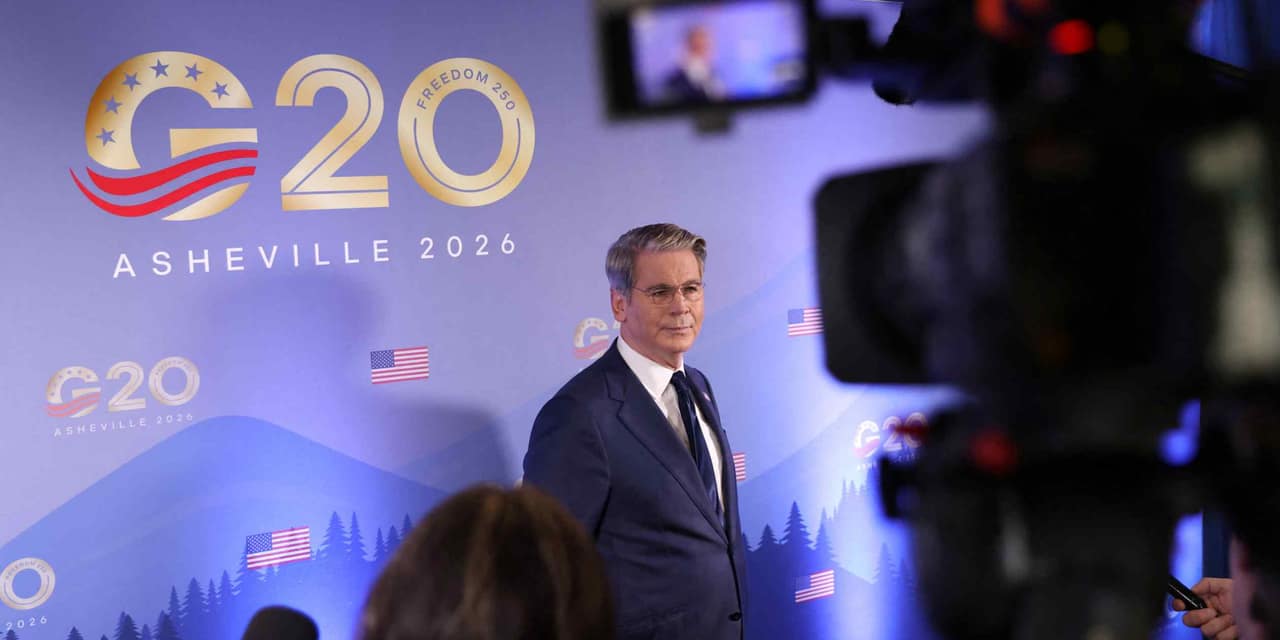
G20 finance leaders, excluding China, agreed to act against "non-market" policies that create export reliance and hinder global growth. U.S. Treasury Secretary Scott Bessent criticized China's "never-ending stream of cheap exports."

Key Numbers

19G20 members backing action on trade distortions
23.9%China's year-on-year export rise in July
360.6 billion eurosChina's goods trade surplus with the EU last year
3%Japan's 10-year bond yield

Who's Involved

Scott Bessent
U.S. Treasury Secretary
G20 finance ministers
backed action against non-market policies
China
dissented from G20 consensus on export strategy
Lars Klingbeil
German Finance Minister
Kristalina Georgieva
International Monetary Fund Managing Director
Satsuki Katayama
Japanese Finance Minister
Kazuo Ueda
Bank of Japan Governor
Donald Trump
U.S. President
China Blocks G20 Consensus on Export Strategy

↳ Why This Matters

The G20's consensus, excluding China, signals a coordinated effort to address trade imbalances driven by state-subsidized exports, potentially leading to new trade barriers and impacting global supply chains. The divergence highlights ongoing geopolitical tensions and differing economic strategies among major world powers.

Key facts

  • 19 G20 members agreed to address global economic imbalances caused by cheap exports.
  • China dissented from the G20 consensus on export trade distortions.
  • U.S. Treasury Secretary Scott Bessent criticized China's export policies.
  • The G20 chair's statement urged countries to avoid unnecessary export restrictions.
  • Global bond markets experienced a selloff, with Japan's 10-year yield reaching 3%.

G20 finance leaders, with the exception of China, have agreed to take action against "non-market" policies that create an over-reliance on exports and hinder global economic growth. U.S. Treasury Secretary Scott Bessent stated that 19 countries supported addressing the issue of non-market-based economies pushing a continuous stream of cheap exports, which he described as unsustainable. The G20 chair's statement urged nations to eliminate such policies that exacerbate imbalances and to avoid unnecessary export restrictions.

China's significant export push has put pressure on economies worldwide, with its total exports rising 23.9% year-on-year in July. Despite calls to reduce industrial subsidies, China has shown little interest in rebalancing its economy, and its goods trade surplus with the European Union reached 360.6 billion euros last year. European officials, including European Economy Commissioner Valdis Dombrovskis, identified China as a major source of economic imbalances. German Finance Minister Lars Klingbeil also pointed to U.S. tariff disputes and the Iran war as sources of global economic uncertainty.

Meanwhile, global bond markets experienced a selloff, with Japan's 10-year bond yield reaching 3%. Treasury officials indicated that Bessent had also urged sound monetary policy to anchor inflation expectations and avoid currency volatility in discussions with Bank of Japan Governor Kazuo Ueda, remarks seen as supporting a potential rate hike by the BOJ.

Frequently asked questions

China dissented from the G20 consensus on taking action against "non-market" policies that distort trade and lead to an over-reliance on exports.

Bessent accused China of flooding global markets with cheap exports from a non-market-based economy, calling the practice unsustainable.

They agreed to eliminate "non-market policies" that exacerbate imbalances and urged countries to avoid unnecessary export restrictions.

Concerns about growing debt levels, inflation pressures, and a global bond market selloff were also noted. U.S. tariff disputes and the Iran war were also mentioned as sources of uncertainty.

What Happens Next

01President Trump and Chinese President Xi Jinping are scheduled to discuss artificial intelligence policy.
02The Bank of Japan is set to hold its policy meeting on September 17-18.

How It Developed

Treasury Secretary Scott Bessent accused China of flooding global markets with cheap exports.
G20 finance leaders, excluding China, backed action against non-market policies causing export reliance and hindering growth.
G20 finance ministers, except China, agreed to act against "non-market" policies and distortions that cause over-reliance on exports and hinder growth elsewhere.
U.S. Treasury Secretary Scott Bessent stated that 19 countries wanted to address the problem of non-market-based economies pushing out cheap exports.
A G20 chair's statement said participants, except China, agreed countries should eliminate "non-market policies" that exacerbate imbalances.
European countries and Canada expressed dismay that Russia attended the meeting.
China's massive export push has pressured economies globally, with total exports rising 23.9% in July year-on-year.
China has shown little interest in reducing industrial subsidies and rebalancing its economy.

Sources

T1
China Rejects G20 Criticism of Its Export StrategyThe New York Times
T1
G20 finance chiefs except China back action on distorted tradeNikkei Asia
T1
G20 finance chiefs except China back action on distorted tradePiQSuite
T2
Bessent says China dissented from G20 agreement on 'cheap exports' | AP ...apnews.com
T2
China dissented as G20 opposed export trade distortions: Bessent - CNBCcnbc.com
T2
China blocks G20 communiqué over trade language at U.S.-hosted summittradersunion.com

Related Stories

Trump's trade stance on Canada watched by global partners
1 Sep · 3:06 PM
US, China debate tariff cuts ahead of Trump-Xi summit
1 Sep · 3:00 AM
UAE to probe Egyptian bank over alleged Iran sanctions breach
1 Sep · 4:07 PM
Japan's PM Takaichi seeks meeting with Trump ahead of US-China summit
1 Sep · 3:47 PM
Congress advances bill to boost US open-source AI capabilities
1 Sep · 9:16 PM