Key facts
- Approximately 100 people died during a large border rush into Spain's Ceuta enclave.
- Between 3,000 and 5,000 migrants remain in Ceuta following the arrival of many thousands.
- EU Migration Commissioner Magnus Brunner stated the EU should leverage visa and trade policy to ensure Morocco's cooperation on migration.
- Ceuta's leader, Juan Jesus Vivas, described the situation as an "irreparable tragedy" and a humanitarian emergency.
- Morocco blamed a Spanish court ruling for the collapse of border deterrents.
- New calls for mass crossings are circulating on social media in Morocco.
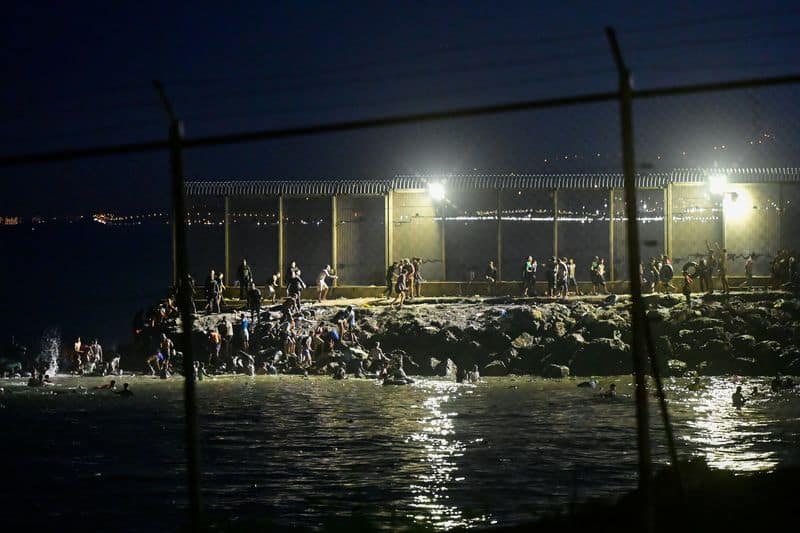
Thousands of migrants remain in the Spanish territory of Ceuta following a large border rush last week, according to the enclave's leader, Juan Jesús Vivas. Vivas described the situation as an "irreparable tragedy" and a humanitarian emergency, stating that approximately 100 people died during the influx of around 78,000 migrants from neighboring Morocco.
EU Migration Commissioner Magnus Brunner has called for the EU to leverage visa and trade policies to ensure Morocco's cooperation on migration, emphasizing that the bloc's control over migration depends on agreements with neighboring countries. He warned that reliance on the goodwill of a single state leaves the EU vulnerable to pressure, a criticism echoed by some regarding the EU's reliance on North African countries to limit migration flows.
Morocco, however, has blamed a Spanish court ruling for the collapse of border deterrents, with an unnamed government source briefing local outlets that the ruling led to the dam giving way. Meanwhile, Moroccan media is reporting fresh online calls to coordinate another mass border-crossing attempt.
The crisis has also caused diplomatic rifts among EU nations. Italy suspended its Schengen arrangement with Spain, with support from Finland and Denmark, while the Czech Republic called for Spain's membership to be temporarily suspended, despite Prime Minister Pedro Sánchez noting Ceuta is not part of the Schengen area.