Key facts
- Cambodian rice farmers are participating in a wildlife-friendly farming initiative called Crane RiceTM.
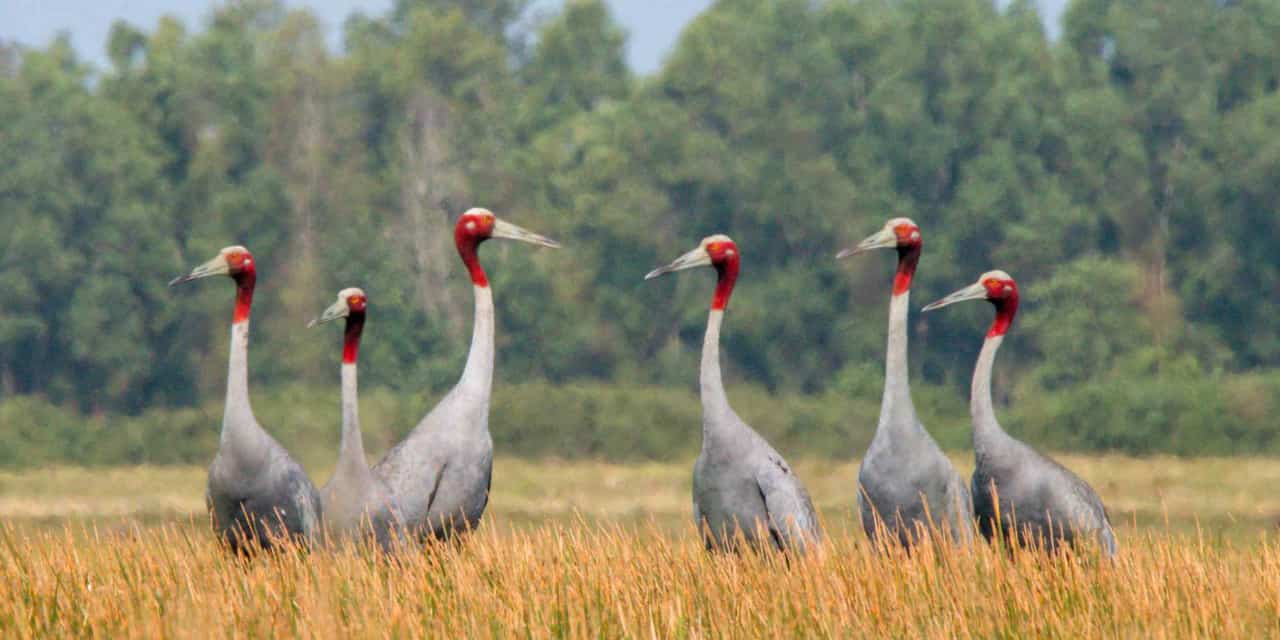
- The initiative aims to conserve the globally vulnerable eastern sarus crane by providing supplemental food and reducing chemical use in rice fields.
- Farmers leave between 5% and 50% of their rice unharvested to feed the cranes during winter months.
- Chemical fertilizer, pesticide, and herbicide use is reduced by 15% to 100% in participating fields.
- Farmers receive agricultural support, training in sustainable cultivation, and compensation for unharvested rice.
- The Anlung Pring Protected Landscape in Cambodia is a key area for this initiative, hosting 100-350 Sarus Cranes annually.
Cambodian rice farmers are adopting wildlife-friendly practices through the Crane RiceTM initiative, aimed at conserving the threatened eastern sarus crane. This program, a collaboration between the Ministry of Environment, NatureLife Cambodia, and BirdLife International, encourages farmers to grow specific rice varieties and reduce chemical use in their fields within the Anlung Pring Protected Landscape.
The initiative involves leaving between 5% and 50% of the rice unharvested to provide a supplemental food source for the cranes during the non-breeding season, typically from December to March. Participating farmers also benefit from reduced chemical inputs, receiving free organic fertilizer, seeds, and training in sustainable cultivation techniques. They are compensated for the rice left in the fields.
This approach addresses the decline of the Sarus Crane population, which is listed as globally vulnerable by the IUCN Red List due to habitat destruction from agricultural expansion and chemical use. The Anlung Pring Protected Landscape is one of only two areas in the Lower Mekong Delta used by these cranes for wintering.
Initially, the program piloted with 16 farmers on 17 hectares of land. The number of participating farmers has been increasing, indicating growing support for the initiative. The project seeks to balance the needs of local livelihoods with wildlife conservation, ensuring the cranes have a safe haven and food source around the protected area.