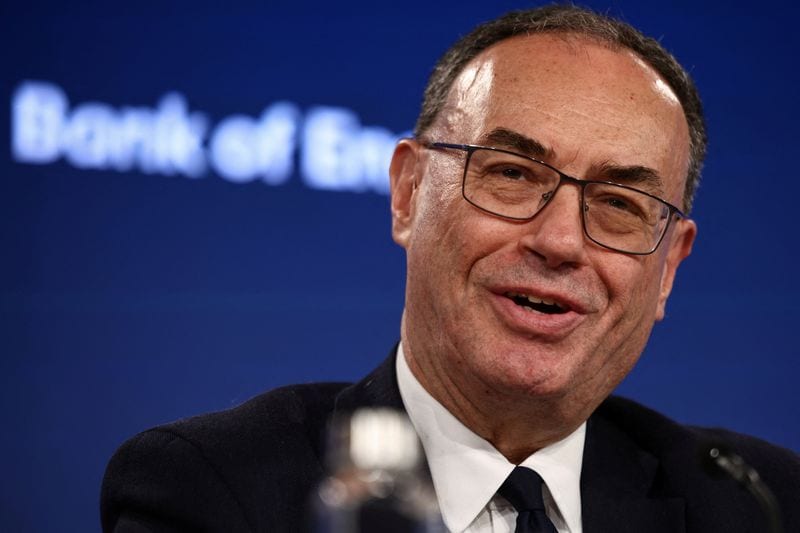
Bank of England Governor Andrew Bailey indicated on Friday that the surge in energy prices, partly attributed to the U.S.-Iran conflict, is not currently creating significant long-term inflation pressures in Britain. Speaking at a U.S. Federal Reserve conference in Jackson Hole, Wyoming, Bailey stated that he observes "quite subdued second-round effects" so far. He pointed to a soft labor market, which limits workers' ability to negotiate higher wages, as a contributing factor to this restraint. However, Bailey cautioned that he could not make promises regarding future economic developments.
Bailey was among the 6-3 majority on the Bank of England's Monetary Policy Committee that voted to maintain interest rates at 3.75% in July. At a subsequent press conference, he emphasized that he did not wish to signal that the BoE was "edging towards a hike." Financial markets, as of Friday, were pricing in a single quarter-point rate increase by the end of the year. Bailey, in July, described this market expectation as reflecting concerns about an escalation of the U.S.-Iran war rather than the most probable path for the Bank of England's policy.