
Key facts
- Blue Owl Capital's non-traded private credit funds saw withdrawal requests fall to $4.2 billion in Q3 from $4.7 billion in Q2.
- Blue Owl Credit Income Corp. (OCIC) had withdrawal requests equal to 16.8% of shares, down from 18.8% in Q2.
- Blue Owl Technology Income Corp. (OTIC) had withdrawal requests equal to 39% of shares, up from 38.1% in Q2.
- Goldman Sachs' Credit fund reported redemption requests at 2% of shares, down from 3.2% in Q2.
- Australia's Metrics Credit Partners froze redemptions in some unlisted funds.
- Blue Owl executives anticipate refinancing risk may become more important for loans maturing around 2028.
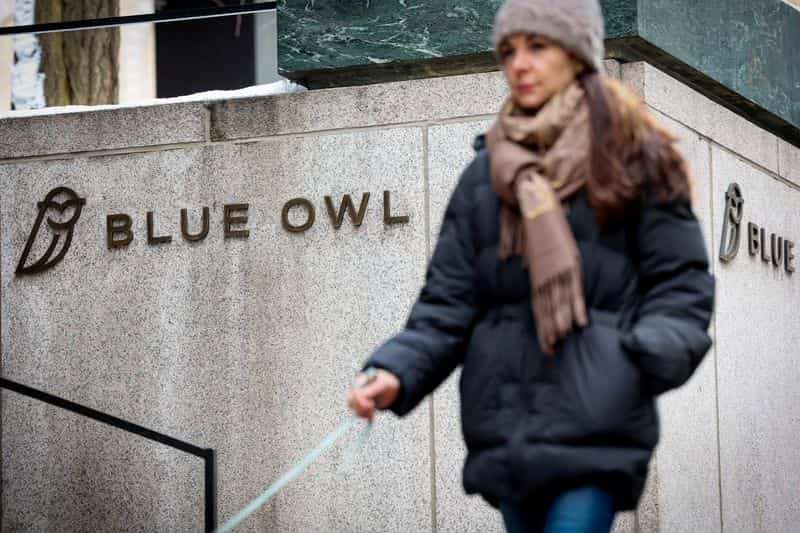
Withdrawal requests at Blue Owl Capital's flagship non-traded private credit fund dropped again in the third quarter, signaling that redemption pressure is easing in parts of the U.S. market, even as stress remains in some vehicles and refinancing risks loom.
Investors sought to withdraw $4.2 billion from Blue Owl's two non-traded private credit funds in the quarter, a decrease from $4.7 billion in the second quarter and a record $5.4 billion in the first quarter. Requests at the $35.1 billion Blue Owl Credit Income Corp. (OCIC) fell to 16.8% of shares from 18.8% in the prior quarter. Blue Owl stated that most requests reflected investors resubmitting previously unfulfilled tenders rather than new withdrawal demand.
The situation was less positive at the technology-focused Blue Owl Technology Income Corp. (OTIC), where investors sought to withdraw $1.1 billion, representing 39% of shares, an increase from 38.1% in the previous quarter. Despite this, the broader direction in the United States appears more encouraging, with Goldman Sachs' $18.2 billion GS Credit fund reporting redemption requests equal to 2% of shares, down from 3.2% in the second quarter, while also generating approximately $400 million in gross inflows.
Evercore analyst Glenn Schorr commented that a more persistent challenge for non-traded business development companies (BDCs) may now be weak new subscriptions, as direct lending could take time to regain favor among wealth-management clients and advisers. Outside the U.S., however, liquidity stress has intensified. Australia's Metrics Credit Partners, managing about A$40 billion ($28 billion), froze redemptions in some unlisted funds after auditor KPMG declined to sign off on annual accounts for three listed vehicles. Metrics stated that KPMG disagreed with assumptions in preliminary financial statements, including the valuation of unlisted commercial real-estate equity investments. Australia's corporate regulator indicated it is closely monitoring the sector, having previously warned about valuation, liquidity, governance, and transparency practices.
Even as redemption pressure cools in parts of the U.S. market, lenders are anticipating another potential test: refinancing. Blue Owl executives informed sell-side analysts that while software portfolio performance has remained broadly stable, refinancing risk could become more significant as loans mature, particularly around 2028. At Blue Owl Technology Finance Corp., software non-accruals stood at 0.1% of fair value and 0.6% of cost, with median revenue growth and free-cash-flow margins stable for four quarters, according to Truist Securities. Blue Owl management suggested that stronger borrowers might be able to extend loans on tighter terms, while weaker credits may need to reduce leverage materially or could ultimately be sold or handed over to lenders.