Key facts
- Art frame TVs are designed to look like hanging paintings when not in use.
- Samsung's Frame TV features a matte, canvas-like screen, magnetic bezels, and a flush wall mount.
- The Samsung Frame TV uses a One Connect Box for a single, thin cable to manage power and device connections.
- Samsung's Art Store offers a large catalog of artwork, with a paid subscription unlocking the full library.
- The Samsung Frame TV's anti-glare matte display performs well in bright rooms.
- Picture quality on the Frame TV is considered mediocre, with brightness peaking around 500 nits and lacking contrast.
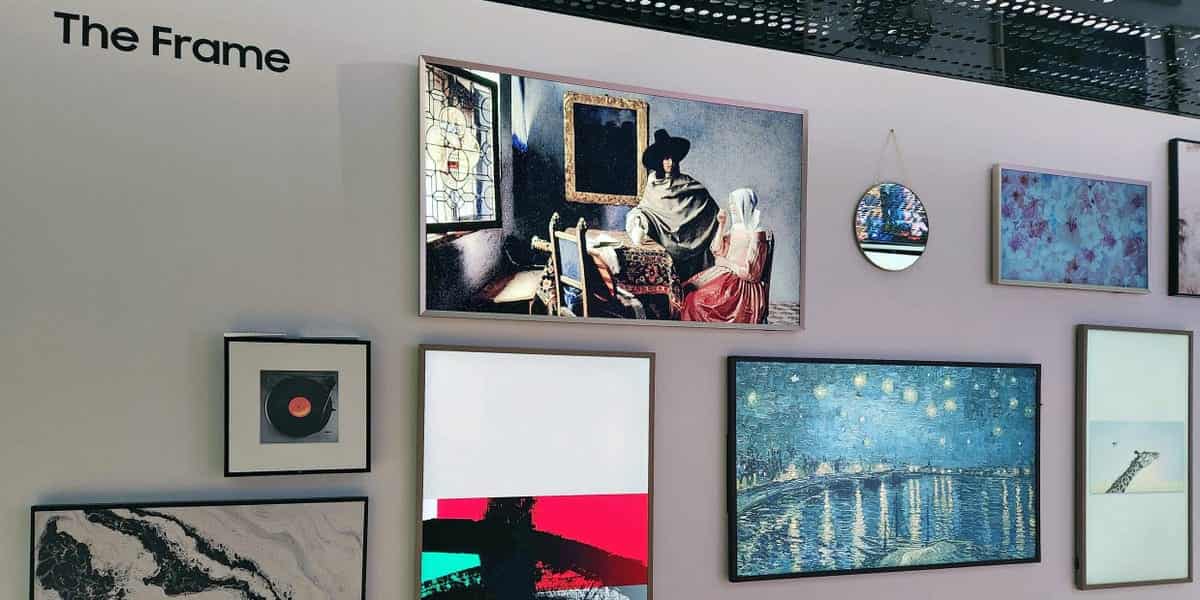
The design of most televisions often detracts from a room's aesthetic when turned off, a problem Samsung aimed to solve with its Frame TV, launched in 2017. This has led to a rise in popularity for frame-style TVs, which are engineered to resemble decor rather than technology. These TVs feature anti-glare screens that mimic canvas, slim profiles for wall-hugging placement, and interchangeable bezels to complement interior design. When not displaying content, they function as digital art frames for various artworks.
While Samsung pioneered this trend, other manufacturers like Hisense, TCL, Amazon, LG, and Walmart have introduced their own versions of art-inspired televisions. To assess their performance both as televisions and as decorative pieces, a comparative test was conducted on models from Samsung, Hisense, TCL, and Amazon.
The Samsung Frame TV is highlighted as the best overall choice for most consumers. It meets the essential criteria for a TV that doubles as decor, including a matte, canvas-like screen, support for magnetic bezels (sold separately), a flush wall mount, and a motion sensor to activate art mode only when a person is present. The model benefits from a long history, offering a wide variety of bezel styles. However, the bezels are not included by default, and the TV comes with a basic black border out of the box.
A key feature of the Samsung Frame TV is its wired One Connect Box, which consolidates power and device connections into a single, thin, transparent cable. This setup allows for a clean wall appearance and simplifies the connection of external devices like streaming players or game consoles. The TV's Art Store provides a more extensive catalog of high-quality images compared to competitors like Hisense or TCL, though a paid subscription is required for full access, despite a small selection of free artwork.
In terms of performance, the anti-glare matte display of the Frame TV is effective in bright environments, making art appear convincing and daytime TV viewing comfortable. However, its picture quality is considered a weaker point, with peak brightness around 500 nits, limited contrast, and uneven black levels due to edge-lit backlighting, which can be distracting in dark viewing conditions. The Frame TV is primarily targeted at consumers prioritizing style and seamless integration into their living spaces over premium HDR performance. The recommended 2025 model is available in sizes from 43 to 65 inches, with older versions potentially available in sizes ranging from 32 to 85 inches.