All NewsEducationTVBrokers
Equities & FundsCrypto & Digital AssetsAI & TechnologyBusiness & CorporateUS Politics & PolicyGeopolitics & Global RiskMacro, Rates & FXCommodities & EnergyEuropean Politics & MarketsAsia-PacificReal Estate & Property
All NewsHome
← Back to Macro, Rates & FX

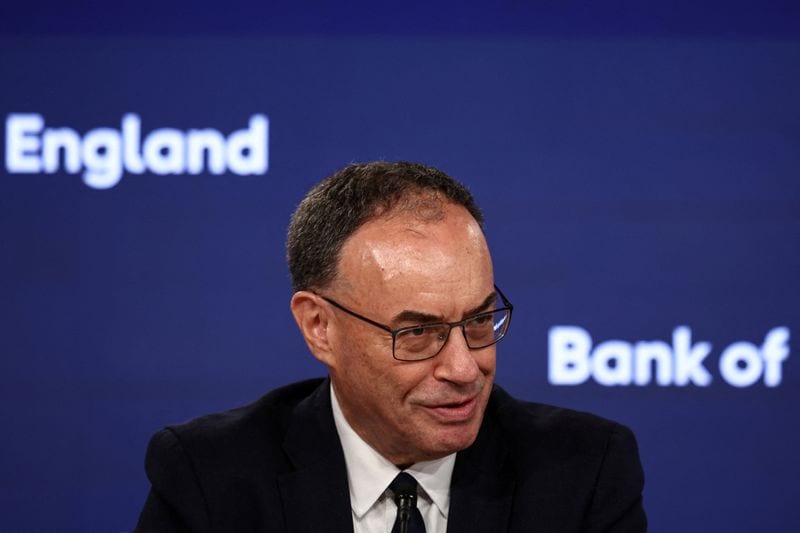
Bank of England's Bailey: Productivity, shocks drive debt, borrowing costs

Created at 4 Sep · 9:46 AM1 source↑ Market-relevant
IN SHORT

Bank of England Governor Andrew Bailey stated that weak productivity, COVID-19, aging populations, and increased defense spending are structural challenges driving up government debt and borrowing costs in advanced economies.

Key Numbers

almost 20 yearshighest British 10-year bond yields
1998highest longer-dated UK bond yields
10%investor pricing for September rate hike
60%investor pricing for November rate hike

Who's Involved

Andrew Bailey
Governor of the Bank of England
Monetary Policy Committee
Bank of England's interest rate setting body
Bank of England's Bailey: Productivity, shocks drive debt, borrowing costs

↳ Why This Matters

Governor Bailey's assessment highlights significant structural headwinds facing advanced economies, suggesting that rising government debt and associated borrowing costs may persist, impacting fiscal policy and investment decisions.

Key facts

  • Bank of England Governor Andrew Bailey identified structural challenges contributing to rising public debt in advanced economies.
  • He cited weak productivity, COVID-19, aging populations, and increased defense spending as primary drivers.
  • Bailey linked these factors to increased borrowing costs and pressures on bond markets.
  • British 10-year bond yields recently hit their highest levels in nearly two decades.

Bank of England Governor Andrew Bailey stated that a combination of weak productivity, shocks such as the COVID-19 pandemic, aging populations, and increased defense spending are creating substantial structural challenges that are driving up government debt and borrowing costs across advanced economies.

Speaking at a conference hosted by the London School of Economics, Bailey indicated that these pressures are directly relevant to the current state of bond markets. His comments come as government bond yields have surged in recent months, with British 10-year yields reaching their highest levels in almost 20 years and longer-dated yields hitting highs not seen since 1998.

Bailey's remarks on fiscal pressures follow his vote in July to keep interest rates on hold, as the Monetary Policy Committee awaited clearer signs regarding long-term inflation pressures, potentially influenced by global events like the Iran war. Market participants are currently pricing in a low probability of a rate hike at the Bank of England's upcoming September meeting, but a significantly higher probability for a hike in November.

Frequently asked questions

Andrew Bailey cited weak productivity, shocks like COVID-19, aging populations, and increased defense spending as the primary drivers of rising government debt.

Bailey indicated that these factors are pushing up borrowing costs and creating pressures on bond markets, leading investors to demand higher interest rates on government debt.

British 10-year bond yields have reached their highest levels in almost 20 years, and longer-dated yields have hit their highest since 1998.

Investors are pricing in a low probability of a rate hike at the September meeting, but a higher probability for a hike in November.

What Happens Next

01The Bank of England's Monetary Policy Committee will hold its next meeting this month.
02Investors are closely watching for signals on future interest rate decisions.
CME Headlines
  • 10-Year Treasury yields drop following dovish Fed comments.
    3 Sep · 8:44 PM
  • 10-Year Treasury yields drop following dovish Fed comments.
    3 Sep · 8:44 PM
  • Euro FX futures rally to 1.1640 following dovish Fed comments.
    3 Sep · 8:43 PM

How It Developed

Bank of England Governor Andrew Bailey cited structural challenges for rising public debt.
Bailey identified weak productivity and shocks like COVID-19 as key drivers.
Aging populations and increased defense spending were also named as factors.
These pressures are relevant to bond markets, influencing investor demand for higher interest rates on government debt.
British 10-year bond yields reached their highest in almost 20 years, with longer-dated yields hitting 1998 highs.
Bailey voted to keep interest rates on hold in July, awaiting clarity on long-term inflation pressures.
Investors are pricing in a low probability of a rate hike in September but a higher chance for November.

Sources

T1
Bank of England's Bailey sees long-term pressures driving up government debtReuters

Related Stories

BoE's Pill: Prompt rate hikes needed to curb inflation
3 Sep · 3:13 PM
Andrew Bailey: Populism threatens central bank independence
4 Sep · 10:36 AM
Bond yields spike globally amid inflation and AI spending concerns
4 Sep · 10:41 AM
UK Borrowing Costs Surge as Oil Shock Rattles Global Markets
3 Sep · 6:11 PM
Norway's $2.3T sovereign fund proposes cutting US Treasury holdings
4 Sep · 9:37 AM