Key facts
- Asian equities fell sharply on Tuesday, led by technology shares.
- Elevated oil prices due to Middle East geopolitical developments and the Russia-Ukraine conflict are driving global markets.
- Brent crude futures were near a two-week high at $105.9 per barrel.
- The MSCI Asia-Pacific index fell 2% in early trading.
- South Korea's KOSPI slid 6%, and Japan's Nikkei sank 2.6%.
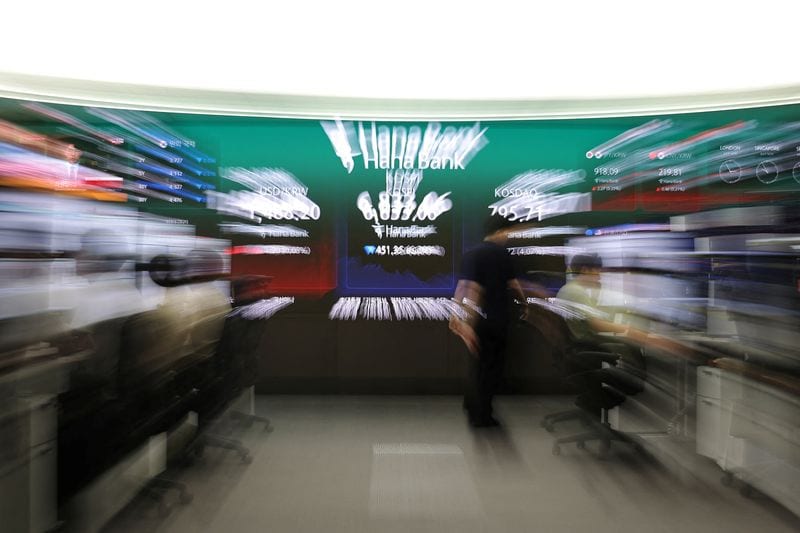
Asian equities tumbled on Tuesday morning, with technology shares leading the decline, as elevated oil prices driven by Middle East geopolitical tensions and an upcoming earnings season created a risk-off sentiment. The MSCI's broadest index of Asia-Pacific shares outside Japan fell 2% in early trading, while South Korea's KOSPI slid 6% and Japan's Nikkei sank 2.6%.
Energy prices are once again influencing global markets, with Brent crude futures trading near a two-week high of $105.9 per barrel. Investors are assessing supply risks from attacks on Saudi Arabia and potential diesel supplies from Russia. "Markets are rediscovering that geopolitics matters most when it feeds back into inflation," said Charu Chanana, chief investment strategist at Saxo in Singapore. She added that the jump in oil prices is pressuring yields and impacting expensive growth stocks.
The decline in Asian stocks followed a selloff in US tech shares overnight, particularly chipmakers, as investors worried about the sustainability of the AI stock rally amid increasing US-China competition. "When you add another jump in oil prices and some positioning ahead of inflation data and earnings, you have all the ingredients for a risk-off day in Asia," said Kyle Rodda, a senior analyst at Capital.com.
The cautious mood also supported the US dollar, which remained near an 18-month high. The euro was last at $1.1157, and the Japanese yen traded at 158.50 per US dollar.
Investors are now turning their attention to a slew of US bank earnings this week, including those from JPMorgan Chase, Goldman Sachs, Citigroup, and Wells Fargo. These results are expected to offer insights into the impact of recent surges in Treasury yields on dealmaking, lending growth, and funding costs across the financial industry. "The Q3 earnings season starts with stocks near record highs and little room for disappointment," said Anthony Saglimbene, chief market strategist at Ameriprise Financial. He noted that for stocks to continue rising, corporate America needs to deliver strong results and maintain momentum into year-end.
The benchmark 10-year Treasury yield was trading at 5.214% in Asian hours, close to a 24-year high of 5.364% reached the previous week.