Key facts
- Asian shares declined on Thursday, with MSCI's broadest index of Asia-Pacific shares outside Japan falling 0.69%.
- Tech firms led the decline, with Samsung Electronics down 2.44% and SK Hynix losing 6.95% in Seoul, while Kioxia plunged 9.61% and Tokyo Electron slumped 4.61% in Tokyo.
- Oil prices traded steadily in the $70-a-barrel range, with Brent crude futures down 0.18% and WTI futures down 0.35%.
- A proposed deal could give Iran control over ships entering the Strait of Hormuz.
- U.S. labor market data, including the nonfarm payrolls report, is highly anticipated.
- Futures markets indicate a 54% chance of a Federal Reserve rate hike in September.
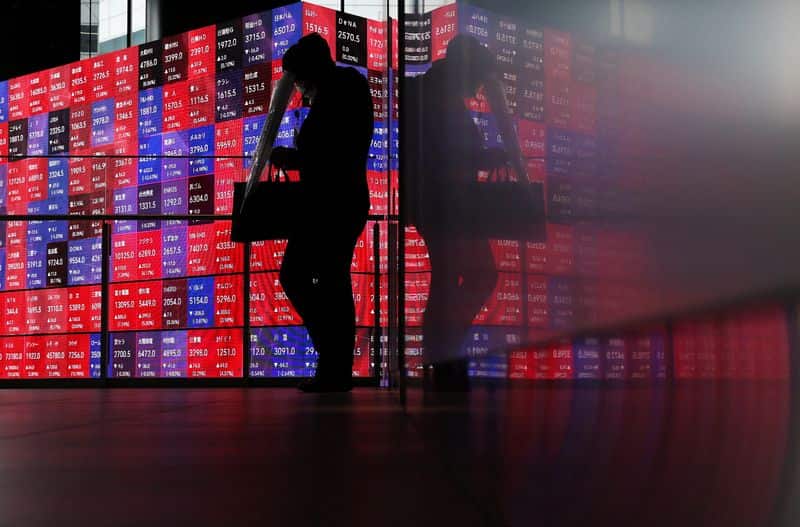
Asian shares declined on Thursday, taking a breather after a previous day's AI-driven surge, while oil prices traded in a tight range as markets assessed prospects for an Iran peace deal. MSCI's broadest index of Asia-Pacific shares outside Japan fell 0.69%, led by declines in tech firms. South Korean shares dropped 3.64% while Japan's Nikkei lost 1.57%. In Seoul, Samsung Electronics fell 2.44% and peer SK Hynix lost 6.95%. In Tokyo, Kioxia plunged 9.61%, while Tokyo Electron slumped 4.61%.
The pullback followed a weaker session on Wall Street overnight, where the Nasdaq snapped a days-long winning streak as shares of Elon Musk-led SpaceX and Advanced Micro Devices stumbled after their quarterly earnings. Although SpaceX highlighted faster-than-expected returns from its AI spending, investors remained concerned about how long its profitable Starlink business could continue to bankroll costly investments in data centres. AMD's results beat analysts' estimates but fell short of investors' lofty expectations.
A senior Iranian source and two regional officials told Reuters that a proposed deal between Iran and Oman to help end five months of war between Iran and the United States would give Tehran control over ships entering the Gulf through the Strait of Hormuz, one of the biggest concessions yet to Iran. Oil prices were steady in the $70-a-barrel range. Brent crude futures fell to $79.31 per barrel, down 0.18%. U.S. West Texas Intermediate futures edged 0.35% down to $74.96 a barrel.
Madison Cartwright, senior geo-economics analyst at Commonwealth Bank of Australia, said a deal to reopen the Strait of Hormuz could be reached by early September, though he remained sceptical that a deal was imminent. Investors are now turning their attention to U.S. labour market data ahead of Friday's closely watched nonfarm payrolls report. ADP figures on Wednesday showed private employers added 44,000 workers last month, slowing from 95,000 in June and coming in about 25,000 below expectations. Economists polled by Reuters expect the government's report to show the U.S. economy added 80,000 jobs in July, after a 57,000 gain in June, with the unemployment rate forecast to hold steady at 4.2%.
Futures markets are pricing in about a 54% chance of a rate hike at the Federal Reserve's September meeting, down from 58% a day ago, according to the CME's FedWatch tool. The yield on benchmark U.S. 10-year notes fell 1.04 basis points to 4.607%. Against the yen, the dollar was steady at 157.66 following a historic currency market intervention. Japan and the U.S. launched a rare joint yen-buying intervention last week and pledged further action if necessary to support the currency. The dollar/yen pair is likely to struggle to find a clear direction, with investors expected to stay largely on the sidelines ahead of Friday's U.S. job report, said Sony Financial Group senior analyst Juntaro Morimoto. Spot gold rose 1.06% to $4,290.26 an ounce, while spot silver gained 0.65% to $62.48 an ounce.