Key facts
- Affluent consumers in South Korea and Japan are continuing to spend on luxury goods.
- AI-linked stock rallies have boosted household wealth in these regions.
- Shinsegae department store sales in South Korea rose 15% in August year-on-year, with luxury sales up 20%.
- Richemont's Asia-Pacific sales increased 21% in the quarter ended June.
- Morgan Stanley forecasts South Korea's semiconductor windfall to spread through the economy over three to five years.
- Samsung Electronics and SK Hynix could generate $49 billion in combined gross employee compensation this year.
Affluent consumers in South Korea and Japan are continuing to spend on luxury goods, driven by wealth generated from AI-linked stock rallies, even as market volatility has increased. In South Korea, a historic stock-market rally earlier this year powered by technology companies like Samsung Electronics and SK Hynix has swelled household wealth, leading to more resilient consumer spending.
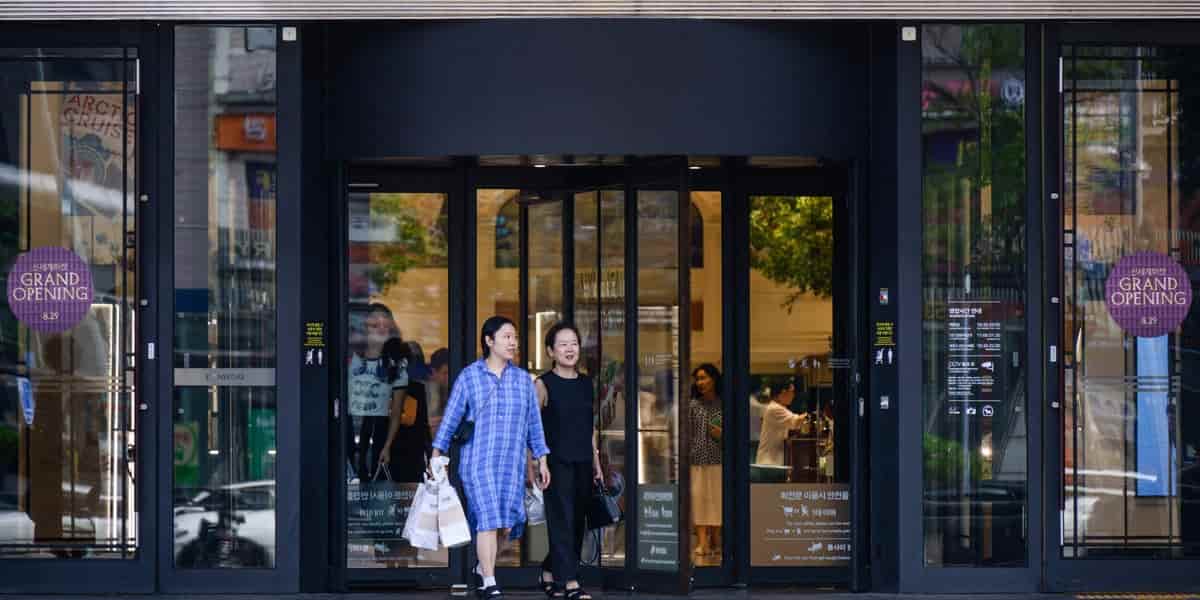
Despite a temporary dip in July, consumer confidence in South Korea's spending recovery remains intact. Morgan Stanley has raised its forecast for private consumption growth this year to 2.6% from 2.2%, citing stronger household incomes, fiscal support, rising wealth, and inbound tourism. This trend is evident at high-end department stores like Shinsegae, which reported a 15% year-on-year increase in same-store sales in August, with luxury sales up 20% and international customer revenue jumping 82%.
Luxury companies are also experiencing strong demand. LVMH noted the remarkable performance of its new stores in Seoul and Beijing, contributing to faster growth in the second quarter. Richemont, owner of Cartier and Van Cleef & Arpels, saw Asia-Pacific sales rise 21% in the quarter ended June, with South Korea and Taiwan being strong markets.
However, the pace of the spending boom is cooling after a strong first half. JPMorgan analysts noted that demand is no longer uniformly strong but is not collapsing either, with jewelry and watches holding up better than other luxury categories. The AI boom's impact is expected to spread beyond stock market gains, with Morgan Stanley predicting South Korea's semiconductor windfall to benefit investment, government finances, and household income over the next three to five years. Employee compensation from companies like Samsung Electronics and SK Hynix is projected to increase significantly.
In Japan, affluent shoppers are also driving luxury retail, with AI-linked companies among the market winners. Takashimaya department store sales rose 3.9% in August, and Richemont's sales in Japan surged 36% in the quarter ended June. Hermès reported an 11% increase in first-half Japanese sales. However, the AI wealth effect is expected to be more muted in Japan due to lower direct stock market exposure among households.
Taiwan offers a longer-term example, where years of semiconductor wealth have fueled demand for housing, luxury retail, and premium services around the Hsinchu Science Park.