Key facts
- Chinese beauty product exporters are seeing surging sales in the US.
- Exports of Chinese hair products to the US rose 12.4% year-on-year in the first half of 2026.
- A press-on nail factory owner reported exports increased to 70% of revenue this year from 20% in late 2025.
- Chinese manufacturers leverage scale, product upgrades, and integrated supply chains to compete globally.
- Social media platforms like TikTok and Instagram are driving demand for Chinese beauty accessories.
Chinese exporters of beauty accessories, including wigs and artificial nails, are experiencing a significant boom in sales to the United States, despite broader trade tensions between the two countries. This growth in the non-strategic beauty sector highlights China's manufacturing capabilities and its ability to leverage scale and product upgrades to dominate global markets.
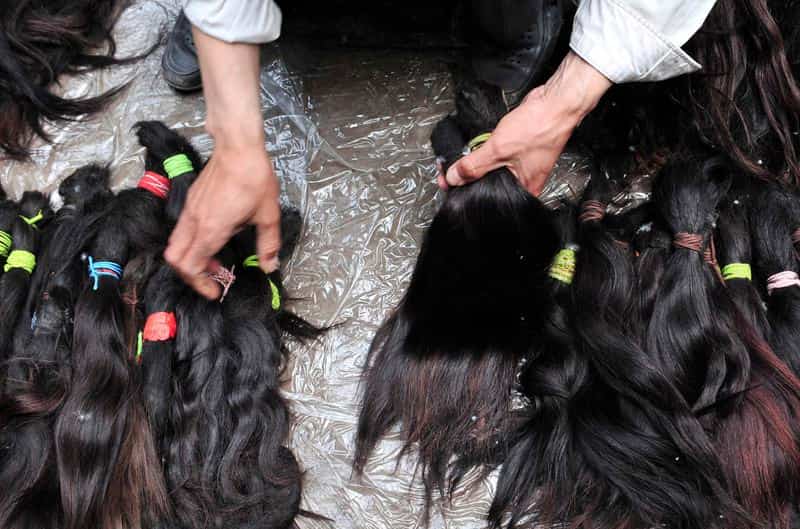
Joe Wu, an exporter from Xuchang, known as China's wig capital, anticipates a 40% increase in sales this year, largely due to US buyers discovered through platforms like TikTok and Instagram. Customs data indicates that China's US exports of hair products rose by 12.4% year-on-year to $1.3 billion in the first half of 2026, and are on pace to surpass the $2.3 billion recorded for the full year 2025.
Producers of artificial nails, categorized under plastic products, also report strong business. Zhang Da, owner of a 200-worker press-on nail factory in Donghai county, stated that exports now constitute 70% of total revenue, up from 20% in late 2025, with a substantial portion of these sales going to the US.
Dan Wang, China director at Eurasia Group, noted that China's unique position in dominating global markets, from advanced to lower value-added goods, through scale and product upgrades presents a challenge for other nations. He believes China's competitive advantage will be difficult to replace for many years.
Chinese manufacturers are capitalizing on the influence of social media personalities who frequently showcase new hairstyles and manicures. Manufacturing centers like Xuchang, with approximately 300,000 people in the hair industry out of a population of 4.4 million, and Donghai county, with nearly 25,000 press-on nail businesses among its 1 million residents, benefit from large labor forces and economies of scale. Some producers even outsource labor-intensive wig-tying processes to North Korea while sourcing hair domestically.
Data from analytics platform Fast Moss showed that hair products occupied 17 of the top 20 spots in TikTok's US fashion accessories sales revenue rankings for August. A hair product seller named Tian reported a 10% to 15% increase in US sales over the past year, citing customers' appreciation for personalization options. A TikTok livestreamer from a nail shop in Donghai mentioned a monthly revenue stream of $10,000 from US clients.
Exporters remain largely unfazed by potential further US trade restrictions, citing strong US demand and the difficulty of scaling up supply outside of China. Wu commented that while tariffs have an impact, they are not the decisive factor.