All NewsEducationTVBrokers
Equities & FundsCrypto & Digital AssetsAI & TechnologyBusiness & CorporateUS Politics & PolicyGeopolitics & Global RiskMacro, Rates & FXCommodities & EnergyEuropean Politics & MarketsAsia-PacificReal Estate & Property
All NewsHome
← Back to Macro, Rates & FX

Argentines increasingly use apps for loans amid record debt stress

Created at 4 Sep · 10:26 AM1 source↑ Market-relevant
IN SHORT

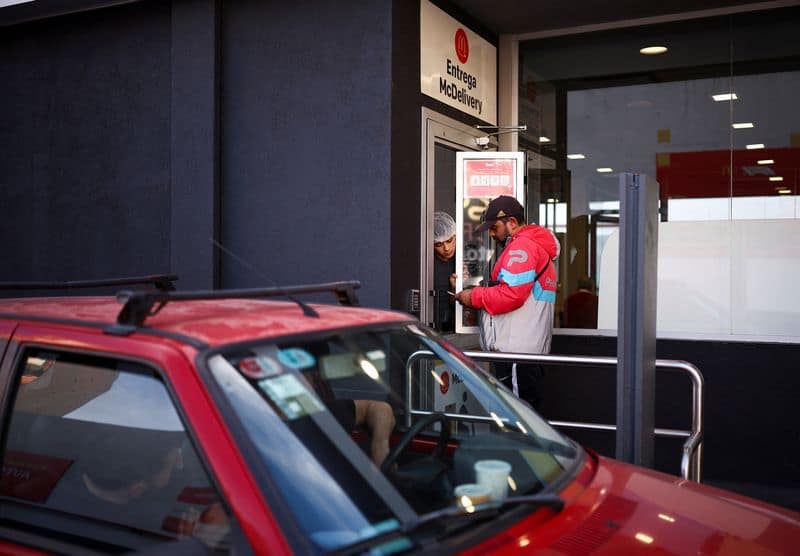
More Argentines, particularly gig workers, are turning to fintech apps for loans due to rising living costs and economic reforms. Despite high interest rates, these apps have become a crucial credit source, but a significant portion of borrowers are now struggling to repay, leading to calls for debt relief.

Key Numbers

70,000 pesosaverage daily earnings for a delivery rider
140,000 pesoscost to recover an impounded motorcycle
131%annual interest rate on PedidosYa loans
170%annual interest rate on Personal Pay loans
20-foldexpansion of fintech lending sector
10 millionindividual fintech loans
500,000individual fintech loans six to seven years ago
6 millionpeople more than 90 days behind on repayments
12.8%household bad loan ratio in June
2.8%household bad loan ratio when Milei took office
12%Argentina's private credit market as % of GDP
80%Brazil's private credit market as % of GDP

Who's Involved

Albert Quintero
41-year-old courier and app worker
Mariano Biocca
Executive director of the Argentine Fintech Chamber
Enrique Tobani
Protester demanding debt relief
Javier Milei
President of Argentina
Mariano Machado
Analyst at risk consultancy Verisk Maplecroft
Marcelo De Mattei
44-year-old delivery rider
Oriana Fernández
Representative of advocacy group Organized Debtors
ABAPPRA
Argentine banking association
Argentines increasingly use apps for loans amid record debt stress

↳ Why This Matters

The increasing reliance on high-interest digital loans by Argentines reflects the severe financial pressures on households due to economic reforms and inflation, potentially leading to a broader debt crisis and becoming a significant political challenge for the current administration.

Key facts

  • Gig workers in Argentina are increasingly relying on fintech app loans to cover expenses, including recovering impounded vehicles.
  • Interest rates on these digital loans regularly exceed triple digits, with some apps charging over 170% annually.
  • Argentina's fintech lending sector has seen a 20-fold expansion in the number of individual loans.
  • Nearly a third of all borrowers are more than 90 days behind on repayments.
  • The ratio of household bad loans reached a record 12.8% in June.
  • Calls for government-backed debt relief are growing, though the administration has largely characterized debt as a private matter.

In Argentina, a growing number of gig economy workers and households are turning to fintech apps for loans to manage financial strain exacerbated by rising living costs and President Javier Milei's economic reforms. These digital loans, often offered by the same platforms that employ the workers, come with extremely high annual interest rates, sometimes exceeding 170%. This trend has led to a significant expansion of the fintech lending sector, with the number of individual loans increasing twentyfold. However, a substantial portion of borrowers, nearly a third, are now over 90 days delinquent, pushing the ratio of household bad loans to a record high of 12.8% in June. Analysts note that borrowers accustomed to inflation eroding debt value are now struggling with sharply positive real interest rates. Advocacy groups and unions are calling for government-backed debt relief, but the administration has largely framed the issue as a private matter between lenders and borrowers. The increasing personal indebtedness is seen as a potential political challenge for President Milei, especially as concerns about jobs begin to outweigh inflation in public opinion.

Fintech companies have provided credit to individuals lacking stable incomes or formal employment, a segment often underserved by traditional banks. Both banking groups and fintech firms are advocating for tax reductions on loans to lower borrowing costs. The Argentine banking association, ABAPPRA, has proposed regulatory changes to the central bank to allow lenders more flexibility in classifying borrowers in arrears. The situation highlights how many Argentines are resorting to debt to cover basic needs and everyday expenses, a situation that advocacy groups are actively protesting.

Frequently asked questions

Rising living costs, economic reforms, and difficulty accessing traditional bank loans are forcing Argentines, particularly gig workers, to use fintech apps for credit.

The loans carry extremely high annual interest rates, often in triple digits, making them difficult to repay and potentially trapping borrowers in a debt cycle.

Nearly a third of all borrowers are more than 90 days behind on payments, and the ratio of household bad loans has reached a record high of 12.8%.

The government has largely resisted calls for state-backed debt relief, characterizing the issue as a private matter between lenders and borrowers.

What Happens Next

01Analysts will monitor if personal indebtedness becomes a political issue for President Milei ahead of the 2027 election.
02Banking groups and fintech firms continue to lobby for lower taxes on loans.
03Advocacy groups are expected to maintain pressure for state-backed debt relief.
CME Headlines
  • 10-Year Treasury yields drop following dovish Fed comments.
    3 Sep · 8:44 PM
  • 10-Year Treasury yields drop following dovish Fed comments.
    3 Sep · 8:44 PM
  • Euro FX futures rally to 1.1640 following dovish Fed comments.
    3 Sep · 8:43 PM

How It Developed

More app workers are turning to fintech loans, including credit offered by delivery platforms.
Apps like PedidosYa offer loans at a 131% annual rate, while Personal Pay charges around 170%.
Argentina's fintech lending sector has expanded 20-fold to 10 million individual loans.
Nearly 6 million people are more than 90 days behind on repayments, almost a third of all borrowers.
The ratio of bad loans among households rose to 12.8% in June, the highest level since 2010.
Young people are reportedly the most affected by bad debt.
Advocacy groups are demanding debt relief from the government.
Analysts suggest personal indebtedness could become a political problem for President Milei.

Sources

T1
More Argentines turn to apps for loans as debt stress hits recordReuters

Related Stories

Brazil's richest capture record income share despite Lula's efforts
4 Sep · 10:05 AM
Bolivia IMF deal faces growing opposition amid fuel crisis
3 Sep · 1:41 PM
Bank of England's Bailey: Productivity, shocks drive debt, borrowing costs
4 Sep · 9:46 AM
US Q2 Productivity Growth Unrevised at 1.4%
3 Sep · 12:53 PM
Bond yields spike globally amid inflation and AI spending concerns
4 Sep · 10:41 AM