All NewsEducationTV
Equities & FundsCrypto & Digital AssetsAI & TechnologyBusiness & CorporateUS Politics & PolicyGeopolitics & Global RiskMacro, Rates & FXCommodities & EnergyEuropean Politics & MarketsAsia-PacificReal Estate & Property
All NewsHome
← Back to Macro, Rates & FX

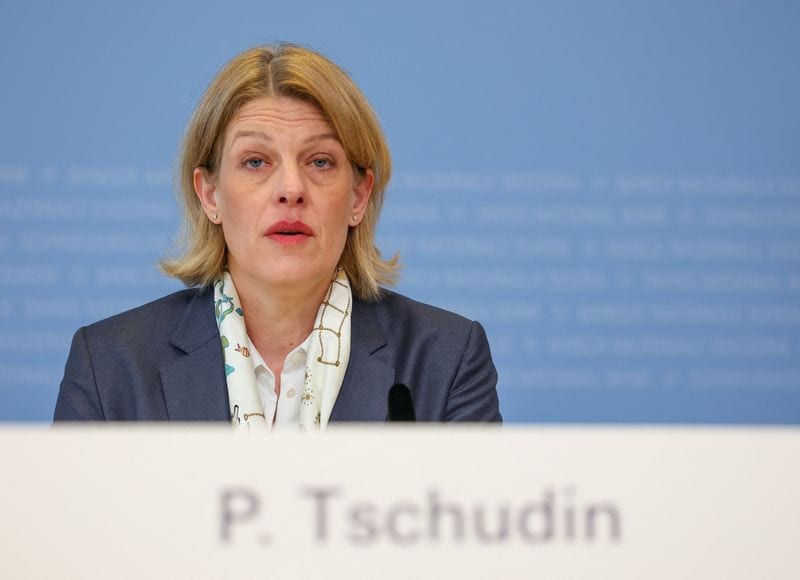
AI could fuel inflation in short term, SNB's Tschudin says

Created at 21 Aug · 3:26 PM1 source↑ Market-relevant
IN SHORT

Artificial intelligence may contribute to higher inflation in the short term due to redirected investment flows and potential chip shortages, according to Swiss National Bank governing board member Petra Tschudin. While AI could eventually lower prices through productivity gains, the overall inflationary impact remains uncertain.

Key Numbers

0%-2%SNB inflation target range
0%current SNB policy interest rate
Q1 2029forecast period end for inflation target

Who's Involved

Petra Tschudin
Swiss National Bank governing board member
Silvana Tenreyro
IMF chief economist
AI could fuel inflation in short term, SNB's Tschudin says

↳ Why This Matters

The comments from a Swiss National Bank official highlight a new potential factor influencing inflation dynamics, suggesting that the widespread adoption of artificial intelligence could complicate central banks' efforts to manage price stability, even as it promises long-term productivity benefits.

Key facts

  • Artificial intelligence may cause short-term inflationary pressure, according to SNB's Petra Tschudin.
  • Potential chip shortages and redirected investment flows are cited as contributing factors.
  • Tschudin acknowledged AI's long-term potential to lower prices through increased productivity.
  • The SNB's current inflation forecast remains within its 0%-2% target range until Q1 2029.
  • Tschudin emphasized that the SNB will adjust monetary policy based on new inflation data.

Artificial intelligence could contribute to higher inflation in the short term, according to Petra Tschudin, a member of the Swiss National Bank's governing board. In an interview with newspaper Finanz und Wirtschaft, Tschudin explained that investment flows being redirected towards AI could lead to adjustments and difficulties in the broader economy, potentially causing shortages, such as with chips, and thus driving up prices.

While acknowledging that AI has the long-term potential to lower prices by increasing productivity, Tschudin expressed skepticism about its ability to create structural deflation. She noted that for inflation to decrease, productivity gains would need to lead to regularly repeating price declines, which she deemed unrealistic.

Her remarks echo a recent warning from IMF chief economist Silvana Tenreyro, who suggested that even if AI boosts productivity, it might not necessarily lower inflation. The Swiss National Bank's latest forecast does not anticipate inflation exceeding its 0% to 2% target range before the first quarter of 2029. However, Tschudin stressed that this forecast is conditional on interest rates remaining unchanged and does not represent a commitment to maintain current policy. She affirmed that the central bank would adjust its monetary policy if new relevant inflation data emerges.

Frequently asked questions

AI could lead to inflation through redirected investment flows and potential shortages of key components like chips, causing prices to rise.

While AI could lower prices by increasing productivity, Tschudin noted that for deflation to occur, price declines would need to repeat regularly, which she finds unrealistic for structural deflation.

The SNB's latest forecast does not expect inflation to rise above its 0% to 2% target range until the first quarter of 2029.

No, Tschudin clarified that the forecast assumes interest rates remain unchanged but stated the SNB will adjust monetary policy if new relevant inflation information becomes available.

What Happens Next

01SNB will adjust monetary policy if new inflation data emerges.
CME Headlines
  • Euro futures test May highs ahead of Jackson Hole symposium.
    20 Aug · 9:36 PM
  • Euro futures test May highs ahead of Jackson Hole symposium.
    20 Aug · 9:36 PM
  • Treasury futures await Jackson Hole as 10-Year yields rebound.
    20 Aug · 9:35 PM

How It Developed

Petra Tschudin stated AI could push inflation higher in the short term.
Tschudin cited redirected investment flows and potential chip shortages as inflationary pressures.
She noted that AI could also lower prices long-term via productivity gains.
IMF chief economist Silvana Tenreyro also warned AI might not lower inflation.
The SNB's current forecast does not project inflation outside its 0%-2% target range until 2029.
Tschudin clarified the forecast assumes unchanged interest rates, not a commitment to hold them steady.

Sources

T1
Artificial intelligence could push up inflation - SNB's Tschudin saysReuters

Related Stories

Bank of Korea deputy chief: Monetary policy to be made 'very carefully'
21 Aug · 2:21 AM
Fed's Musalem keeps September rate options open, data dependent
20 Aug · 3:51 PM
Traders price in hawkish ECB stance amid inflation fears
21 Aug · 12:38 PM
Mexico central bank signals prolonged pause in rates
20 Aug · 3:32 PM
Japan July core CPI rises 1.8% yr/yr
20 Aug · 11:38 PM