Key facts
- Disgruntled homebuyers are suing developer Samolet over delayed apartment move-ins in Moscow.
- Russia's residential construction completed slumped 28% year-on-year in the first quarter.
- High borrowing costs and a rollback of state subsidies are impacting Russian builders.
- Samolet reported a loss in 2025 and has a debt exposure of 373 billion roubles.
- Workers at the Ostafyevo construction site have reportedly not been paid.
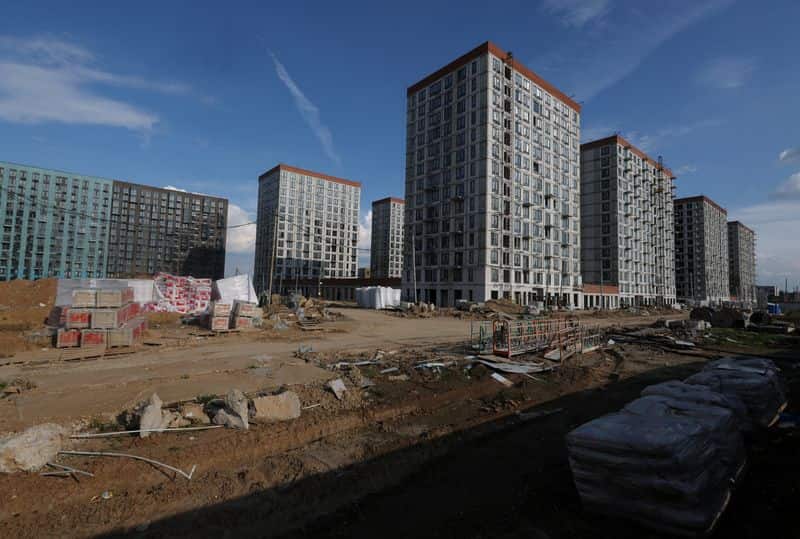
Unfinished apartment blocks in Moscow's Ostafyevo housing complex have left homebuyers in limbo, with many suing developer Samolet over repeated delays. While Russia saw a record volume of housing built in 2023, fueled by state-backed mortgages, a subsequent rollback of subsidies and high borrowing costs have hit builders amid a broader economic slowdown.
Data from the state statistics service shows that the amount of residential space completed slumped 28% year-on-year in the first quarter of the current year. Russia's largest lender, Sberbank, has warned that the entire construction sector stagnated during this period. Buyers at Ostafyevo have reported multiple slips in move-in deadlines since March 2025, with some expressing frustration over a lack of visible progress.
Samolet acknowledged the buyers' concerns and stated it is making efforts to expedite move-ins, noting that some contractors have been replaced. The company, one of Russia's largest developers, reported a loss in 2025 after rapid revenue growth in the preceding years, attributing it to high borrowing costs. Its debt exposure stood at 373 billion roubles ($5 billion) as of the latest available data.
The downturn in the building sector is expected to further drag on Russia's economy, which contracted for the first time in approximately three years in January to March. Construction, along with related sectors, accounted for 13% of the country's gross domestic product in 2025, according to Russia's construction minister.
Russia's central bank noted a 10% increase in loan restructuring requests from construction and real estate firms in the first quarter compared to the previous quarter. However, it characterized the challenges facing developers as limited and not posing systemic risks. The central bank also pointed to a 37% year-on-year rise in new project launches in the first quarter as a positive sign, and stated that delays in housing completions had decreased following the expiry of a moratorium in January that had prevented buyers from seeking penalties for missed deadlines.
Buyers at Ostafyevo have initiated legal action, with some reporting that construction workers have not been paid. A survey by Russia's state housing agency indicated that nearly 75% of developers missed their first-quarter sales targets, and over half anticipate worsening conditions in the coming year. Buyers like Tatyana Lubentsova, who planned to move her family from Belgorod, are now facing significant delays, with no keys to their apartments nearly a year and a half past the original planned move-in date.