Key facts
- HUD has launched two funding opportunities to address the housing affordability crisis.
- One initiative focuses on robotics and AI-enabled housing manufacturing with $10 million in funding.
- The second initiative targets automated permitting systems with $3 million in funding.
- Applications for both programs are due by July 13.
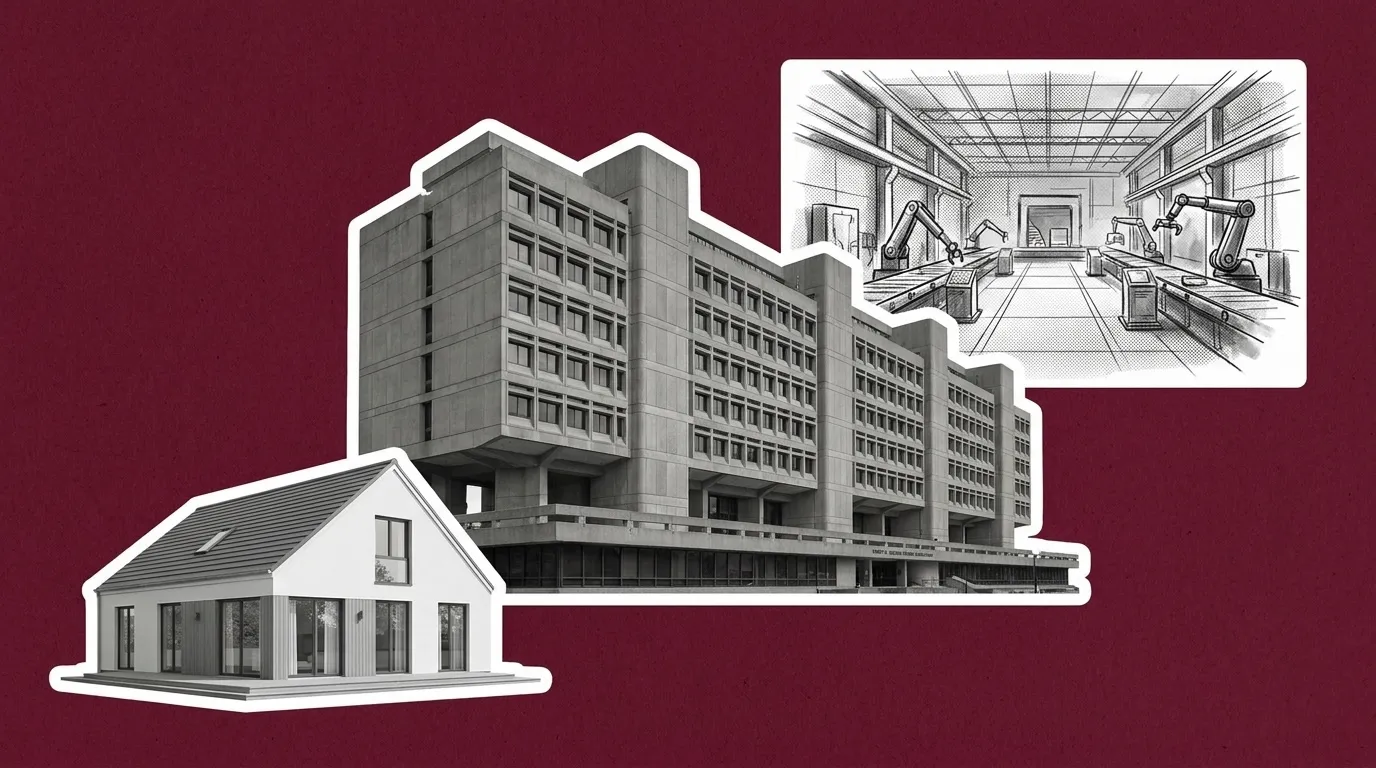
- These efforts are compared to George Romney's 1969 Operation Breakthrough, an ambitious federal housing innovation initiative.
The U.S. Department of Housing and Urban Development (HUD) has initiated two funding opportunities aimed at addressing the nation's housing affordability crisis by leveraging technology. One program offers $10 million for a demonstration of robotics and AI in housing manufacturing, while a separate $3 million initiative supports automated permitting systems. Applications for both are due July 13.
These efforts are framed as a modern parallel to "Operation Breakthrough," a federal housing innovation program launched in 1969 by then-HUD Secretary George Romney. Romney's initiative sought to apply industrial management principles to housing production, aiming to transform the entire delivery system. However, despite initial ambition and some unit production, it ultimately failed to create a lasting industrialized housing ecosystem due to fragmented demand, inconsistent regulations, and market structures.
Experts like Ryan Smith, co-founder of ModX, emphasize that successful industrialization of housing requires systemic alignment beyond just technology. He points to countries like Japan and Northern Europe, which have built supporting systems that enable technology to scale, through coordinated incentives and harmonized standards. This perspective suggests that HUD's current funding is significant not just for the dollar amounts, but for generating evidence on how new technologies can perform within broader housing systems.
Entrepreneurs like Vikas Enti, CEO of Reframe Systems, view these HUD initiatives as validation of a necessary shift in housing production. Enti believes that traditional methods are insufficient for improving labor efficiency and that new approaches are critical, signaling an inflection point for the industry.