Key facts
- FHFA proposed an outcome-based framework to replace the current Duty to Serve (DTS) regulation.
- The new framework aims to encourage Fannie Mae and Freddie Mac to innovate and serve underserved markets with less administrative burden.
- A key change is the increased emphasis on chattel loans, which finance most new manufactured homes.
- The proposal seeks to address the 'financing gap' for chattel borrowers who face higher denial rates and interest rates.
- It also aims to preserve affordable rental stock by allowing GSEs credit for subordinate liens on multifamily properties and expanding LIHTC equity eligibility.
- The rule proposes revising income calculations for rural and Indian areas to better qualify low-income borrowers.
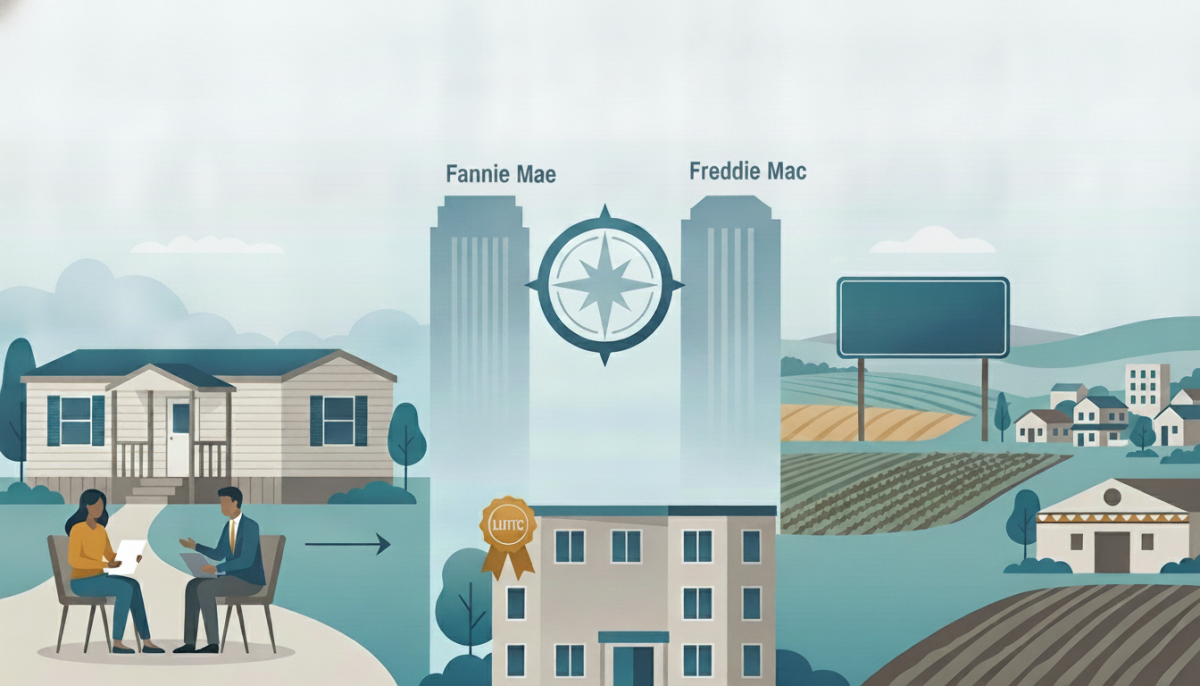
The Federal Housing Finance Agency (FHFA) has put forth a proposal to overhaul its Duty to Serve (DTS) regulation, shifting from a compliance-centric model to an outcome-based framework. This aims to enhance how government-sponsored enterprises (GSEs) like Fannie Mae and Freddie Mac support manufactured housing, affordable housing preservation, and rural housing.
The proposed rule, released Wednesday, places a significant new emphasis on chattel loans, which are crucial for financing manufactured homes, particularly when borrowers do not own the land. FHFA data indicates these loans have high denial rates and interest rates, contributing to a "financing gap" that offsets the lower purchase price of manufactured homes. Under the proposed framework, chattel lending would become a core DTS activity, requiring the GSEs to develop responsible initiatives.
In response to the dwindling supply of affordable rental units, the proposal also seeks to bolster affordable housing preservation. It suggests allowing GSEs to receive DTS credit for subordinate liens on multifamily properties for any purpose, not just energy efficiency. Furthermore, LIHTC equity in all underserved markets could become eligible for DTS credit, expanding beyond rural areas. Permanent construction take-out loans would also be permitted across all DTS evaluation areas.
For rural housing, the FHFA noted significant home price increases and a doubling of the income needed to afford a median-priced rural home since 2019. To address challenges in qualifying low-income borrowers in areas with depressed median incomes, such as Indian areas, the agency proposes revising income calculations to use the highest of county, state, or national median income figures. The definition of "high-needs rural regions" would also be expanded to explicitly include Indian areas.