Key facts
- Data centers can simultaneously increase regional land values and decrease demand for nearby homes due to concerns like noise and water usage.
- Real estate professionals are finding it difficult to accurately appraise properties affected by data center development.
- The U.S. has a significant pipeline of data centers under construction and planned, with many shifting to rural areas.
- Studies on the impact of data centers on nearby home prices have yielded mixed results.
- Some real estate agents report that while land values can skyrocket due to data center development, nearby homeowners struggle to sell.
- In some areas, data center projects are viewed positively as drivers of job growth and economic transformation.
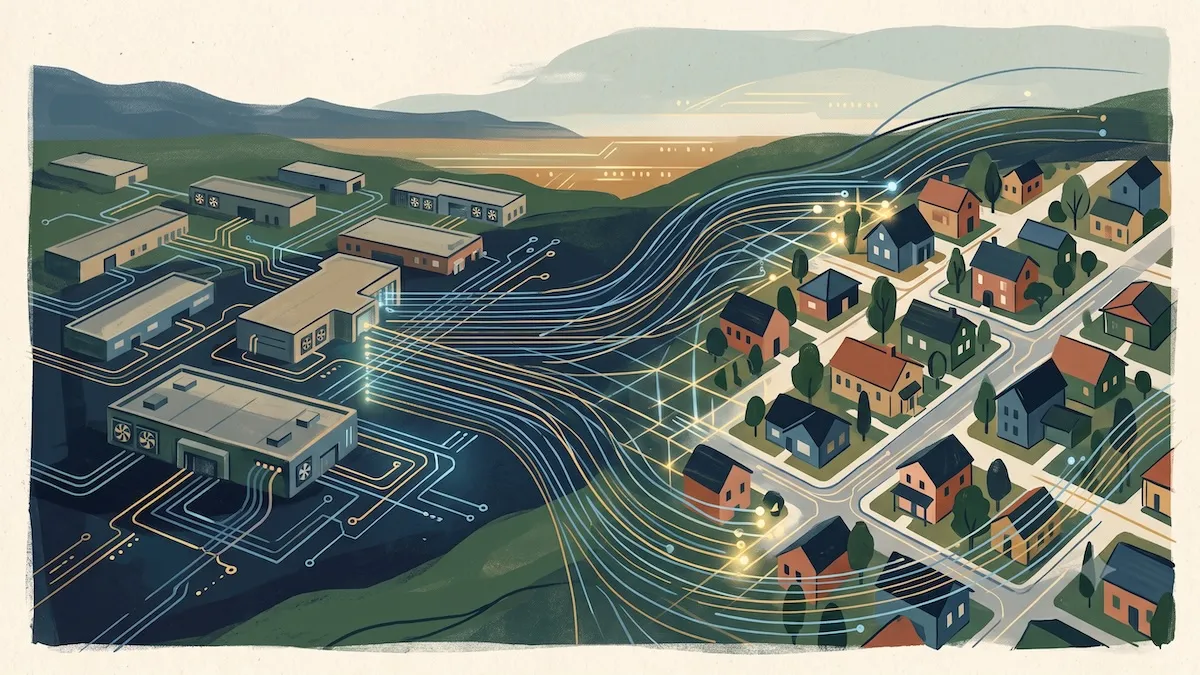
Data centers are creating a complex dynamic in housing markets, simultaneously driving up regional land values while potentially deterring buyers from properties located near these facilities. This tension presents a new challenge for real estate professionals who must navigate the dual impact of increased economic activity and potential localized property value depreciation.
These large facilities, housing servers and networking equipment for cloud computing and AI, can lead to buyer concerns regarding noise, water consumption, construction disruption, and long-term uncertainty. For sellers, overcoming these objections is becoming increasingly difficult, while buyers face the dilemma of investing in an area poised for economic growth or proximity to a project that could hinder future resale.
In markets like Granbury, Texas, real estate agents report that homeowners adjacent to proposed data centers are struggling to sell their properties. This is occurring even as data center developers offer substantial premiums for land, sometimes many times the normal market rate, which skews appraisal values and creates market flux. While some studies suggest data centers have minimal impact on nearby home prices, others indicate a slowdown in local home-price growth.
However, the impact is not uniform. In some areas, such as the greater Cincinnati region in Ohio, real estate agents have not seen buyers abandon purchases due to planned data centers, with local markets holding steady. Concerns in these areas often stem from existing residents feeling blindsided by projects, though construction is typically situated in industrially zoned areas.
Conversely, some regions view data center development positively, seeing it as a catalyst for job growth and broader economic transformation. Real estate professionals in these areas report no buyer reluctance specifically due to data centers, though they anticipate this may change as development increases.