Key facts
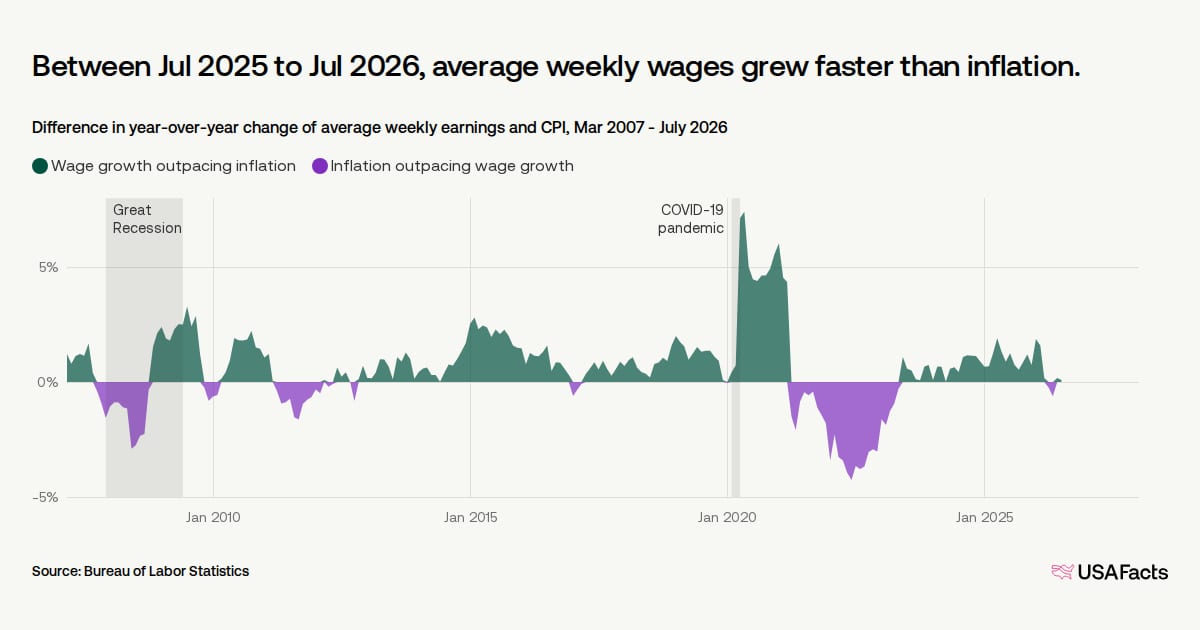
- Real wages have declined for workers in 45 U.S. states over the past year.
- Workers in Washington D.C. have also experienced a decline in real wages over the past year.
- Nominal wage growth has occurred in some periods.
- The decline in real wages indicates a loss of purchasing power.
- The trend has affected a significant majority of U.S. states.
Over the past year, a significant majority of U.S. states have seen their workers experience a decline in purchasing power. Specifically, real wages have fallen for workers in 45 out of the 50 U.S. states, along with Washington D.C. This trend signifies a loss of economic well-being for a vast portion of the American workforce. Despite nominal wage growth, which refers to the actual dollar amount earned, the rising cost of inflation has outpaced these increases. Consequently, the real value of wages, or what those wages can actually buy, has diminished. This widespread erosion of purchasing power suggests a challenging economic environment for many households across the country, impacting their ability to afford goods and services.