All NewsEducationTV
Equities & FundsCrypto & Digital AssetsAI & TechnologyBusiness & CorporateUS Politics & PolicyGeopolitics & Global RiskMacro, Rates & FXCommodities & EnergyEuropean Politics & MarketsAsia-PacificReal Estate & Property
Story archiveAll categories
← All Stories

US Wages Lag Inflation as Purchasing Power Declines in Most States

Created at 17 Aug · 10:06 AM1 source↑ Market-relevant
IN SHORT

Despite nominal wage growth outpacing inflation in some periods, real wages have declined for workers in 45 U.S. states and Washington D.C. over the past year, indicating a loss of purchasing power.

✉Newsletter

PiQ Daily

Pick your topics. Get only what matters, on your cadence.

Key Numbers

3.5%Nominal average weekly wage growth (Jul 2025-Jul 2026)
3.4%Inflation rate (Jul 2025-Jul 2026)
0.09%Real wage growth (Jul 2025-Jul 2026)
5.9%Highest real wage growth in New Mexico (Jun 2025-Jun 2026)
-5.1%Steepest real wage decline in Minnesota (Jun 2025-Jun 2026)
88.3%Nominal average wage increase since March 2006
12.7%Real wage increase since March 2006

Who's Involved

Bureau of Labor Statistics
Source of average weekly wage and inflation data
USAFacts
Data analysis and standardization provider
US Wages Lag Inflation as Purchasing Power Declines in Most States

↳ Why This Matters

The decline in real wages across most of the U.S. signifies a reduction in the purchasing power of average workers, potentially impacting consumer spending, economic growth, and overall household financial well-being.

Key facts

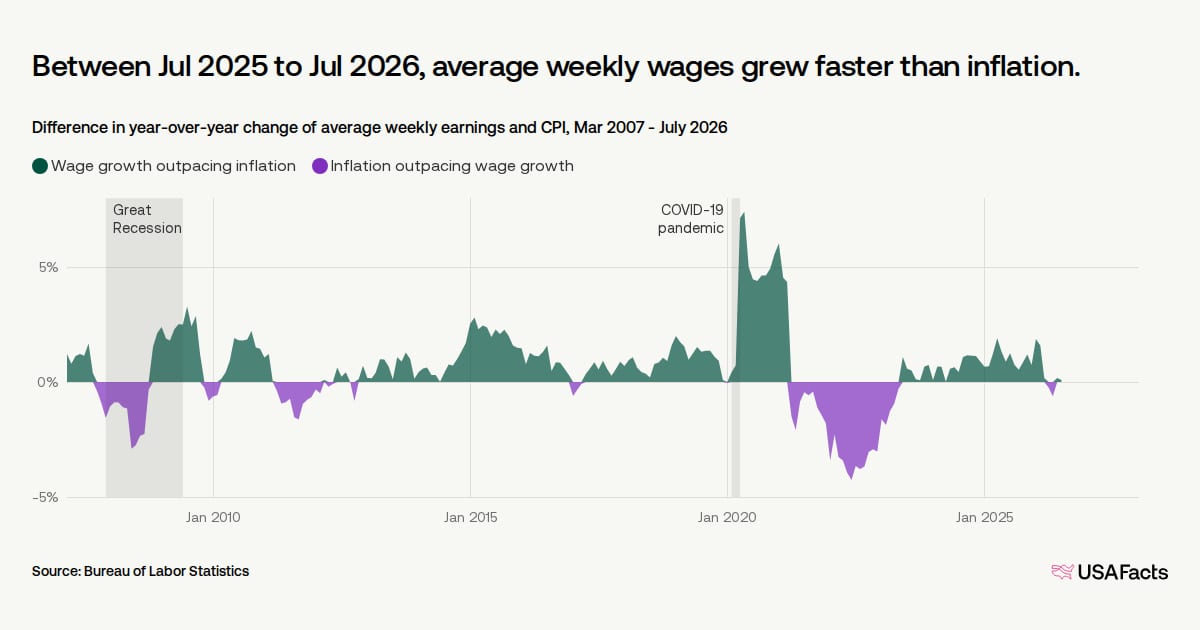
  • From July 2025 to July 2026, nominal wages grew 3.5% while inflation was 3.4%.
  • Real wage growth was positive in only five states over the 12 months ending June 2026.
  • New Mexico led states with 5.9% real wage growth, while Minnesota saw the largest decline at -5.1%.
  • Since March 2006, nominal average wages rose 88.3%, but real wage growth was 12.7%.

While nominal wages have shown growth, inflation has eroded purchasing power for many American workers, with real wages declining in most states over the past year. Between July 2025 and July 2026, nominal average weekly wages increased by 3.5% to $1,290, while the inflation rate was 3.4%. This resulted in a real wage growth of just 0.09%, or an additional $1.00 per week.

Geographically, the impact varies significantly. Over the 12 months ending in June 2026, only five states experienced positive real wage growth. New Mexico led with a 5.9% increase, followed by Louisiana, Wyoming, New Jersey, and Indiana. In contrast, 45 states and Washington D.C. saw real wages fall, with Minnesota experiencing the most significant decrease at -5.1%.

Since March 2006, nominal average wages have risen by 88.3%, but when adjusted for inflation, the real wage growth amounts to 12.7%. Historically, average wages have outpaced inflation 72.4% of the time since March 2006, with wage growth being faster than inflation in every month since June 2026.

Frequently asked questions

Nominal wages are the actual dollar amounts earned, while real wages are adjusted for inflation to reflect their purchasing power.

Over the 12 months ending June 2026, New Mexico, Louisiana, Wyoming, New Jersey, and Indiana experienced positive real wage growth.

Minnesota saw the steepest drop in real wages, with a decline of -5.1% over the 12 months ending June 2026.

Get the newsletter.

Pick the topics you actually care about. We'll email when there's news worth your time, on the cadence you choose. Cancel any time from your account.

Cadence
CME Headlines
  • Yield curve shifts and Fed minutes set the stage for.
    14 Aug · 8:47 PM
  • Yield curve shifts and Fed minutes set the stage for.
    14 Aug · 8:47 PM
  • Yield curve shifts and Fed minutes set the stage for.
    14 Aug · 8:47 PM

How It Developed

Nominal wages increased by 3.5% while inflation stood at 3.4% from July 2025 to July 2026.
Real wage growth was positive in only 5 states over the 12 months ending June 2026.
New Mexico recorded the highest real wage growth at 5.9% during the same period.
Minnesota experienced the steepest real wage decline at -5.1%.

Sources

T1
As Inflation Eats Up Pay Gains, Workers Fall BehindThe New York Times
T2
Are wages keeping up with inflation?usafacts.org

Related Stories

US Inflation Eased to 3.4% in July Amidst Iran Conflict
16 Aug · 6:06 PM
US Inflation Data Supports Hawkish Fed Stance Despite Benign Headline
16 Aug · 1:06 PM
UK Jobs Market Stagnant as Employment Costs Deter Hiring
16 Aug · 11:06 PM
Philippine central bank sees gradual inflation easing, upside risks persist
17 Aug · 2:16 AM
US Inflation Cools in June as Energy Prices Decline
16 Aug · 1:06 PM