Key facts
- South Korea's foreign exchange reserves fell to $426.99 billion in May.
- South Korea's won is approaching its lowest level since 2009.
- South Korea has introduced measures to counter the won's slide.
- China's foreign exchange reserves rose to $3.442 trillion in May.
- China's central bank has bought gold for 19 consecutive months.
- Eurozone retail sales declined by 0.4% in April.
- Spain's 12-month Letras auction yield fell to 2.543%.
- India's annual GDP grew 7.7% year-on-year.
- The U.S. U6 unemployment rate decreased to 8.1% in May.
- Brazil's trade surplus narrowed to $7.82 billion in May.
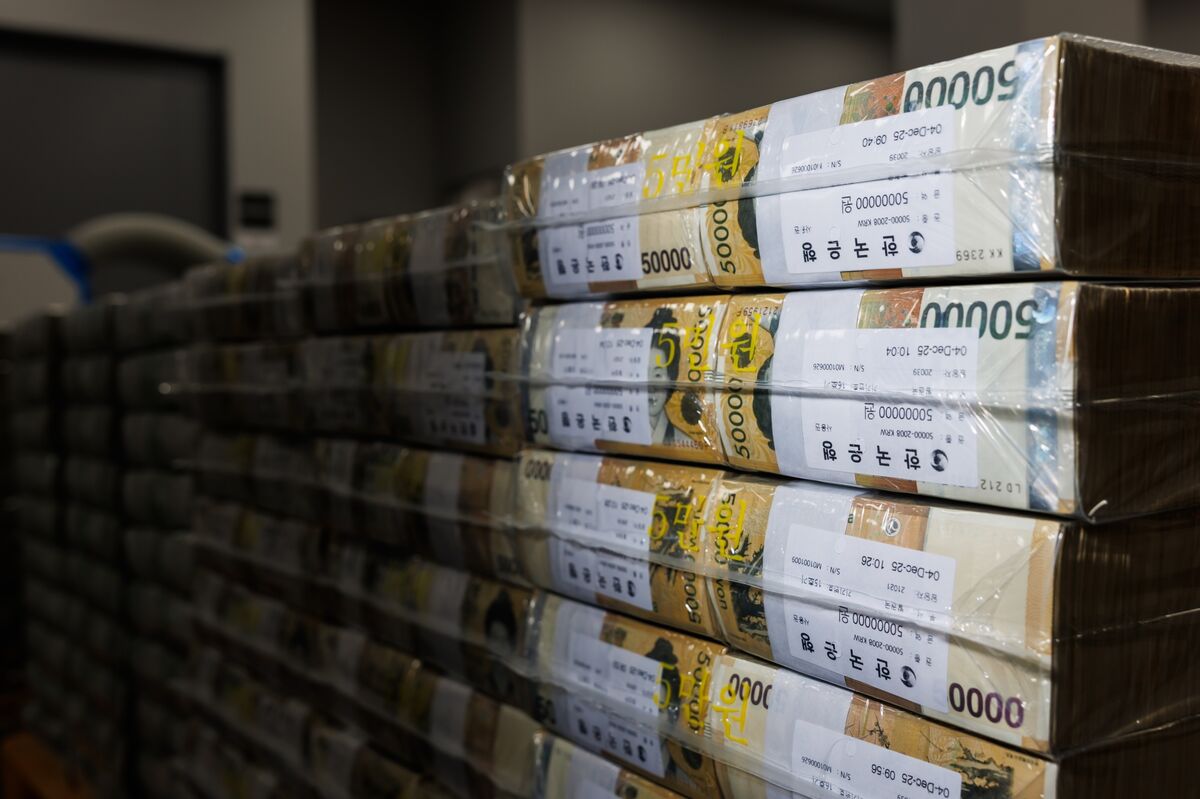
South Korea is implementing targeted measures to combat the weakening of its currency, the won, which has approached its lowest point since 2009. The nation's foreign exchange reserves also saw a slight decrease, falling to $426.99 billion in May from $427.88 billion in the previous month. Authorities have pledged to take firm action against speculative trading and other activities contributing to amplified market swings.
In contrast, China's foreign exchange reserves experienced an increase, reaching $3.442 trillion in May, up from $3.411 trillion. This rise coincides with the central bank's extended streak of gold purchases, now at 19 consecutive months, signaling a sustained accumulation of reserves.
Economic data from Europe presents a less robust picture. Eurozone retail sales declined by 0.4% in April, falling short of the anticipated 0.3% decrease and indicating a slowdown in consumer spending after a revised 0.8% increase in March. Spain's short-term borrowing costs, reflected in its 12-month Letras auction yield, decreased to 2.543%, down from 2.635% at the prior auction.
India's economy continues to show strong growth, with annual GDP expanding by 7.7% year-on-year, surpassing the previous quarter's 6.5% growth and exceeding forecasts. The Reserve Bank of India is closely monitoring global energy costs and the weakness of the rupee while maintaining its policy repo rate at 5.25%.
In the United States, the broader U6 unemployment rate, a measure of labor market slack, fell to 8.1% in May from 8.2% in April. The labor force participation rate remained steady at 61.8%. Brazil's trade surplus narrowed to $7.82 billion in May, a decrease from $10.54 billion in April, though it still exceeded market expectations of $7.65 billion. While exports rose 6.6% year-on-year, driven by higher commodity prices, oil export volumes saw a significant drop due to a new tax.