Key facts
- The Federal Reserve held its benchmark interest rate at 3.50%-3.75% for the sixth consecutive meeting.
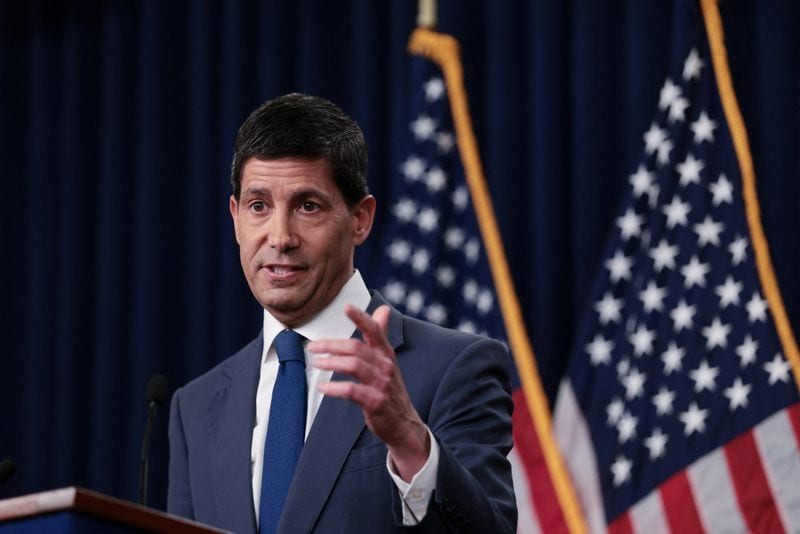
- Fed Chair Kevin Warsh reaffirmed the central bank's commitment to its 2% inflation target.
- J.P. Morgan forecasts a December Federal Reserve rate hike of a quarter-point.
- J.P. Morgan revised its forecast for a Fed rate hike from the second half of 2027.
- The Bank of Canada held its benchmark rate at 2.25%.
- The Bank of Canada predicted 2.5% Q2 growth.
- South Korea's finance ministry cited persistent inflation and Middle East tensions as factors creating U.S. rate path uncertainty.
- South Korea's finance ministry noted solid momentum in the U.S. economy, including AI-related investment.
The Federal Reserve has maintained its benchmark interest rate at 3.50%-3.75% for the sixth consecutive meeting. New Chair Kevin Warsh has reaffirmed the central bank's commitment to its 2% inflation target, a focus that has created market uncertainty and led to higher bond yields and stock declines. J.P. Morgan has revised its forecast, now expecting the Federal Reserve to raise interest rates by a quarter-point in December, shifting from its previous expectation of the second half of 2027.
In Canada, minutes from the Bank of Canada's July 15 meeting revealed a split among governors regarding the long-term sustainability of the economic recovery. The bank held its benchmark rate at 2.25%, while predicting 2.5% growth for the second quarter.
South Korea's finance ministry has stated that the U.S. Federal Reserve's interest rate path remains uncertain. This uncertainty is attributed to persistent inflation and geopolitical tensions in the Middle East. Officials acknowledged the U.S. economy's solid momentum, particularly noting AI-related investment, but emphasized inflation and regional instability as key concerns influencing monetary policy decisions.