Key facts
- Federal Reserve Chair Kevin Warsh affirmed that the central bank has no "soft target" for inflation, only a firm 2% goal.
- Warsh stated that the Fed is determined to restore price stability.
- He acknowledged that persistent high inflation might have led to a mistaken impression of a higher implicit target.
- Warsh indicated that the Fed possesses tools to prevent short-term price increases from spreading throughout the economy.
- He suggested that inflation is a choice and that the committee has no tolerance for persistently elevated inflation.
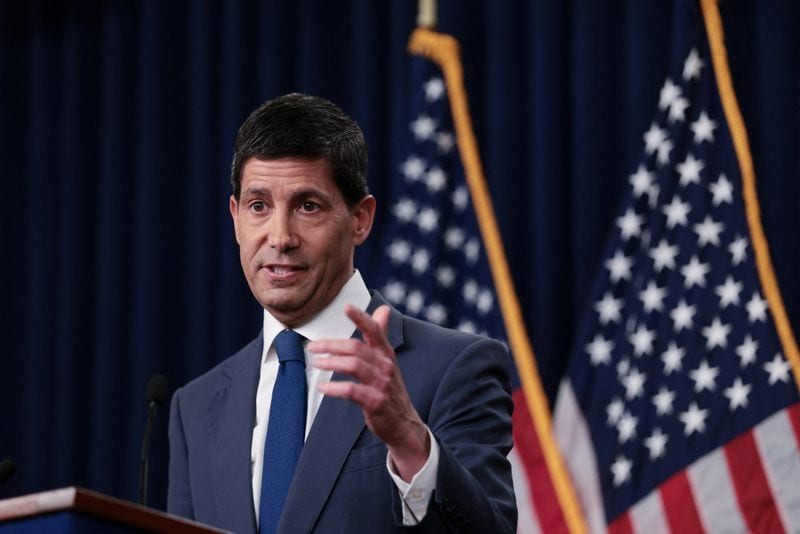
Federal Reserve Chair Kevin Warsh stated on Wednesday that the U.S. central bank has no higher "soft target" for inflation and is determined to meet its longstanding 2% goal. Warsh addressed concerns that five years of elevated inflation might have created a mistaken impression of a higher implicit target, emphasizing that "there is no soft inflation target" on the committee's watch.
Warsh indicated that while the Fed cannot directly control factors like the Iran war's impact on oil prices, it possesses tools, including its benchmark interest rate and balance sheet, to prevent price increases from broadening into the wider U.S. economy. He described inflation as a "choice" and stated that committee members have "no tolerance for persistently elevated inflation."
During congressional hearings, lawmakers questioned Warsh on the Fed's ability to control inflation amid external factors and whether monetary policy was at odds with other U.S. policies, such as tariffs. Warsh acknowledged that changes in trade policy, immigration policy, and military conflict can affect prices in the short term, but the Fed's focus is on whether these price changes spread.
Inflation has remained elevated over the past five years, peaking at 9% in 2022 before slowing. However, it has seen an uptick since the start of the Iran war, rising from 2.4% in February to 4.2% in May, largely due to increased gas costs. It slowed to 3.5% in June.