Key facts
- Wall Street is intensely focused on predicting the timing of the Federal Reserve's next interest rate hike.
Investors are closely focused on the Federal Reserve's next move regarding interest rates, with inflation remaining a key concern. Following the latest FOMC meeting, market expectations for the timing of a potential rate hike have accelerated, though significant debate persists.
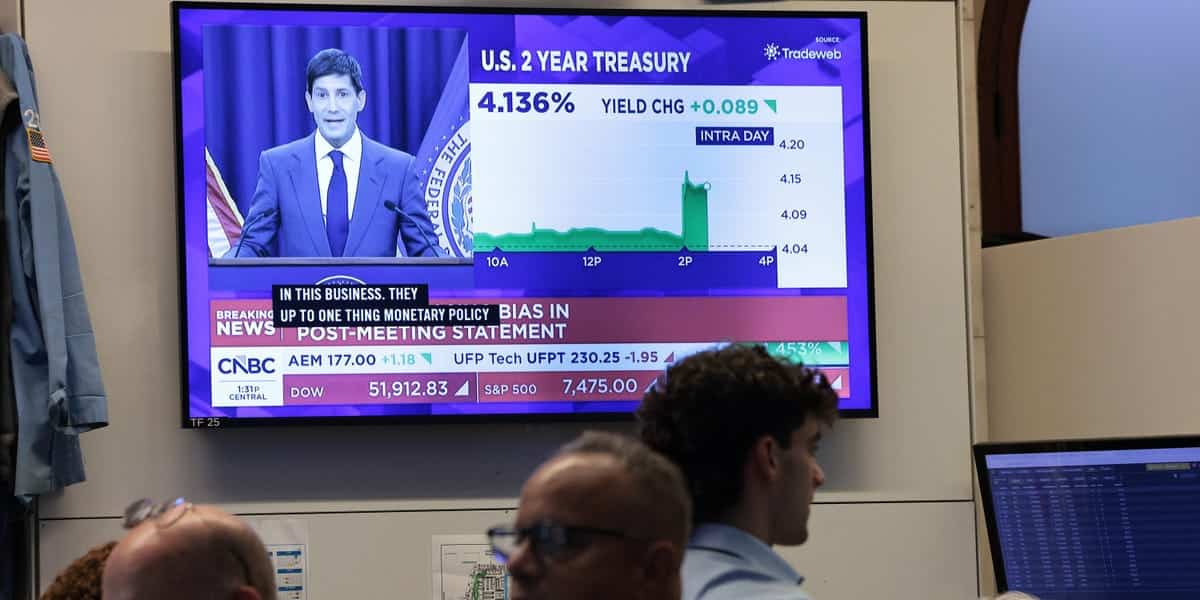
The Federal Reserve's decisions on interest rates directly influence borrowing costs for consumers and businesses, impacting everything from mortgage rates and stock valuations to overall economic growth and employment. Uncertainty about the timing of these hikes creates volatility and makes financial planning more challenging for investors and corporations alike.
Wall Street's attention has pivoted to the Federal Reserve's monetary policy, specifically the timing of the next interest rate hike, as other market-moving events like the Iran conflict and chip stock news have receded. The recent Federal Open Market Committee (FOMC) meeting provided a glimpse into the central bank's internal discussions, with exactly half of the 18 voting officials supporting a rate increase. Newly appointed chair Kevin Warsh's first press conference did little to clarify the path forward, as he has opted to discontinue forward guidance.
Market participants interpreted the meeting's signals as hawkish, focusing on Warsh's emphasis on inflation and the support for multiple rate hikes in 2026 by six of the nine officials who favored an increase. This interpretation led to a decline in stock prices and a spike in bond yields, a typical reaction when rate hikes are anticipated.
The debate over rate hikes marks a significant shift from March, when no policymakers had a hike penciled in and the committee was signaling potential cuts. The expected timeline for a rate increase has notably accelerated. Heading into the Fed meeting, a hike was most likely anticipated in December, but current market probabilities, as of Sunday evening, show a 39% chance for July, 74% for September, 78% for October, and 90% for December.
The primary driver for the Fed's decision remains inflation, which, despite recent data not exceeding forecasts, is still rising at its fastest pace in three years. The upcoming May personal consumption expenditure (PCE) index, the Fed's preferred inflation gauge, due this Thursday, will be a crucial input. The June Consumer Price Index (CPI) is not expected until July 14.
Arguments supporting a rate hike include the persistently high inflation rate (4.2% versus the Fed's 2% target) and the resilience of the labor market, which may not require further monetary support. Additionally, potential tariff risks are still being factored into the system. Conversely, arguments against a hike emphasize that while inflation is elevated, it is not accelerating, and economic growth is already showing signs of slowing, as indicated by consumer spending and manufacturing activity. Proponents of this view also argue that tariff-related inflation is primarily a supply shock and does not necessarily reflect excessive demand.