Key facts
- Adjustable-rate mortgages (ARMs) are increasing in agency originations in 2026.
- Independent mortgage banks (IMBs) and leveraged borrowers are driving the rise in ARMs.
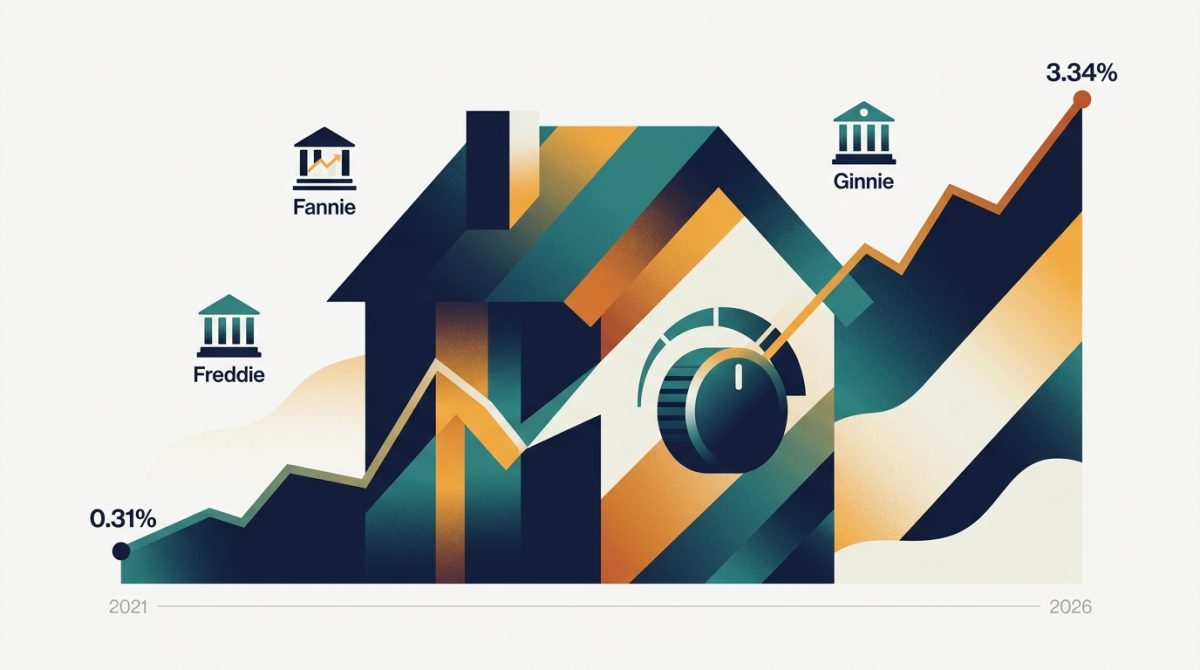
- ARMs constituted 3.34% of agency loans in the first half of 2026, a significant increase from 0.31% in the same period of 2021.
- All top 10 agency ARM sellers/issuers in 2026 year-to-date are nonbanks, a shift from 2021 when banks dominated.
- Borrowers utilizing ARMs in 2026 show a trend of lower credit scores, higher loan-to-value ratios, and increased debt-to-income ratios compared to 2021.
Adjustable-rate mortgages (ARMs) are regaining prominence in the agency mortgage market, driven by independent mortgage banks (IMBs) and borrowers facing affordability pressures, according to Polygon Research. ARMs accounted for 3.34% of agency loans in the first six months of 2026, a substantial increase from 0.31% in the same period of 2021, with originations rising from 35,591 in all of 2021 to 39,166 in the first five months of 2026.
The landscape of ARM originators has shifted dramatically. In 2021, major banks like Wells Fargo and JPMorgan Chase were among the top 10 sellers/issuers. However, by 2026 year-to-date, all top 10 positions are held by nonbanks, including PennyMac Loan Services, United Wholesale Mortgage, and Freedom Mortgage Corp. This shift is attributed to IMBs' flexibility in operating across multiple channels, enabling them to adapt quickly to product demand.
From a borrower's perspective, ARMs offer lower initial interest rates, which can aid qualification and ease early payment burdens. However, the 2026 ARM borrower profile indicates increased financial stretch. The average FICO score has dropped by 29 points to 737, the average loan-to-value ratio has risen from 64% to 79%, and the average debt-to-income ratio has increased by 8.2 percentage points to 40.4%. Notably, the segment of loans with loan-to-value ratios between 97% and 100% has surged from 0.4% in 2021 to 15.7% in 2026. This combination of higher leverage and debt ratios suggests thinner borrower cushions against potential income declines, home price softening, or payment increases after the initial fixed-rate period.
Polygon founder Val Buresch highlighted that the quoted initial rate for ARMs often overshadows the actual risk, as borrowers and media focus on the starting rate regardless of the fixed period's length. This can create a misleading perception of affordability, particularly for borrowers planning to hold their loans long-term.