All NewsEducationTV
Equities & FundsCrypto & Digital AssetsAI & TechnologyBusiness & CorporateUS Politics & PolicyGeopolitics & Global RiskMacro, Rates & FXCommodities & EnergyEuropean Politics & MarketsAsia-PacificReal Estate & Property
Story archiveAll categories
← All Stories

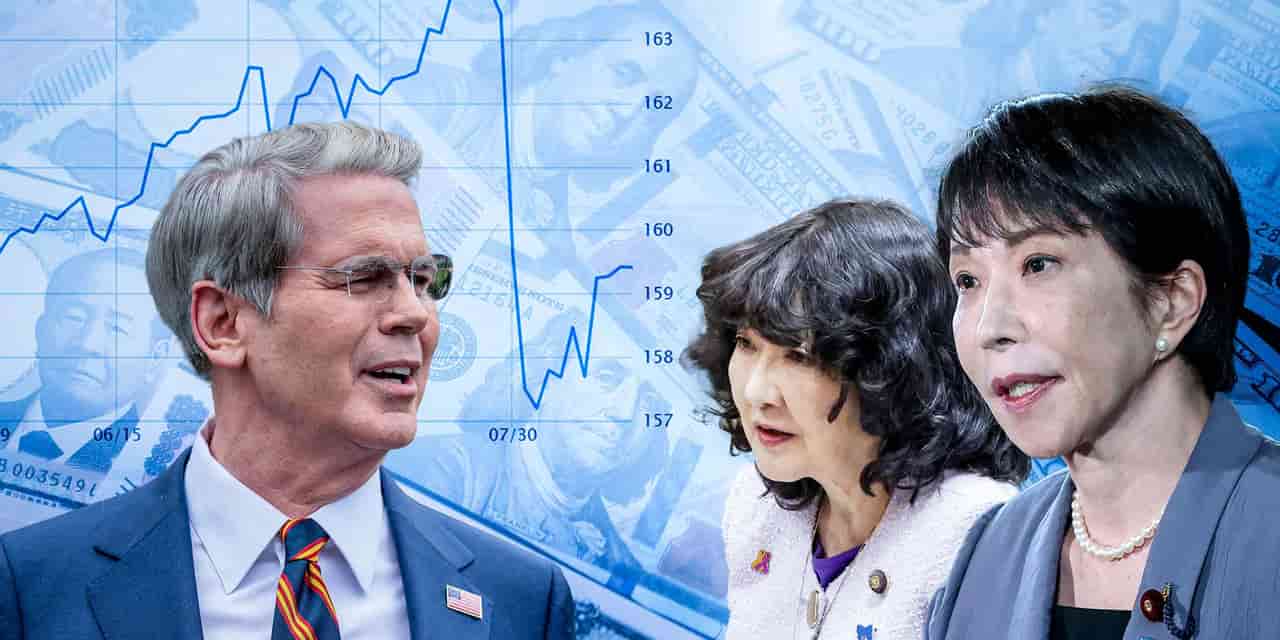
Japan and US coordinate to counter yen bears in 'Reiwa Plaza Accord'

Created at 16 Aug · 9:06 PM1 source↑ Market-relevant
IN SHORT

Japan and the United States have intervened in foreign exchange markets to buy yen, marking the first coordinated action in 28 years. The move aims to stabilize currency and bond markets against speculative bets that have weakened the yen to a 40-year low.

✉Newsletter

PiQ Daily

Pick your topics. Get only what matters, on your cadence.

Key Numbers

28 yearstime since last coordinated yen intervention
August 1, 2026date of coordinated intervention
163.73dollar-yen rate before intervention
155dollar-yen rate after intervention
40 yearsyen's weakest level before intervention
3%yen's rise over two business days
10 trillion yenestimated cost of Japan's prior unilateral intervention
5.7 trillion to 9.3 trillion yenestimated scale of coordinated intervention

Who's Involved

Scott Bessent
U.S. Treasury Secretary
Satsuki Katayama
Japanese Finance Minister
Sanae Takaichi
Japanese Prime Minister
Federal Reserve Bank of New York
conducted 'rate check' with major banks
Japan and US coordinate to counter yen bears in 'Reiwa Plaza Accord'

↳ Why This Matters

The coordinated intervention signals a significant shift in global currency dynamics, with major economies actively pushing back against speculative attacks on a currency. This action could impact global trade, inflation, and investment flows, particularly if it leads to a sustained strengthening of the yen.

Key facts

  • Japan and the U.S. intervened to buy yen on August 1, 2026, the first coordinated action since June 1998.
  • The intervention pushed the dollar-yen exchange rate from a 40-year low of around 163.73 to the 155 yen level.
  • Japanese Finance Minister Satsuki Katayama confirmed the coordinated effort with U.S. Treasury Secretary Scott Bessent.
  • Japan had previously spent an estimated 10 trillion yen on unilateral interventions that failed to halt yen depreciation.

Japan and the United States have jointly intervened in foreign exchange markets to support the yen, a move not seen in 28 years. The coordinated action on August 1, 2026, aimed to curb the yen's sharp depreciation, which had pushed it to a 40-year low against the dollar, trading around 163.73 yen per dollar just before the intervention. Following the intervention, the yen surged to the 155 level against the dollar.

Japanese Finance Minister Satsuki Katayama officially confirmed the coordinated effort with U.S. Treasury Secretary Scott Bessent, who stated the action counteracted 'chaotic yen depreciation' and indicated a willingness for future joint interventions. This marks a significant escalation after Japan's previous unilateral interventions, estimated to have cost 10 trillion yen between April 30 and May 6, 2026, failed to stem the yen's decline.

The market has seen speculation of a 'Reiwa Plaza Accord,' referencing the 1985 agreement that saw global powers coordinate to devalue the U.S. dollar. However, some analysts remain skeptical, viewing intervention as symptomatic treatment that may not sustainably strengthen the yen, with some predicting a return to 160 yen by year-end.

Prime Minister Sanae Takaichi has also issued strong warnings against currency speculation. Reports of the Federal Reserve Bank of New York conducting a 'rate check' with major banks, a move historically seen as a precursor to intervention, further fueled market sentiment. The intervention led to a sharp rally in the yen, with USD/JPY plunging over 1% and Japanese Government Bond yields cooling.

Frequently asked questions

The term 'Reiwa Plaza Accord' is a market-coined phrase referencing the coordinated intervention to strengthen the yen, drawing a parallel to the 1985 Plaza Accord where major economies agreed to devalue the U.S. dollar.

The last coordinated intervention by Japan and the U.S. to buy yen occurred in June 1998.

Before the intervention on August 1, 2026, the dollar-yen exchange rate had fallen to around 163.73 yen to the dollar, its weakest level in 40 years.

Following the intervention, the yen surged, with the dollar-yen exchange rate rising to the 155 yen level at one point and settling around 157.57 yen by the end of trading that day.

What Happens Next

01Further joint interventions may occur if the yen depreciates significantly.
02Market participants will monitor the sustainability of the yen's strength beyond the immediate intervention effects.
03Analysis of four potential scenarios for investors and the public will be presented.

Get the newsletter.

Pick the topics you actually care about. We'll email when there's news worth your time, on the cadence you choose. Cancel any time from your account.

Cadence
CME Headlines
  • Yield curve shifts and Fed minutes set the stage for.
    14 Aug · 8:47 PM
  • Yield curve shifts and Fed minutes set the stage for.
    14 Aug · 8:47 PM
  • Yield curve shifts and Fed minutes set the stage for.
    14 Aug · 8:47 PM

How It Developed

Japan and the U.S. conducted foreign exchange intervention to sell dollars and buy yen on August 1, 2026.
The dollar-yen exchange rate surged from around 163.73 yen to the 155 yen level following the intervention.
Japanese Finance Minister Satsuki Katayama officially acknowledged the coordinated intervention with the United States.
U.S. Treasury Secretary Scott Bessent stated the intervention counteracted 'chaotic yen depreciation' and did not rule out future joint actions.
Japan had previously conducted a unilateral yen-buying intervention between April 30 and May 6, 2026, which proved ineffective.
Prime Minister Sanae Takaichi issued a warning against currency speculation, bolstering the yen's rally.
The Federal Reserve Bank of New York reportedly conducted a 'rate check' with major banks, often seen as a precursor to intervention.

Sources

T1
'A new Plaza Accord?' Japan's battle against yen bears enters new phaseNikkei Asia
T2
Japan-US Coordinated Intervention After 28 Years: Can the 'Reiwa Plaza ...note.com
T2
Yen Surges on Intervention Fears: Japan Signals 'Plaza Accord 2.0' as ...wikifx.com

Related Stories

US Inflation Data Supports Hawkish Fed Stance Despite Benign Headline
16 Aug · 1:06 PM
US Inflation Cools in June as Energy Prices Decline
16 Aug · 1:06 PM
UK inflation set to rise to 2.9% on soaring energy bills
16 Aug · 5:06 AM
US Inflation Eased to 3.4% in July Amidst Iran Conflict
16 Aug · 6:06 PM
UK inflation set to rise to 2.9% in July on soaring energy costs
16 Aug · 9:06 AM