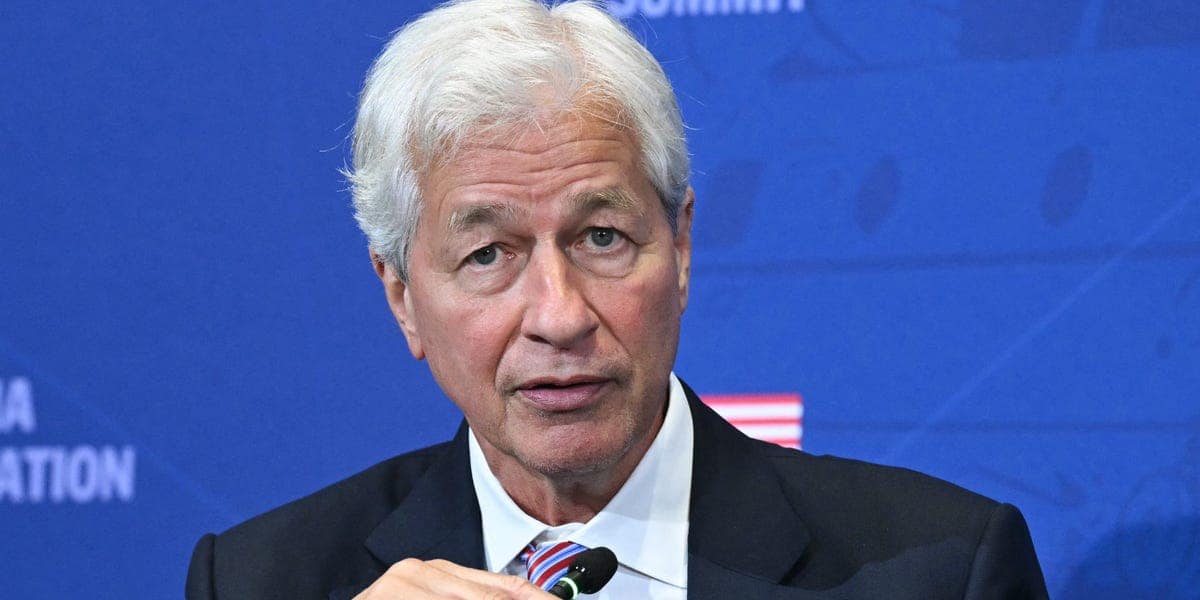
JPMorgan CEO Jamie Dimon warned that the US dollar could lose its reserve currency status if the nation fails to maintain its economic and military dominance. He cited reliance on adversaries for critical goods and the nation's productive capacity as vulnerabilities.

The dollar's status as the global reserve currency underpins US economic and geopolitical influence. Any significant shift away from it could impact borrowing costs, trade, and the US's ability to project power, affecting global financial markets and international relations.
JPMorgan Chase CEO Jamie Dimon has cautioned that the US dollar's position as the world's primary reserve currency could be jeopardized if the United States falters in maintaining its economic and military leadership. "If we're not the strongest military in 25 years and the strongest economy, we won't be the reserve currency either," Dimon stated in an interview on PBS' "Firing Line with Margaret Hoover."
Dimon elaborated that a decline in US dominance would lead to a fragmented and potentially dangerous global landscape. While the dollar currently holds about 57% of global foreign-exchange reserves, a decrease from approximately 70% at the start of the century, its position remains dominant. Concerns about the impact of financial sanctions, particularly following Russia's 2022 invasion of Ukraine, have raised questions about a potential shift away from the dollar, though Federal Reserve research has not indicated a significant post-2022 decline in dollar reserves.
To counter these vulnerabilities, Dimon emphasized the need for the US to reduce its dependence on potential adversaries for strategically important goods. He identified a past mistake in relying on China for critical materials like rare earths, aluminum, and certain types of steel, stating, "We can't rely on China for that, we can't allow mercantilist behavior, we need to do it here, we made a mistake."
Furthermore, Dimon pointed to the war in Iran as an indicator of the US's capacity to sustain a prolonged conflict, noting, "The war in Iran has pointed out we didn't have productive capability to defend the United States if there was a real war that lasted for a long period of time."
In response to these concerns, JPMorgan launched a $1.5 trillion, 10-year Security and Resiliency Initiative in October. This initiative targets industries vital to US economic security, including critical minerals, advanced manufacturing, energy, defense, AI, and quantum computing. Dimon had previously stated that it had become "painfully clear" that the US was overly reliant on unreliable sources for essential national security products and manufacturing.