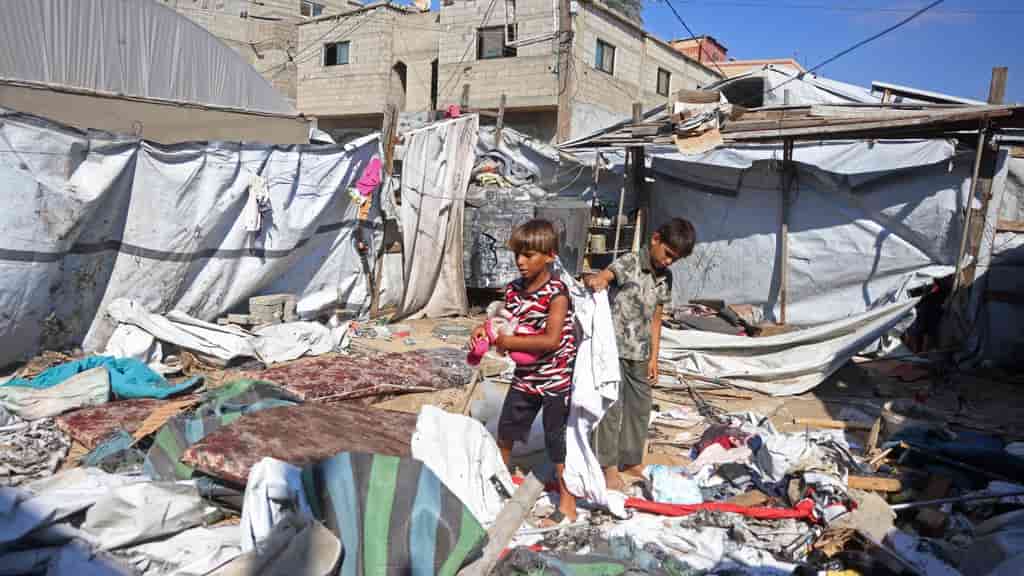
Key facts
- Hundreds of thousands of children in Gaza lack access to functioning schools.
- Temporary learning spaces in Gaza are failing to meet the need.
- UNICEF is expanding its 'Back to Learning' program.
- The program aims to reach 336,000 children.
- The program provides education and psychosocial support.
A recent UN report highlights a critical situation in Gaza, where hundreds of thousands of children are unable to access functioning schools. The existing temporary learning spaces are proving inadequate to address the overwhelming educational needs of the population. In response, UNICEF is scaling up its 'Back to Learning' program. This initiative is designed to reach a significant number of children, specifically targeting 336,000. Beyond providing educational materials and opportunities, the program also focuses on delivering essential psychosocial support to these children, acknowledging the broader impact of the crisis on their well-being.
The report underscores the severe disruption to education in Gaza, with a vast number of young individuals facing prolonged periods without formal schooling. The inadequacy of temporary measures suggests a deep-seated challenge in providing consistent and effective educational services amidst the ongoing circumstances. UNICEF's expanded program represents a significant effort to mitigate these effects by offering a combination of academic and mental health support.