Key facts
- President Donald Trump stated he would soon declare the Strait of Hormuz U.S. territory.
- Saudi Arabia condemned an attack on two UAE tankers in the Strait of Hormuz.
- Saudi Arabia held Iran responsible for the consequences of continuing attacks in Hormuz.
- Iran condemned Israeli airstrikes in southern Lebanon that killed at least 11 people, including three children.
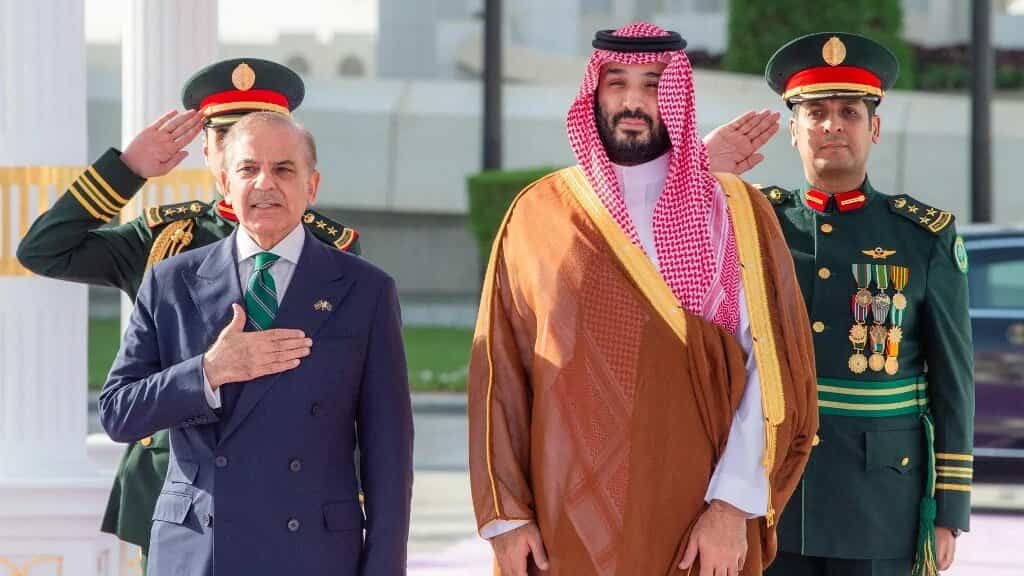
- A new Sunni-led bloc anchored by Saudi Arabia, Turkey, and Pakistan is emerging.
- Iran and Oman agreed on shipping route coordinates through the Strait of Hormuz.
- The Israeli military stated its forces killed two Palestinians in Gaza.
- Qatar denied holding Iranian pilots and stated the remains of one pilot were found.
- Israeli airstrikes occurred in southern Lebanon.
- Israeli military actions are ongoing in the Gaza Strip.
The Middle East is experiencing a significant escalation in regional tensions, marked by a series of interconnected incidents and emerging geopolitical alignments. President Donald Trump announced his intention to declare the Strait of Hormuz as U.S. territory following recent conflicts, a move met with defiance from Tehran. This declaration comes amidst broader regional instability, including Israeli strikes in Lebanon, Houthi attacks in Yemen, and vessel incidents within the Strait of Hormuz itself.
Saudi Arabia has condemned an attack on two United Arab Emirates (UAE) tankers in the Strait of Hormuz, labeling it a dangerous escalation and a threat to global energy supplies. The Kingdom explicitly held Iran responsible for the consequences of continued attacks. Concurrently, Iran's foreign ministry condemned Israeli airstrikes in southern Lebanon that resulted in the deaths of at least 11 people, including three children, calling for international action against these "blatant violations of international law." The Israeli military reported killing two Palestinians in Gaza who had crossed a designated boundary, amidst ongoing military actions in the Strip that Palestinian officials state have caused further casualties.
A new geopolitical bloc, referred to as the "Sunni axis" and anchored by Saudi Arabia, Turkey, and Pakistan, is emerging. This bloc aims to manage risks, contain Iran, deter Israel, and achieve strategic autonomy from the United States. Analysts also suggest that Israel's designation of three villages in southern Lebanon as 'pilot zones' is a strategy to undermine Hezbollah and prolong its occupation, rather than facilitate withdrawal, despite an agreement signed in June 2026 for gradual Israeli withdrawal and handover of sovereignty to the Lebanese Army.
In a separate development, Iran and Oman have reached an agreement on shipping route coordinates through the Strait of Hormuz, though finalization is pending and concerns about potential third-party interference exist. This deal aims to ensure safe passage but does not guarantee the waterway's full reopening. Qatar has denied Iran's claims of holding three Iranian pilots captured after their fighter jets were shot down, stating the pilots violated Qatari airspace and that the remains of one pilot were recovered. Qatar has invited Iran to review details of its search and rescue operation.