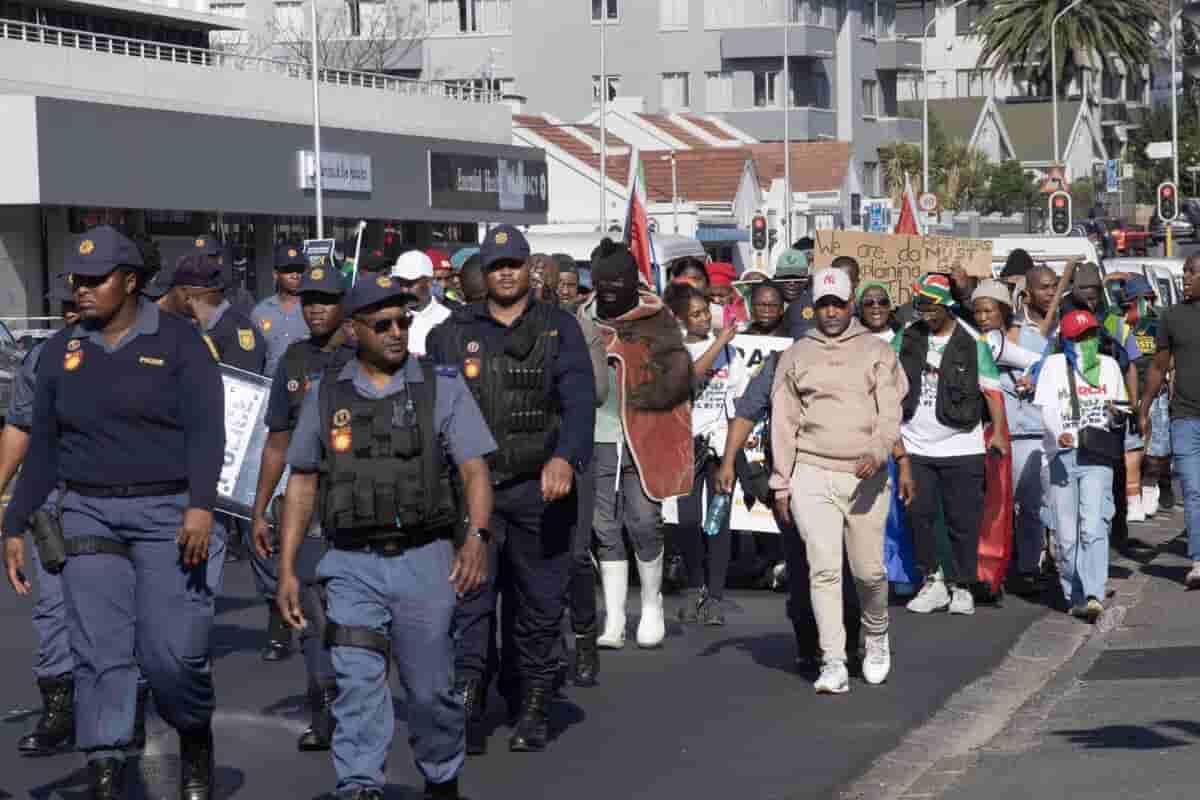
Key facts
- South Africa is increasing police presence nationwide.
- A June 30 deadline has been set by xenophobic groups for foreigners to leave.
- The police deployment aims to deter violence and disruptive activities.
- Thousands of Malawians are stranded in Durban.
- Anti-migrant protests are occurring in South Africa.
- The situation highlights pressures on South Africa's labor system.
- Slowing growth, political demands, and regional inequality are contributing factors.
South Africa is escalating its police presence across the nation in anticipation of potential violence and disruptive actions related to a looming June 30 deadline. This deadline was set by xenophobic groups, demanding that all foreigners depart the country. The deployment aims to deter any unrest and ensure public safety ahead of this date.
In Durban, the anti-migrant sentiment has led to significant disruptions, with thousands of Malawians reportedly stranded. These protests and the resulting displacement underscore the complex pressures affecting South Africa's labor system. Factors contributing to this strain include the country's slowing economic growth, ongoing political demands, and persistent regional inequalities that drive migration.
The situation reflects deeper societal and economic challenges within South Africa. The government's response, including increased policing, indicates an effort to manage potential xenophobic violence while addressing the underlying issues that fuel such sentiments. The stranded Malawians in Durban are a visible consequence of these tensions, highlighting the vulnerability of migrant populations in the face of organized anti-foreigner campaigns.