Saudi Arabia seeks defensive alliances to deter regional war | PiQ Markets
breaking
2 storiesGeopolitics & Global RiskMiddle East conflict (Israel-Gaza, Lebanon, Iran)Russia-Ukraine war (frontline, weapons, peace talks)
Saudi Arabia seeks defensive alliances to deter regional war
window 24h
IN SHORT
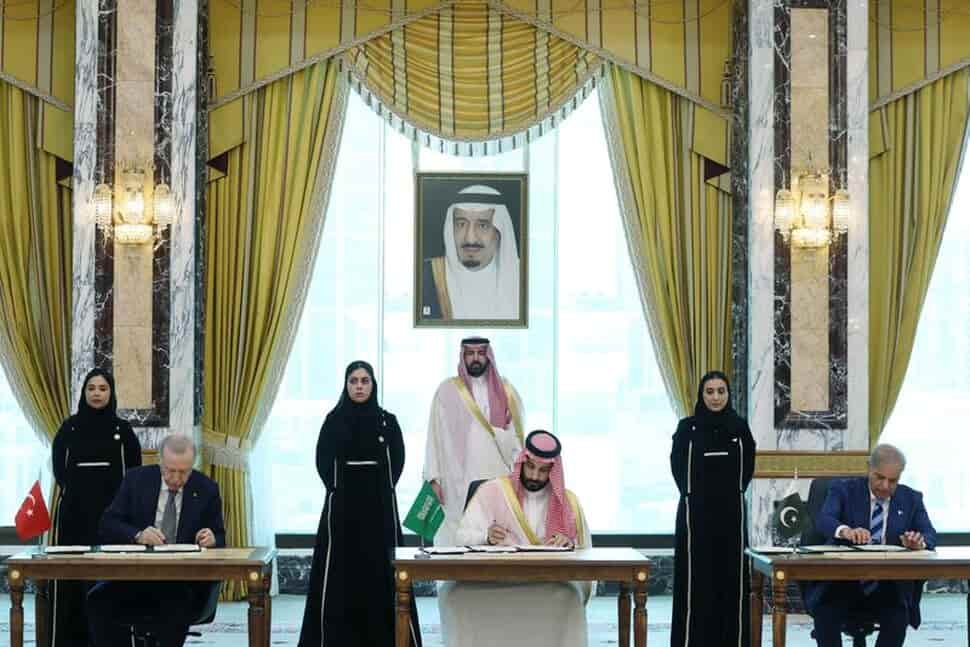
Saudi Arabia is pursuing regional defensive alliances to deter conflict, particularly from Iran and its proxies. However, these efforts have not yet stopped ongoing assaults. Initial attempts to establish a maritime coalition and a defense pact with Turkey and Pakistan have faced challenges. Meanwhile, Iraq has rejected any violation of its sovereignty during security discussions with Saudi Arabia, even as US-Saudi strikes continue in the region.
✉Newsletter
PiQ Daily
Pick your topics. Get only what matters, on your cadence.
Who's Involved
Saudi Arabia
Kingdom forging regional defensive alliances to deter conflict
Iran
Nation perceived as a threat by Saudi Arabia
Turkey
Nation involved in attempted defense pact with Saudi Arabia
Pakistan
Nation involved in attempted defense pact with Saudi Arabia
Iraq
Nation rejecting sovereignty violations during security talks
Khalid bin Salman
Saudi Defence Minister involved in security talks with Iraq
United States
Nation conducting recent strikes with Saudi Arabia
Key facts
Saudi Arabia is seeking regional defensive alliances.
The alliances aim to deter attacks from Iran and its allies.
Initial attempts to form a maritime coalition have not prevented further assaults.
A defense pact with Turkey and Pakistan has also been attempted.
Iraq rejected sovereignty violations during security talks with Saudi Arabia.
The talks involved Saudi Defence Minister Khalid bin Salman.
Recent US-Saudi strikes have occurred in the region.
Saudi Arabia is actively seeking to establish regional defensive alliances as a strategy to deter potential conflict, with a specific focus on mitigating threats from Iran and its allied forces. Despite these diplomatic overtures, the kingdom's efforts have not yet succeeded in preventing continued assaults in the region. Early initiatives to form a maritime coalition aimed at securing vital shipping lanes have not yielded significant results. Similarly, attempts to forge a broader defense pact involving Turkey and Pakistan have yet to materialize into a concrete security arrangement.
In parallel, Iraq has voiced strong objections to any perceived infringement upon its national sovereignty during high-level security talks held with Saudi Arabia. This stance was articulated by the Iraqi Prime Minister's office, underscoring Baghdad's sensitivity to external influence on its internal security matters. The discussions occurred in the context of recent US-Saudi military strikes, which have heightened regional tensions and underscored the complex security landscape.
The Saudi push for alliances reflects a broader strategy to enhance regional stability and counter perceived Iranian expansionism. The kingdom aims to create a united front against potential aggression, but the formation of such pacts is complex, involving intricate geopolitical considerations and varying national interests among potential partners. The ongoing security challenges, including the need to protect maritime trade and address proxy activities, underscore the urgency of these alliance-building efforts.
↳ Why This Matters
Saudi Arabia is actively seeking to establish regional defensive alliances as a strategy to deter potential conflict, with a specific focus on mitigating threats from Iran and its allied forces. Despite these diplomatic overtures, the kingdom's efforts have not yet succeeded in preventing continued assaults in the region. Early initiatives to form a maritime coalition aimed at securing vital shipping lanes have not yielded significant results. Similarly, attempts to forge a broader defense pact involving Turkey and Pakistan have yet to materialize into a concrete security arrangement.
Frequently asked questions
Saudi Arabia aims to deter attacks from Iran and its allies, respond more robustly to assaults, and protect its ambitious economic vision without becoming directly involved in the wider regional war.
Initial attempts to form a maritime coalition in the Red Sea and a defense pact with Turkey and Pakistan have not yet prevented further attacks on the kingdom.
The kingdom and the U.S. conducted joint airstrikes against Iraqi militias, and Saudi Arabia announced its intention to lead a maritime defense coalition and a joint defense agreement with Turkey and Pakistan.
Analysts suggest that adversaries perceive Saudi Arabia's desire to avoid war as an opportunity to continue targeting the kingdom, understanding restraint as an acceptance of being attacked.
What Happens Next
01Further developments on the effectiveness of the maritime coalition in the Red Sea.
02Potential for increased diplomatic engagement or military responses based on future attacks.
Get the newsletter.
Pick the topics you actually care about. We'll email when there's news worth your time, on the cadence you choose. Cancel any time from your account.