Russia UN envoy says US 'ruined' Hormuz navigation, vetoes UN resolution | PiQ Markets
breaking
2 storiesGeopolitics & Global RiskRussia-Ukraine war (frontline, weapons, peace talks)Middle East conflict (Israel-Gaza, Lebanon, Iran)Shipping lane security (Hormuz, Bab-el-Mandeb, Red Sea, South China Sea)
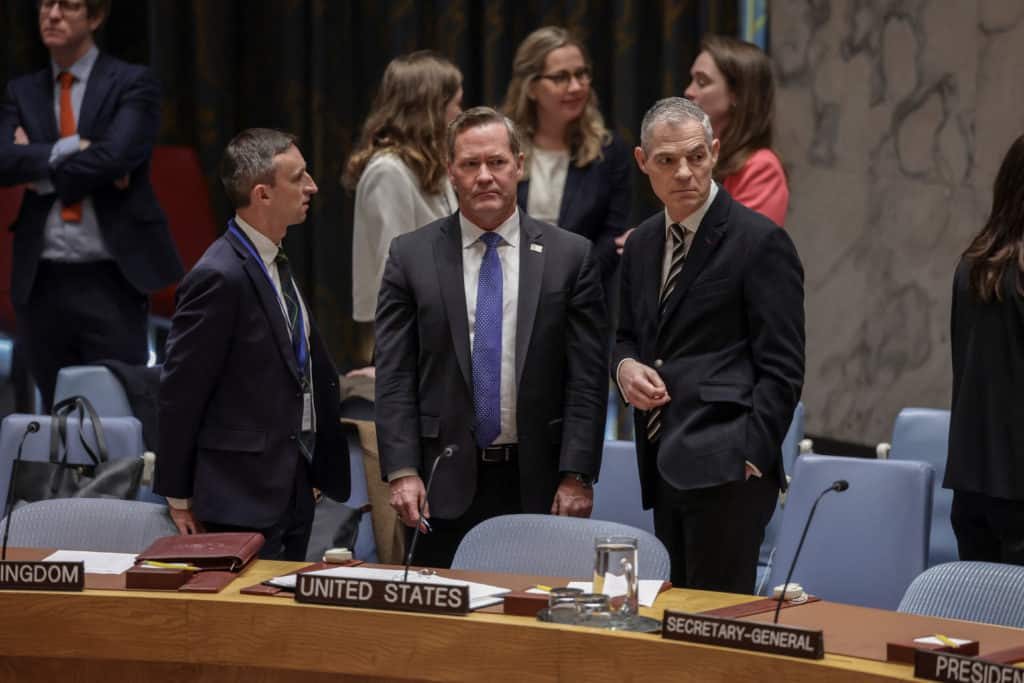
Russia UN envoy says US 'ruined' Hormuz navigation, vetoes UN resolution
window 24h
IN SHORT
Russia's UN envoy, Mikhail Ulyanov, claims US policy has "ruined" navigation in the Strait of Hormuz. This statement coincided with Russia and China vetoing a UN Security Council resolution to reopen the strait, attributing the conflict's initiation to the US and Israel. Separately, Russian Foreign Minister Sergei Lavrov stated Russia believes the US is deeply involved in Ukrainian attacks and has submitted questions to the State Department about intelligence support. Moscow also plans to intensify efforts to disrupt Western military supplies to Ukraine.
✉Newsletter
PiQ Daily
Pick your topics. Get only what matters, on your cadence.
Who's Involved
Mikhail Ulyanov
Russia's UN envoy
Russia
nation vetoing UN resolution and accusing US of involvement in Ukraine
United States
nation whose policies allegedly ruined Hormuz navigation and is accused of supporting Ukraine
China
nation vetoing UN resolution
UN Security Council
body that considered and rejected a resolution on Hormuz navigation
Israel
nation blamed by Russia and China for initiating conflict
Sergei Lavrov
Russian Foreign Minister
State Department
US agency receiving questions from Russia
1 / 2
Key facts
Russia's UN envoy stated US policy has ruined navigation through the Strait of Hormuz.
Russia and China vetoed a UN Security Council resolution to reopen the Strait of Hormuz.
Russia and China blamed the US and Israel for initiating the conflict.
Russian Foreign Minister Sergei Lavrov stated Russia believes the US is deeply involved in Ukrainian attacks.
Russia submitted questions to the State Department regarding US intelligence support for Ukraine.
Moscow intends to intensify efforts to disrupt Western military supplies to Ukraine.
Russia's UN envoy, Mikhail Ulyanov, has asserted that the United States' policies have "ruined" navigation through the Strait of Hormuz. Ulyanov's remarks were made in the context of Russia and China vetoing a United Nations Security Council resolution that aimed to reopen the vital waterway. The two nations blamed the United States and Israel for initiating the conflict that has led to the strait's closure.
In parallel, Russian Foreign Minister Sergei Lavrov has indicated that Russia believes the U.S. is deeply involved in Ukrainian attacks. Lavrov stated that Moscow has submitted questions to the U.S. State Department concerning intelligence support provided to Ukraine. Furthermore, Lavrov signaled Moscow's intention to intensify efforts aimed at disrupting the flow of Western military supplies to Ukraine.
The UN Security Council resolution, which Russia and China vetoed, sought to address the navigation issues in the Strait of Hormuz. The vetoes highlight the ongoing geopolitical tensions and differing perspectives on the causes and solutions to the conflict impacting the strait.
Russia's actions and statements suggest a multi-pronged approach to international relations and the ongoing conflict in Ukraine, involving diplomatic challenges at the UN and direct accusations against the United States regarding its support for Ukraine.
↳ Why This Matters
Russia's UN envoy, Mikhail Ulyanov, has asserted that the United States' policies have "ruined" navigation through the Strait of Hormuz. Ulyanov's remarks were made in the context of Russia and China vetoing a United Nations Security Council resolution that aimed to reopen the vital waterway. The two nations blamed the United States and Israel for initiating the conflict that has led to the strait's closure.
Frequently asked questions
The Strait of Hormuz is a vital chokepoint for global oil transportation, connecting the Persian Gulf to the open ocean. One-fifth of the world's oil supply typically passes through it.
Russia and China stated that the resolution was one-sided, failed to address the root causes of the conflict, and would have given the US and Israel too much leeway for aggression, especially in light of President Trump's threats.
President Trump initially threatened that a "whole civilization will die tonight" if Iran did not open the Strait of Hormuz and agree to a deal. He later suspended this threat for two weeks pending a ceasefire and the reopening of the strait.
Iran has been blocking passage through the Strait of Hormuz and has targeted civilian infrastructure in response to attacks by the US and Israel. Iran has accepted a two-week ceasefire and agreed to allow passage through the strait during this period.
What Happens Next
01Monitor Iran's adherence to the two-week ceasefire and reopening of the Strait of Hormuz.
02Observe further diplomatic efforts or potential escalations between the US and Iran.
03Track energy price reactions to the developments in the Strait of Hormuz.
Get the newsletter.
Pick the topics you actually care about. We'll email when there's news worth your time, on the cadence you choose. Cancel any time from your account.