Key facts
- Russia's Defense Ministry reported intercepting 660 Ukrainian drones.
- The drone attack spanned 12 Russian regions and Crimea.
- Moscow Mayor Sergey Sobyanin stated dozens of drones were launched toward the capital.
- At least 30 drones were reportedly downed before reaching Moscow.
- Ukraine reportedly struck the Azot chemical plant in Tula Oblast.
- Energy infrastructure in Tula Oblast was also reportedly hit.
- Residents in Tula Oblast reported explosions and an ammonia-like smell.
- An industrial facility and power lines were confirmed damaged in Tula Oblast.
- Widespread power outages were reported in Russian-controlled Kherson.
- The drone attacks follow a pattern of Ukrainian strikes on infrastructure.
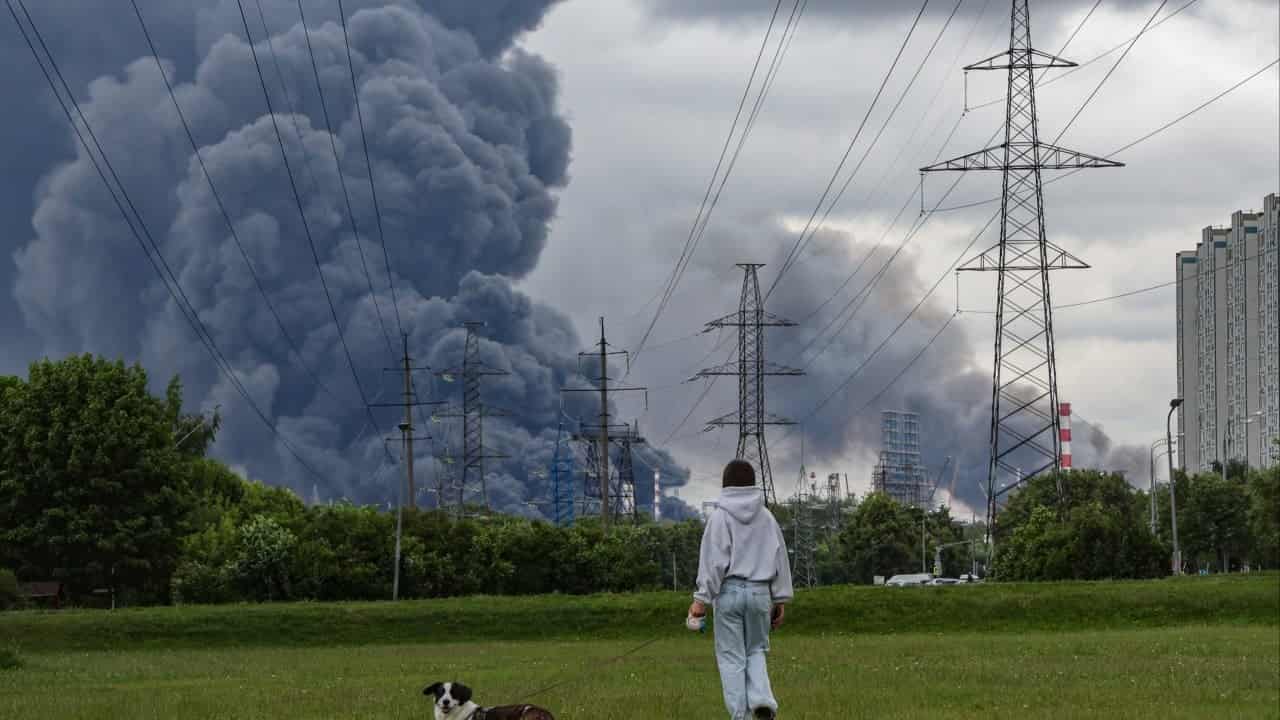
Russia's Defense Ministry announced it intercepted 660 Ukrainian drones during a large-scale nighttime attack that affected 12 regions and Crimea. This incident is described as one of the most significant drone assaults reported by Russia to date. Moscow Mayor Sergey Sobyanin reported that dozens of drones were launched toward the capital, with at least 30 being downed before reaching their targets. Emergency crews were dispatched to assess damage caused by falling debris.
In parallel, Ukraine reportedly targeted Tula Oblast with drones, striking the Azot chemical plant and energy infrastructure. Residents in the area reported hearing explosions and detecting an ammonia-like smell. Officials confirmed that an industrial facility and power lines sustained damage as a result of the attack. Additionally, Russian-installed officials in the Kherson region, which borders Crimea, reported widespread power outages in Russian-controlled areas. While the cause was not immediately specified, these outages follow a pattern of Ukrainian drone attacks on infrastructure.
The scale of the drone activity suggests a coordinated effort by Ukraine to disrupt Russian operations and infrastructure across a wide geographical area. The attacks highlight Ukraine's continued capability to launch long-range drone strikes despite Russian air defense efforts. The targeting of industrial facilities, energy infrastructure, and potentially civilian areas underscores the evolving nature of the conflict and the tactics employed by both sides.