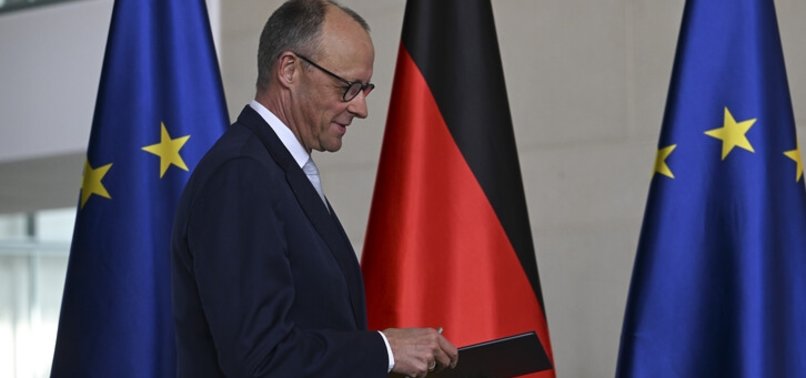
Key facts
- German Chancellor Friedrich Merz stated a US-Iran peace deal offers regional stability.
- Merz emphasized the need for the US-Iran peace deal to hold.
- The Group of Seven nations have welcomed the US-Iran peace accord.
- US President Donald Trump is among the G7 leaders who welcomed the accord.
- German President Frank-Walter Steinmeier voiced European concerns over South China Sea tensions.
- Steinmeier warned that flare-ups in the South China Sea could endanger freedom of navigation.
- Steinmeier drew parallels to the impact of a Strait of Hormuz blockade.
German Chancellor Friedrich Merz has indicated that a peace agreement between the United States and Iran presents a significant opportunity for regional stability and a boost to the global economy. Merz stressed the importance of the deal's adherence and expressed optimism about its potential to foster a more secure environment. The Group of Seven (G7) nations, comprising major world economies, have collectively endorsed the accord, with US President Donald Trump among its supporters. This backing from the G7 signifies a unified front in supporting the diplomatic breakthrough.
In parallel, German President Frank-Walter Steinmeier has articulated broader European anxieties regarding the rising tensions in the South China Sea. He cautioned that any escalation in this strategically vital waterway could severely compromise freedom of navigation, a critical element for international trade and security. Steinmeier drew a parallel between the potential impact of a South China Sea blockade and the consequences of a blockade in the Strait of Hormuz, highlighting the global economic ramifications of such disruptions.