Key facts
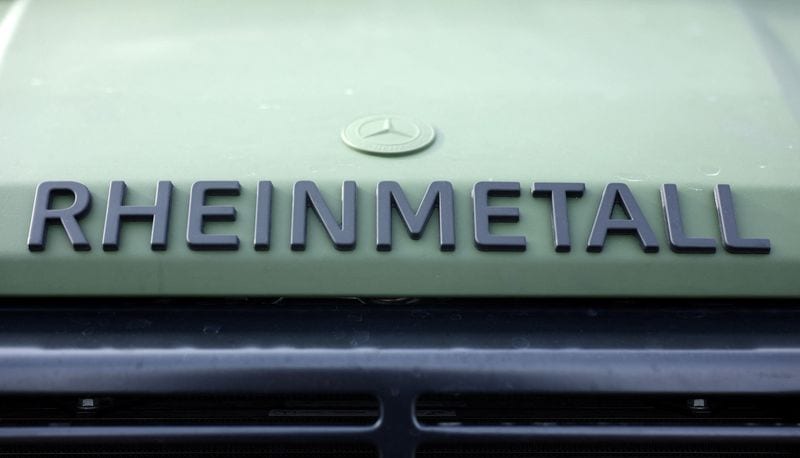
- Lockheed Martin and Rheinmetall will jointly produce ATACMS missiles in Germany.
- This will be the first time ATACMS missiles are manufactured outside the United States.
- The venture aims to establish a European production hub for NATO allies.
- The U.S. is discussing co-production of AMRAAM missiles in Europe.
- The U.S. is discussing a maintenance facility for Patriot missiles in Europe.
- These initiatives aim to address depleted U.S. stockpiles.
- Canada awarded its largest defense procurement contract to German firm TKMS.
- Canada will receive 12 new submarines.
- President Donald Trump stated the U.S. should control Greenland.
- NATO leaders were gathering for a summit in Turkey.
Lockheed Martin and Rheinmetall are partnering to jointly produce ATACMS short-range ballistic missiles in Germany. This marks the first instance of the U.S.-developed weapon system being manufactured outside the United States, with the venture intended to create a European production hub for NATO allies. This initiative aligns with broader discussions between the U.S. and European allies, including Germany, regarding co-production of AMRAAM missiles and the establishment of a maintenance facility for Patriot missiles in Europe. These efforts are driven by a need to free up U.S. manufacturing capacity and replenish depleted stockpiles, exacerbated by high demand from Ukraine.
Canada has awarded its largest-ever defense procurement contract to the German company TKMS for a new fleet of 12 submarines. Prime Minister Mark Carney highlighted the decision as a response to a "dangerous and divided world" and stated the goal is to bolster Canada's maritime sovereignty, with a particular focus on the Arctic region. These defense initiatives occur against a backdrop of geopolitical tensions and evolving security landscapes.
In a separate development, President Donald Trump has stated that Greenland should be controlled by the United States rather than Denmark. This declaration was made as NATO leaders were gathering for a summit in Turkey, where topics such as defense spending and the ongoing Russia-Ukraine war were also on the agenda.
The co-production and maintenance initiatives in Europe are designed to enhance the defense capabilities of NATO allies and ensure a more resilient supply chain for critical munitions. The depleted stockpiles in the U.S. underscore the strain on defense manufacturing due to sustained global demand, particularly from ongoing conflicts. The establishment of European production and maintenance sites aims to alleviate this pressure and provide more immediate support to allies.
These developments collectively point to a significant recalibration of defense strategies among Western allies, emphasizing increased European industrial capacity, strengthened alliances, and responses to a perceived rise in global instability.