Key facts
- Iranian President Masoud Pezeshkian criticized global inaction on Israeli attacks.
- Pezeshkian called for greater Muslim unity at an Arab-Islamic Summit in Doha.
- Iran's UN mission accused the U.S. of a "culture of impunity" regarding Iran Air Flight 655.
- Iran Air Flight 655 was downed in 1988, killing 290 civilians.
- Turkish President Tayyip Erdogan warned Israel against sabotaging a U.S.-Iran deal.
- Erdogan stated Middle East peace efforts require regional support.
- The Gaza conflict is overshadowed by wider Middle East tensions.
- There is a reported lack of significant diplomatic efforts on the Gaza crisis.
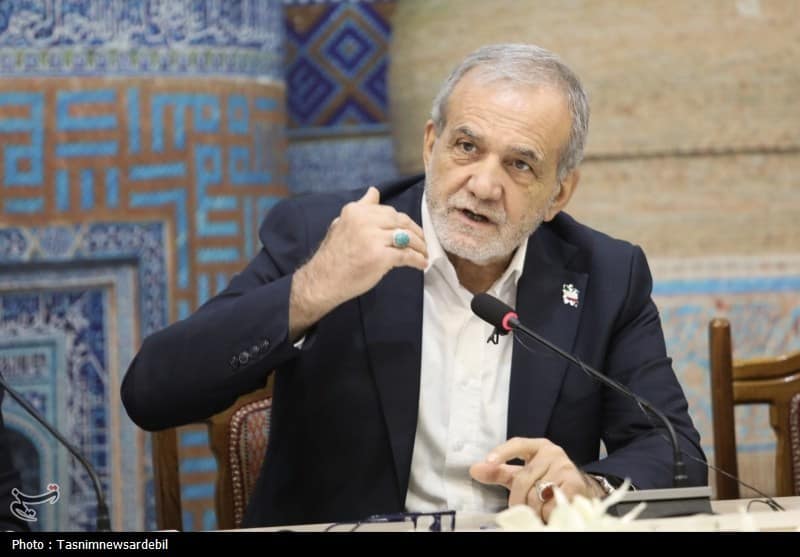
Iranian President Masoud Pezeshkian has voiced strong criticism of the international community's perceived failure to halt Israeli attacks, advocating for enhanced Muslim unity to confront regional issues. Addressing an Arab-Islamic Summit in Doha, Pezeshkian condemned recent Israeli aggression and emphasized the necessity of concrete actions beyond mere expressions of disapproval. His remarks highlight a growing frustration with the international response to ongoing conflicts in the region.
Concurrently, Iran's mission to the United Nations has accused the United States of fostering a "culture of impunity." This accusation stems from the U.S. not accepting responsibility for the 1988 downing of Iran Air Flight 655, an incident that resulted in the deaths of 290 civilians. Iran's UN mission drew a parallel between this historical event and contemporary actions, such as a missile strike on a school, suggesting a pattern of unchecked behavior.
In parallel, Turkish President Tayyip Erdogan has commented on the delicate balance of Middle East peace efforts. He stated that such endeavors necessitate regional backing and issued a warning against any attempts to sabotage a potential U.S.-Iran agreement. Erdogan explicitly stated that Israel should not be permitted to disrupt this deal, underscoring the interconnectedness of regional stability and diplomatic progress.
The wider context of escalating Middle East tensions continues to cast a shadow over the ongoing conflict in Gaza. International focus and resources are reportedly being diverted from the Gaza crisis due to broader regional instability. Sources indicate a deficiency in substantial diplomatic initiatives aimed at directly resolving the Gaza situation amidst this wider geopolitical turmoil.