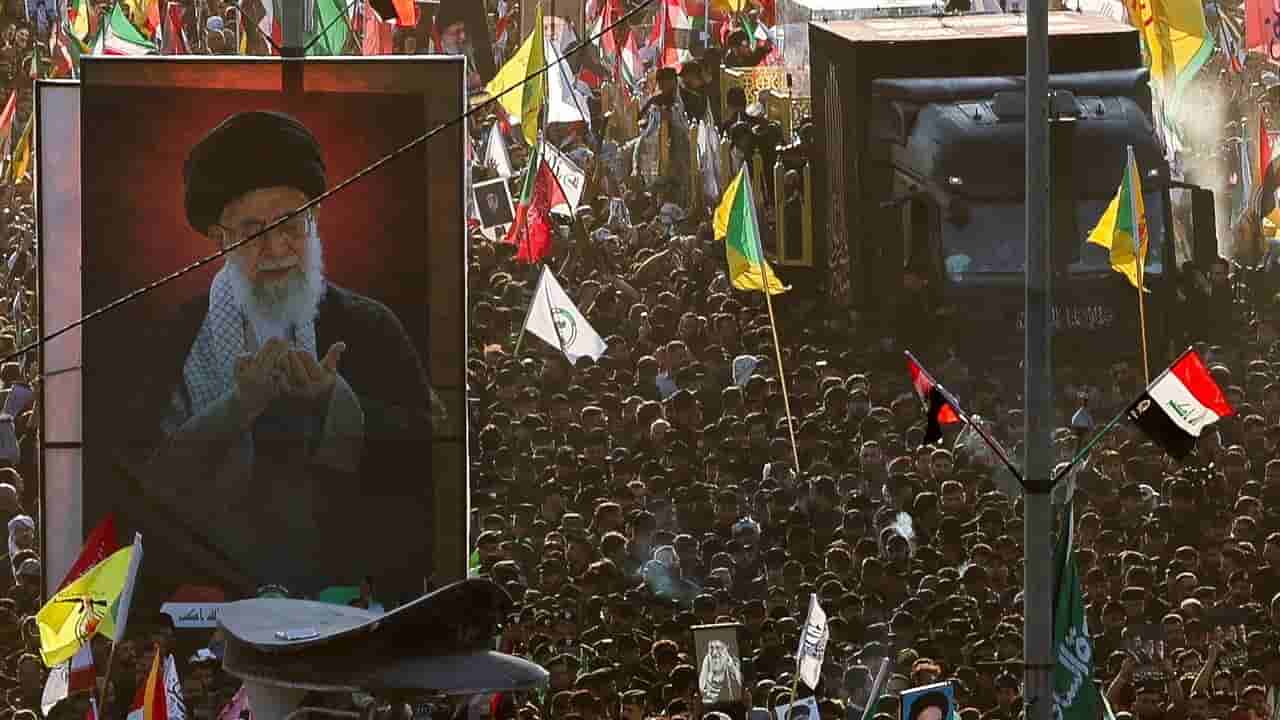
Funeral procession for Iran's slain leader continues in Najaf | PiQ Markets
updating
2 storiesGeopolitics & Global RiskRussia-Ukraine war (frontline, weapons, peace talks)
Funeral procession for Iran's slain leader continues in Najaf
window 24h
IN SHORT
Iran's Supreme Leader Ayatollah Ali Khamenei was killed on February 28 in U.S.-Israeli air strikes, with his funeral procession continuing in Najaf, Iraq on Wednesday. His burial is anticipated for Thursday in Mashhad, Iran. Meanwhile, Iran's foreign minister stated that U.S.-Iran talks will not commence if President Trump continues threats of renewed hostilities. This follows an incident where a tanker was struck in the Strait of Hormuz.
✉Newsletter
PiQ Daily
Pick your topics. Get only what matters, on your cadence.
Who's Involved
Ayatollah Ali Khamenei
Iran's late Supreme Leader killed in air strikes
Donald Trump
U.S. President making threats of hostilities
Iran
Nation whose Supreme Leader was killed and whose foreign minister made statements
U.S.
Nation involved in air strikes and diplomatic threats
Israel
Nation involved in air strikes
Najaf
City in Iraq where funeral procession continued
Mashhad
City in Iran where burial is expected
Strait of Hormuz
Waterway where a tanker was struck
Key facts
Iran's Supreme Leader Ayatollah Ali Khamenei was killed on February 28.
The killing of Khamenei was attributed to U.S.-Israeli air strikes.
A funeral procession for Ayatollah Ali Khamenei continued in Najaf, Iraq on Wednesday.
Khamenei's burial is expected on Thursday in Mashhad, Iran.
Iran's foreign minister stated that U.S.-Iran talks will not begin if President Trump continues threats of hostilities.
A tanker was struck in the Strait of Hormuz.
The U.S. previously withdrew from the Iran nuclear deal.
The U.S. has imposed sanctions on Iran.
Ayatollah Ali Khamenei, Iran's Supreme Leader, was killed on February 28 in U.S.-Israeli air strikes. His funeral procession proceeded in Najaf, Iraq, on Wednesday. The burial is expected to take place on Thursday in Mashhad, Iran.
In parallel, Iran's foreign minister declared that discussions between the U.S. and Iran will not begin if President Trump persists with his threats to restart hostilities. This statement was made subsequent to an incident involving a tanker that was struck in the Strait of Hormuz. The specific details of the tanker incident and the identity of the tanker were not provided.
The geopolitical tensions between the U.S. and Iran have been escalating, with President Trump's administration previously withdrawing from the Iran nuclear deal and imposing sanctions. Iran has consistently maintained that it will not engage in negotiations under duress or threats of military action. The air strikes that reportedly killed Khamenei mark a significant escalation in the ongoing conflict.
↳ Why This Matters
Ayatollah Ali Khamenei, Iran's Supreme Leader, was killed on February 28 in U.S.-Israeli air strikes. His funeral procession proceeded in Najaf, Iraq, on Wednesday. The burial is expected to take place on Thursday in Mashhad, Iran.
Frequently asked questions
Ayatollah Ali Khamenei was killed in late February in wide-scale U.S. and Israeli strikes.
Funeral processions and prayers are taking place in Najaf, Iraq, and will move to Karbala before returning to Iran.
In Najaf, prayers will be led by Muhammad Taqi al-Hakim. In Karbala, Abdul Mahdi al-Karbalaei will lead the prayers.
Strikes from both the U.S. and Iran have raised risks to an interim agreement to end the conflict, with the U.S. attacking Iran after alleged Iranian strikes on ships in the Strait of Hormuz, followed by Iranian retaliatory strikes on Kuwait and Bahrain.
What Happens Next
01Khamenei's body will be taken from Najaf to Karbala.
02The body will be returned to Iran for burial.
03Talks between the United States and Iran appear to be on hold until after the burial.
Get the newsletter.
Pick the topics you actually care about. We'll email when there's news worth your time, on the cadence you choose. Cancel any time from your account.