Key facts
- The funeral procession for Iran's Supreme Leader Ayatollah Ali Khamenei is continuing in Najaf, Iraq.
- Khamenei was killed on February 28 in U.S.-Israeli air strikes.
- His coffin arrived in Najaf on Tuesday, July 7, 2026, after ceremonies in Iran.
- Iraqi Prime Minister Ali al-Zaidi received the coffin at Najaf International Airport.
- The burial is expected on Thursday in Mashhad, Iran.
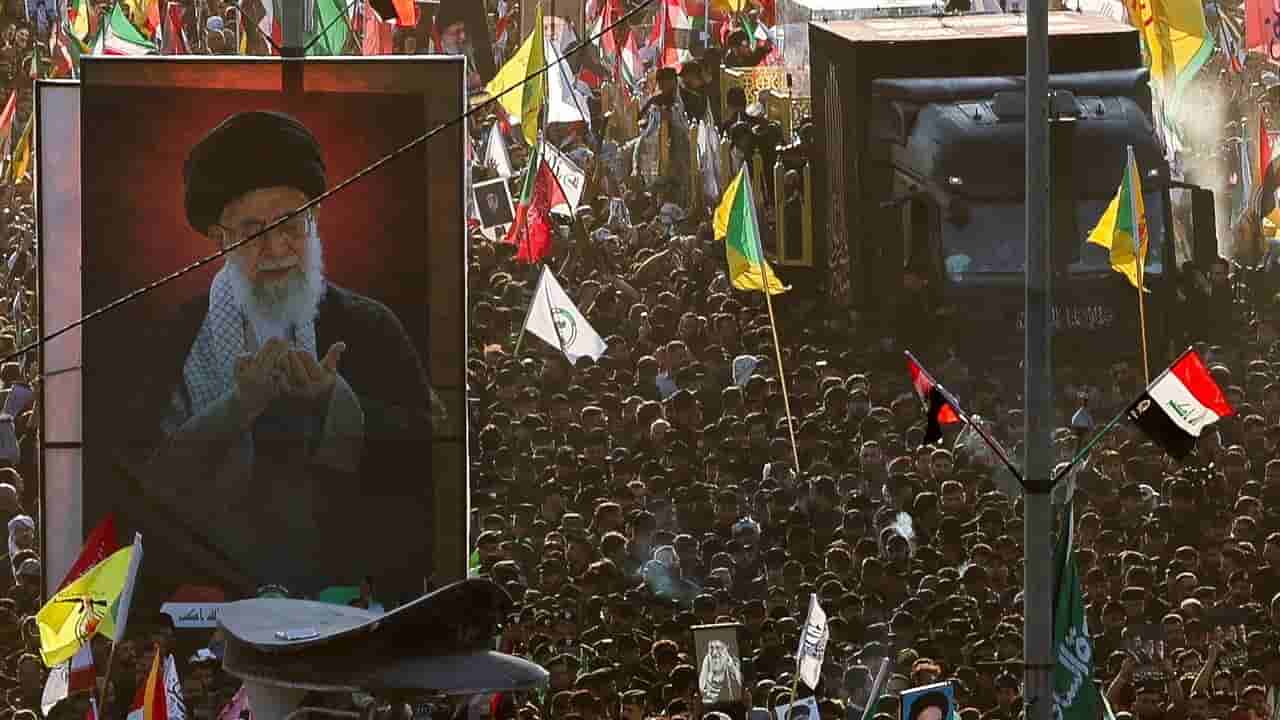
The funeral procession for Iran's Supreme Leader Ayatollah Ali Khamenei, who was killed on February 28 in U.S.-Israeli air strikes, continued in the Iraqi city of Najaf on Wednesday, July 8, 2026. Khamenei's coffin arrived in Najaf on Tuesday after multi-day ceremonies in Iran, drawing large crowds of mourners to one of Shi'ite Islam's most sacred sites.
Iraqi Prime Minister Ali al-Zaidi and senior Iraqi officials received the coffin at Najaf International Airport. Iranian President Masoud Pezeshkian also attended the ceremonies. The procession is expected to move through Najaf and then to Karbala before returning to Iran for burial in Mashhad later this week.
Authorities have tightened security in Najaf, anticipating large numbers of mourners. Iran's state-organized funeral ceremonies are intended to demonstrate continuity following the death of the leader who ruled for nearly four decades. During ceremonies in Tehran, mourners called for revenge against the U.S. and Israel, with some hanging an effigy of U.S. President Donald Trump and carrying placards with images of U.S. Vice President JD Vance, U.S. Defense Secretary Pete Hegseth, and Israeli Prime Minister Benjamin Netanyahu.
Iran's army chief, Major General Amir Hatami, pledged that the nation would pursue justice for Khamenei's killing. The U.S.-Israel war on Iran has been halted during a ceasefire, but both nations have warned of potential military action resumption. Vengeance has been a prominent theme during the weeklong funeral events.