Key facts
- China's PLA Eastern Theatre Command deployed new HQ-16F missiles opposite Taiwan.
- The HQ-16F missiles are comparable to U.S. Patriot systems.
- The missile deployment followed a Dutch warship's transit through the Taiwan Strait.
China has escalated its military posture around Taiwan, deploying new HQ-16F missiles opposite the island and expanding its Coast Guard patrols into new operational areas east of Taiwan. These actions follow a Dutch warship's transit through the Taiwan Strait and are seen by Taiwan as 'provocative acts' and 'cognitive warfare.' Taiwan's military is responding by showcasing its own defense capabilities, including armed robot dogs designed for coastal patrols and high-risk missions. Tensions also flared near the Pratas Islands, where Taiwan's Coast Guard reported standoffs with Chinese vessels allegedly entering restricted waters.
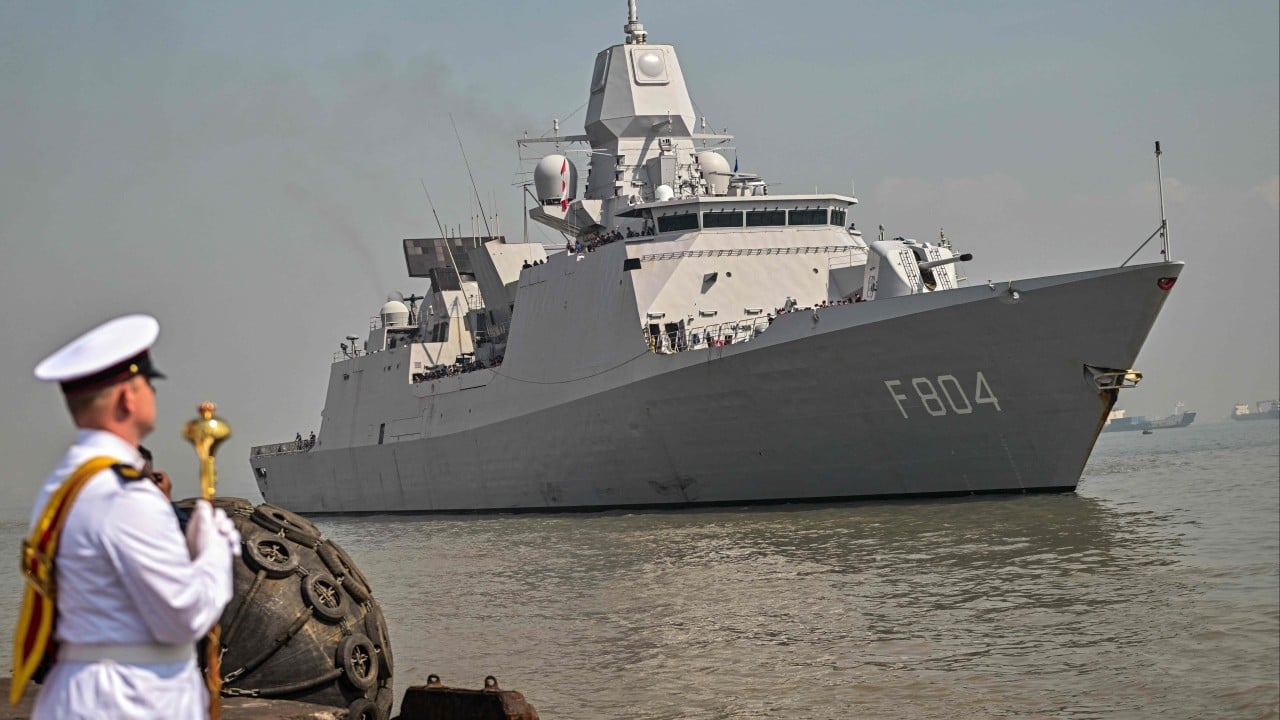
China's People's Liberation Army Eastern Theatre Command has deployed new HQ-16F missiles, described as comparable to U.S. Patriot systems, in an area opposite Taiwan. This deployment was reported by state media following a Dutch warship's transit through the Taiwan Strait, a move that has heightened regional tensions. Concurrently, the China Coast Guard has expanded its operational scope, conducting its first independent law enforcement patrol east of Taiwan, moving beyond its traditional maritime zones. This expansion is reportedly a response to ongoing maritime border talks between Japan and the Philippines. Taiwan's Defense Minister, Wellington Koo, has characterized these Chinese Coast Guard patrols east of the island as a 'provocative act' and a form of 'cognitive warfare,' emphasizing that the military will coordinate with the Coast Guard to protect national sovereignty amid these escalating tensions.
Further complicating the situation, Taiwan's Coast Guard has reported multiple confrontations with Chinese vessels near the Pratas Islands in the South China Sea. In one incident, a Chinese coast guard ship allegedly entered restricted waters, disregarding warnings, marking the second such occurrence within two weeks. Taiwan's coast guard also confronted Chinese coast guard and research vessels operating in the vicinity after China initiated a "law enforcement operation" nearby. These events underscore a pattern of increasing assertiveness by Chinese maritime forces in contested waters.
In response to the heightened tensions and China's assertive actions, Taiwan's military is also showcasing its own defensive capabilities. The National Chung-Shan Institute of Science and Technology has unveiled armed robot dogs, based on Ghost Robotics platforms. These robots are designed for coastal patrols and high-risk missions, capable of being equipped for reconnaissance, combat, and target tracking, with potential deployment on Taiwan's outlying islands.
China's People's Liberation Army Eastern Theatre Command has deployed new HQ-16F missiles, described as comparable to U.S. Patriot systems, in an area opposite Taiwan. This deployment was reported by state media following a Dutch warship's transit through the Taiwan Strait, a move that has heightened regional tensions. Concurrently, the China Coast Guard has expanded its operational scope, conducting its first independent law enforcement patrol east of Taiwan, moving beyond its traditional maritime zones. This expansion is reportedly a response to ongoing maritime border talks between Japan and the Philippines. Taiwan's Defense Minister, Wellington Koo, has characterized these Chinese Coast Guard patrols east of the island as a 'provocative act' and a form of 'cognitive warfare,' emphasizing that the military will coordinate with the Coast Guard to protect national sovereignty amid these escalating tensions.