Key facts
- Yemen's Presidential Leadership Council chairman Rashad al-Alimi rejected a new truce with the Houthis.
- Al-Alimi called for a lasting peace built on state control of weapons and sovereignty.
- He described the Houthi movement as a destructive force, not one seeking peace.
- The government vowed to respond to future Houthi attacks with comprehensive deterrence.
- A recent Houthi attack on the port of Mokha resulted in civilian casualties and infrastructure damage.
- The Yemeni government stated that Houthi attacks will no longer go without consequences.
Rashad al-Alimi, chairman of Yemen's Presidential Leadership Council, has declared that the government has no intention of pursuing a new truce with the Houthi rebels. Al-Alimi stated that the government seeks a "lasting and sustainable peace" founded on a state that holds a monopoly on weapons and sovereignty, viewing the Houthis as a "project of war and destruction."
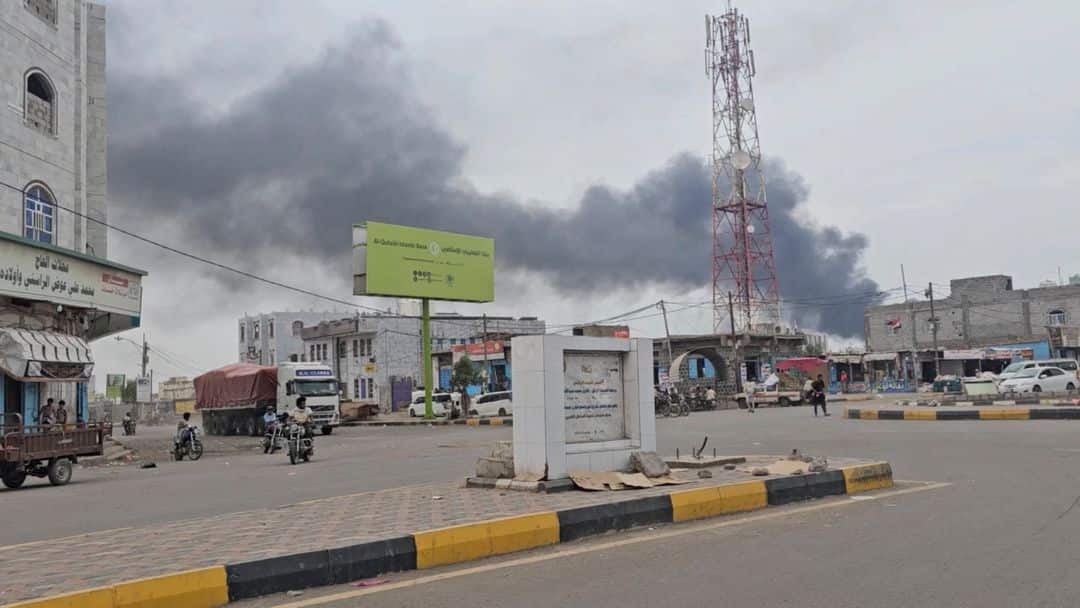
Speaking at a meeting with ambassadors of countries sponsoring Yemen's political process, Al-Alimi emphasized that the Yemeni state did not initiate the latest escalation but would no longer permit the Houthis to unilaterally decide on matters of war and peace. He noted that a recent Houthi missile and drone attack on the port of Mokha resulted in civilian casualties, damaged port facilities, and affected essential services and commercial vessels.
Al-Alimi warned that the era of Houthi attacks without consequences has concluded, and the state will now respond with comprehensive deterrence. He called on the international community to protect civilians, civilian facilities, and commercial ports, respect state sovereignty, and reject the use of missiles and drones for "illegitimate gains." The ambassadors present strongly condemned the recent Houthi attacks on government forces, civilian sites, economic facilities, and commercial vessels.
Yemen has been embroiled in conflict since 2014 when the Iran-aligned Houthi movement seized control of the capital, Sanaa. A Saudi-led coalition intervened in 2015 in support of the internationally recognized government. While a relative lull in fighting occurred after April 2022, tensions have periodically intensified, with dozens killed and wounded on both sides in recent weeks.