HomeEverythingEducationTV
Equities & FundsCrypto & Digital AssetsAI & TechnologyBusiness & CorporateUS Politics & PolicyGeopolitics & Global RiskMacro, Rates & FXCommodities & EnergyEuropean Politics & MarketsAsia-PacificReal Estate & Property
Story archiveAll categories
← All Stories

US troop withdrawals from Eastern Europe spark allied concerns

Created at 16 Jul · 11:06 PM1 source↑ Market-relevant
IN SHORT

The United States has quietly withdrawn hundreds of troops from vulnerable areas in Eastern Europe, raising concerns among allies about long-term U.S. military commitment. This pullback coincides with increased geopolitical tensions and worries about potential Russian retaliation.

✉Newsletter

PiQ Daily

Pick your topics. Get only what matters, on your cadence.

Key Numbers

18%chance of Russia-NATO clash by end of 2026
1962year of Cuban missile crisis
below 100U.S. forces remaining in Estonia
one sixthEstonia troop level compared to last winter
5,000U.S. troops planned for movement to Poland
1,000troops reportedly leaving Lithuania in June
2029year German officials believe threat will be greatest

Who's Involved

Hanno Pevkur
Estonia's Defence Minister
Donald Trump
U.S. President
Mark Rutte
NATO Secretary General
Al Carns
former UK Armed Forces Minister
Vladimir Putin
President
Elbridge Colby
Pentagon policy chief
Holger Neumann
Head of the German air force
US troop withdrawals from Eastern Europe spark allied concerns

↳ Why This Matters

The U.S. troop withdrawals from Eastern Europe and the Middle East signal a potential shift in American foreign policy and military posture, raising concerns among allies about security commitments and increasing the risk of geopolitical instability and escalation.

Key facts

  • Hundreds of U.S. troops have been withdrawn from Eastern Europe, including Estonia and Lithuania.
  • The U.S. also cancelled a planned movement of 5,000 troops to Poland.
  • Allies in Europe and the Pacific are increasingly concerned about long-term U.S. military commitment.
  • The U.S. has also withdrawn personnel from forward bases in the Middle East amid rising tensions with Iran.
  • Some analysts suggest the U.S. pullback could be to avoid having fewer forces in harm's way if conflict escalates.

The United States has quietly withdrawn hundreds of troops from vulnerable areas in Eastern Europe, sparking concerns among allies about long-term U.S. military commitment. This pullback, occurring as geopolitical tensions rise, has led to worries that Russia might lash out. Estonia's Defence Minister Hanno Pevkur revealed that U.S. troops deployed to his country had been withdrawn without a clear indication of their return. NATO officials, while publicly touting new defense deals and increased European spending at a summit, acknowledged that many commitments will take years to deliver.

On the ground, the U.S. has reduced its troop presence in Eastern Europe, with Estonia reporting fewer than 100 U.S. personnel, a significant drop from the previous winter. These withdrawals followed the U.S. administration's unexpected cancellation of a planned movement of 5,000 troops to Poland, which also affected troop movements through the Baltic states. Allies in both Europe and the Pacific are growing increasingly nervous about the trajectory of U.S. commitment.

Analysts suggest potential reasons for the U.S. pullback include a strategic shift to prioritize confronting China, a desire for Europe to take more responsibility for its own defense, or a move to reduce the number of U.S. forces in harm's way should conflict escalate. Some commentators have speculated that the withdrawals might be an attempt to placate Russia, as pro-Kremlin voices have suggested troop withdrawals as part of a peace deal for Ukraine. However, other strategic thinkers advocate for maintaining highly mobile units with long-range missiles in exposed locations.

In the Middle East, the U.S. also began withdrawing personnel from forward bases in mid-January due to rising tensions with Iran, with functions being pulled back to the U.S. or relocated to safer perceived locations. Decision-making in Washington is seen as concentrated within President Trump and his inner circle, leading to concerns that further policy shifts may occur with little warning. The situation has been compared by some to the strategic risks of the 1962 Cuban missile crisis, though most analysts believe Russia is more likely to continue hybrid warfare tactics.

Frequently asked questions

Potential reasons include a strategic shift to prioritize confronting China, a push for Europe to increase its own defense capabilities, or a move to reduce forces in potentially vulnerable areas should conflict escalate.

Allies in Eastern Europe and the Pacific are increasingly nervous about long-term U.S. commitment, leading them to coordinate more closely on defense procurement.

While direct military action is considered less likely than hybrid warfare, analysis suggests an 18% chance of a lethal clash between Russia and NATO by the end of 2026.

Yes, the U.S. began withdrawing personnel from forward bases in the Middle East in mid-January amid rising tensions with Iran.

What Happens Next

01U.S. commanders in Europe indicated another troop detachment might arrive later in the summer, subject to review.
02Further decisions regarding U.S. troop deployments may be made with little warning by President Trump and his inner circle.
03European allies are attempting to coordinate more closely for procurement due to worries over long-term U.S. commitment.

Get the newsletter.

Pick the topics you actually care about. We'll email when there's news worth your time, on the cadence you choose. Cancel any time from your account.

Cadence

How It Developed

U.S. troops deployed to Estonia have been withdrawn without a clear return date.
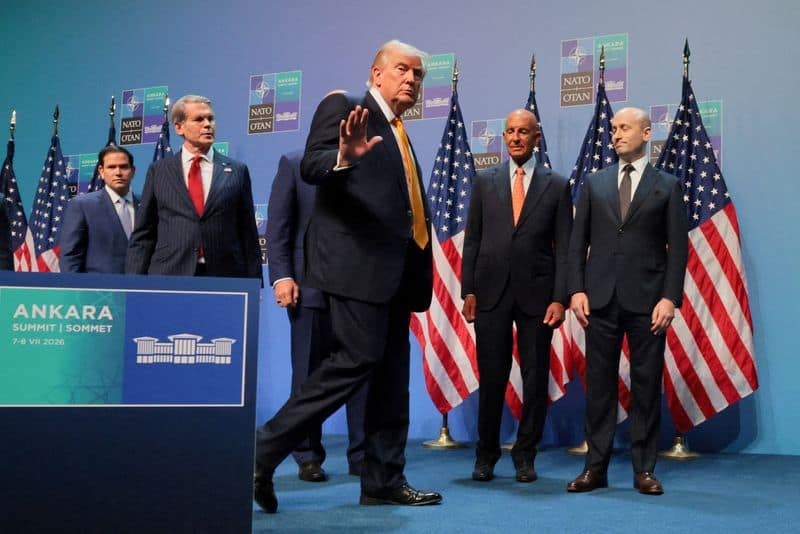
NATO officials claimed success at the Ankara summit, citing new defense deals and increased European spending.
The U.S. has withdrawn forces from some vulnerable Eastern European areas.
Analysis suggests an 18% chance of a clash between Russia and NATO by the end of 2026.
The U.S. began withdrawing personnel from forward bases in the Middle East in mid-January.
Estonia's Defense Minister Hanno Pevkur stated U.S. troop numbers in Estonia dropped significantly.
Baltic withdrawals followed the U.S. cancellation of a troop movement to Poland.
U.S. allies in the Pacific are increasingly nervous about a potential U.S. pullback.

Sources

T1
Quiet U.S. pullback in Eastern Europe sparks wider allied worriesReuters

Related Stories

France, Germany to discuss defence cooperation amid program strains
16 Jul · 4:54 PM
Latvia boosts security at dam, gas storage due to Russian threat
16 Jul · 5:29 PM
Kushner proposes new Gaza aid approach to EU ministers
16 Jul · 12:56 PM
Iran deal collapses amid renewed US-Iran hostilities
16 Jul · 4:16 PM
EU Commissioner Kubilius pushes for faster military mobility plan
16 Jul · 10:11 AM