Key facts
- The UN Command's deputy commander, Lt. Gen. Scott Winter, emphasized the coalition's role in deterring North Korea.
- Winter stated the UNC's 18 member states provide multinational legitimacy and capabilities.
The deputy commander of the U.S.-led United Nations Command (UNC) highlighted the coalition's role in defending South Korea, emphasizing its deterrence capabilities and multinational legitimacy amid a complex security environment. Lt. Gen. Scott Winter stated the UNC's commitment is crucial for de-escalation and supporting combined forces.
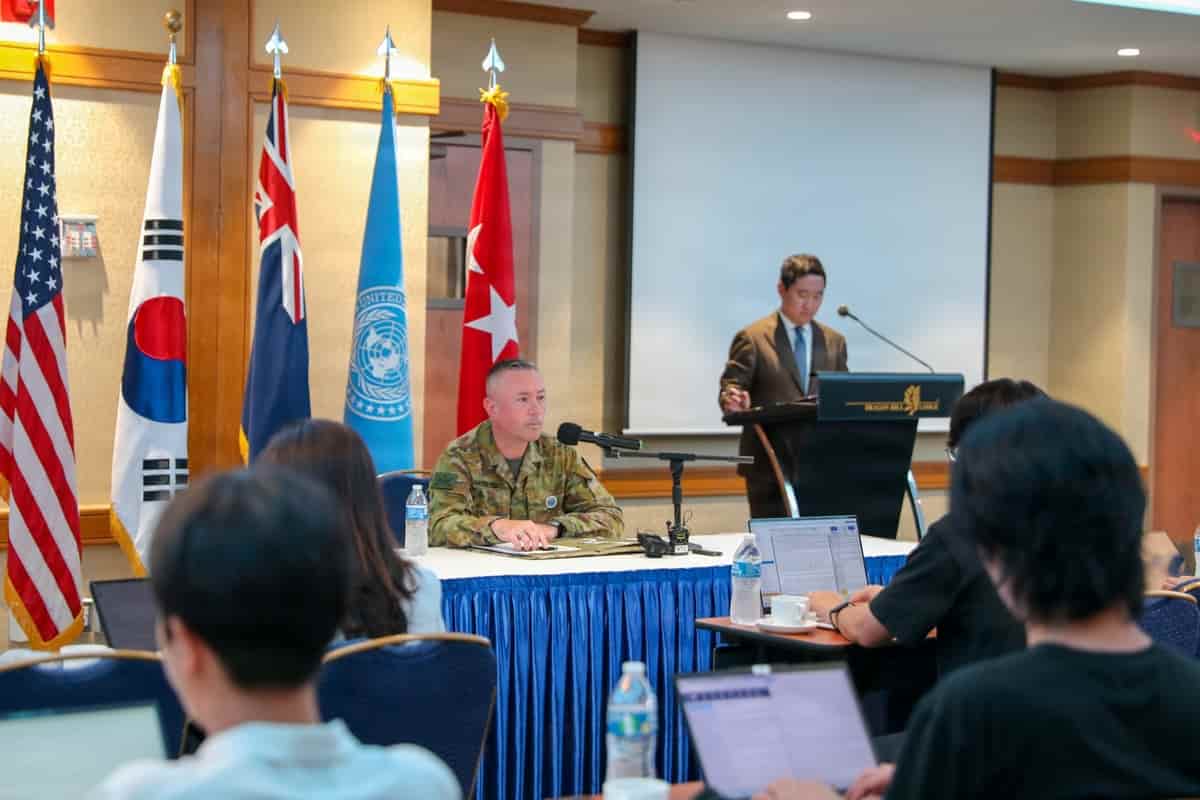
The remarks underscore the continued importance of the multinational UN Command in maintaining stability on the Korean Peninsula and deterring potential aggression from North Korea, particularly as regional security tensions rise.
The deputy commander of the U.S.-led United Nations Command (UNC), Lt. Gen. Scott Winter, has emphasized the critical role of the 18-member coalition in South Korea's defense, highlighting its function as a vital deterrence component well understood by North Korea.
Speaking at a press conference, Winter stressed that the UNC's commitment, spanning over seven decades since the Korean War, is more important than ever given the current complex security environment. He noted that the diverse group of nations within the UNC contributes significantly to deterrence, de-escalation during crises, and provides multinational legitimacy in the event of conflict.
Winter also stated that the upcoming annual Ulchi Freedom Shield (UFS) exercise between South Korea and the United States will provide an opportunity for the UNC to assess and adjust its command and control arrangements to best fit the evolving security landscape. His focus, he explained, is on harnessing the collective power of the 18 member states to support the South Korea-U.S. Combined Forces Command (CFC) in defensive scenarios.
Established after the 1950-53 Korean War, the UNC is tasked with managing the armistice and supporting the CFC during contingencies. While 14 member states sent combat troops and four provided medical support during the war, today they are committed to supplying multinational reinforcements, medical aid, and logistical support. Although not engaging in field training, UNC member states participate in combined exercises like UFS by providing support in communication, coordination, and crisis management.
Winter, an Australian Army officer who assumed his post in January, further underscored the UNC's contribution to deterrence and its ability to bring additional capabilities to complement other defensive measures. He specifically mentioned the importance of developing capabilities in new domains such as information, cyber, and space, in coordination with South Korean partners.
Regarding North Korea's recent installation of barbed-wire fences and land mine operations along the inter-Korean border, Winter expressed confidence in the ongoing UNC investigations. He stated that the UNC diligently investigates every alleged violation of the armistice and that the recent activities do not constitute a violation of the Armistice Agreement, serving instead a defensive and separation purpose.