All NewsEducationTV
Equities & FundsCrypto & Digital AssetsAI & TechnologyBusiness & CorporateUS Politics & PolicyGeopolitics & Global RiskMacro, Rates & FXCommodities & EnergyEuropean Politics & MarketsAsia-PacificReal Estate & Property
Story archiveAll categories
← All Stories

Iran sees no threat from Pakistan-Turkey-Saudi security pact

Created at 10 Aug · 8:01 AM2 sources↑ Market-relevant2 events
IN SHORT

Iran's Foreign Ministry stated it has no concerns regarding a new security pact between Pakistan, Turkey, and Saudi Arabia, viewing it as a regional move towards self-reliance and a shift away from external powers.

✉Newsletter

PiQ Daily

Pick your topics. Get only what matters, on your cadence.

Key Numbers

August 7, 2026defense agreement signing date

Who's Involved

Esmaeil Baghaei
Iran's Foreign Ministry spokesman
Hakan Fidan
Turkey's Foreign Minister
Recep Tayyip Erdogan
Turkish President
Mohammed bin Salman
Saudi Crown Prince
Shehbaz Sharif
Pakistan's Prime Minister
Iran sees no threat from Pakistan-Turkey-Saudi security pact

↳ Why This Matters

The pact signifies a potential recalibration of regional security alliances, with Iran viewing it as a positive step towards greater self-reliance among Middle Eastern nations, rather than a direct threat.

Key facts

  • Iran's Foreign Ministry spokesman Esmaeil Baghaei stated the country has no concerns about a new security pact between Pakistan, Turkey, and Saudi Arabia.
  • Baghaei characterized the pact as a regional shift towards self-reliance and a change in perception regarding the US.
  • Turkey's Foreign Minister Hakan Fidan confirmed the agreement is not directed against any nation.
  • The 'Mecca Joint Defense Agreement' includes a mutual defense clause similar to NATO's Article 5.
  • The pact was signed by leaders from Saudi Arabia, Turkey, and Pakistan.
  • Iran's Foreign Ministry has indicated that a recently signed joint defense agreement between Pakistan, Turkey, and Saudi Arabia does not pose a threat to Tehran. Spokesman Esmaeil Baghaei stated on Monday that the pact demonstrates a regional shift towards self-reliance rather than depending on external powers.

    Baghaei suggested that any security plan grounded in regional realities, inclusivity, and a correct identification of threats, including those from Israel and its allies, could bolster security and stability. This statement comes after Iran had previously criticized the agreement, urging a focus on policy changes over military partnerships for lasting security.

    Turkey's Foreign Minister Hakan Fidan echoed similar sentiments, asserting that the "Mecca Joint Defense Agreement" is not directed against any specific country. He described the pact, which brings together Saudi Arabia, Pakistan, and Turkey, as a significant step towards regional stability and noted its mutual defense clause is technically similar to NATO's Article 5.

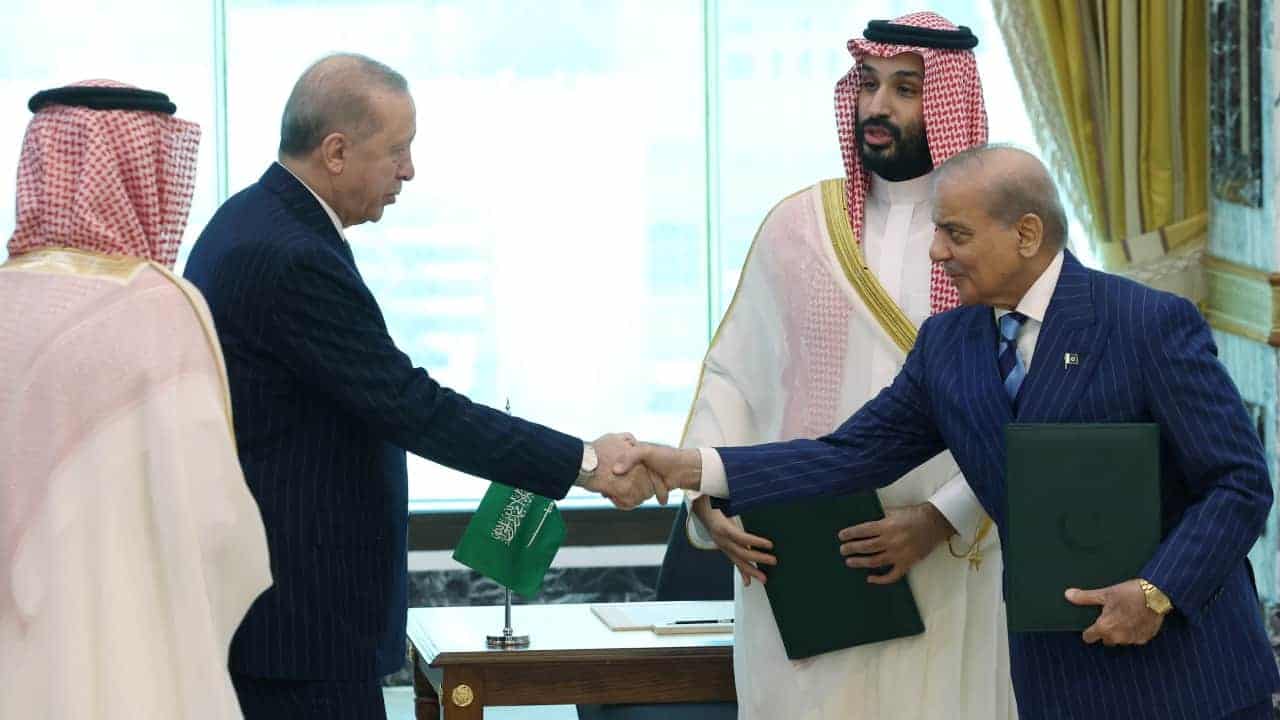
    The agreement was signed in Mecca on Friday by Saudi Crown Prince Mohammed bin Salman, Turkish President Recep Tayyip Erdogan, and Pakistan's Prime Minister Shehbaz Sharif. Analysts suggest the pact allows Riyadh to diversify its security alliances beyond the United States.
    Frequently asked questions

    It is a defense pact signed by Saudi Arabia, Pakistan, and Turkey in Mecca, aimed at collective security and deterrence in the face of regional instability. It includes a mutual defense clause.

    Iran's Foreign Ministry stated it sees no reason to fear the pact and believes true regional security depends on policy changes rather than military alliances.

    The agreement was signed by Saudi Crown Prince Mohammed bin Salman, Turkish President Recep Tayyip Erdogan, and Pakistan's Prime Minister Shehbaz Sharif.

    What Happens Next

    01Further statements from regional powers regarding the implications of the defense pact.

    Get the newsletter.

    Pick the topics you actually care about. We'll email when there's news worth your time, on the cadence you choose. Cancel any time from your account.

    Cadence

    How It Developed

    Iran's Foreign Ministry sees no concern over a new Pakistan-Turkey-Saudi security pact.
    Iran views the pact as a regional shift towards self-reliance.
    Iranian foreign ministry spokesman Esmaeil Baghaei stated Tehran saw no reason to be concerned that the pact is directed against Iran.
    Baghaei said the pact showed a 'change in perception' towards the US and a shift in regional countries' approach to security.
    Baghaei added that any plan correctly identifying threats from the 'Zionist enemy' and its allies could help strengthen security.
    Turkey's Foreign Minister Hakan Fidan stated the agreement is not aimed against Iran or any other country.
    Fidan described the pact as a significant step towards regional stability.
    The agreement includes a mutual defense clause technically similar to NATO's Article 5.

    Sources

    T1
    Iran says no reason to fear Pakistan-Turkey-Saudi security pactReuters
    T1
    Iran says it is not concerned by new 'Mecca Joint Defence Agreement'Middle East Eye
    T2
    Turkey says new defense pact with Saudi Arabia and Pakistan not aimed ...apnews.com
    T2
    Iran mocks Pakistan's Mecca defence pact as Saudi and Turkey reject ...moneycontrol.com
    T2
    'Paper Agreement Will Not Bring Security': Iran Warns Saudi Over ...timesnownews.com

    Related Stories

    Pakistan, Saudi Arabia, Turkey Sign Defense Pact, Signaling Regional Security Shift
    9 Aug · 4:06 PM
    Iran, Oman 'very close' to deal on Strait of Hormuz shipping route
    10 Aug · 5:41 AM
    US, Israel tensions rise over efforts to de-escalate regional conflict
    10 Aug · 3:51 AM
    Netanyahu: Iran will not acquire nuclear weapons
    9 Aug · 11:46 AM
    US Navy redirects 55 commercial vessels amid Iran blockade
    10 Aug · 5:30 AM