Key facts
- UK MPs were told the government prioritized UAE ties over preventing atrocities in el-Fasher, Sudan.
- Human rights investigator Nathaniel Raymond testified that warnings about an impending massacre were ignored.
- Raymond believes the UK prioritized its relationship with the UAE over preventing starvation and slaughter in el-Fasher.
- The UK faced pressure from the UAE, which allegedly supplied weapons and mercenaries to the RSF.
- UN Security Council Resolution 2736, calling for a ceasefire, was passed without consequences for foreign backers like the UAE.
British MPs are set to hear allegations that the UK government prioritized its diplomatic and economic relationship with the United Arab Emirates over intervening to prevent a massacre in el-Fasher, Sudan. Human rights investigator Nathaniel Raymond testified before the International Development Committee, stating that repeated warnings about an impending atrocity in the North Darfur capital were ignored, questioned, or dismissed by the Foreign, Commonwealth and Development Office (FCDO).
Raymond, director of the Humanitarian Research Lab (HRL) at Yale School of Public Health, presented evidence suggesting the UK was uniquely positioned to avert the slaughter of an estimated 60,000 people by UAE-backed paramilitaries in October 2025. He believes the FCDO prioritized its ties with the UAE above preventing starvation, forced displacement, and genocidal acts against civilians.
Fears for el-Fasher escalated after the RSF, described by the US government and human rights groups as having committed genocide in el-Geneina in summer 2023, targeted the city. Raymond's HRL had briefed the FCDO in July 2023, urging UN peacekeeping intervention. By April 2024, as the siege of el-Fasher began, HRL engaged with the British government, presenting data that appeared to link UAE-based facilities to the RSF.
Raymond told MPs that British officials asked him to publicly release this data, but he declined to protect his tracking system. He stated that UK officials admitted facing significant private pressure from the UAE, which limited their ability to influence the situation. The tracking mechanism was later exposed by Human Rights Watch.
Despite the passage of UN Security Council Resolution 2736 in June 2024, which called for an unconditional ceasefire, Raymond noted that the UK committed to no consequences for foreign backers like the UAE. He recounted being told that Abu Dhabi had directed RSF leader Hemedti to pause the attack on el-Fasher to assess political repercussions, and that the attack resumed when no consequences were forthcoming.
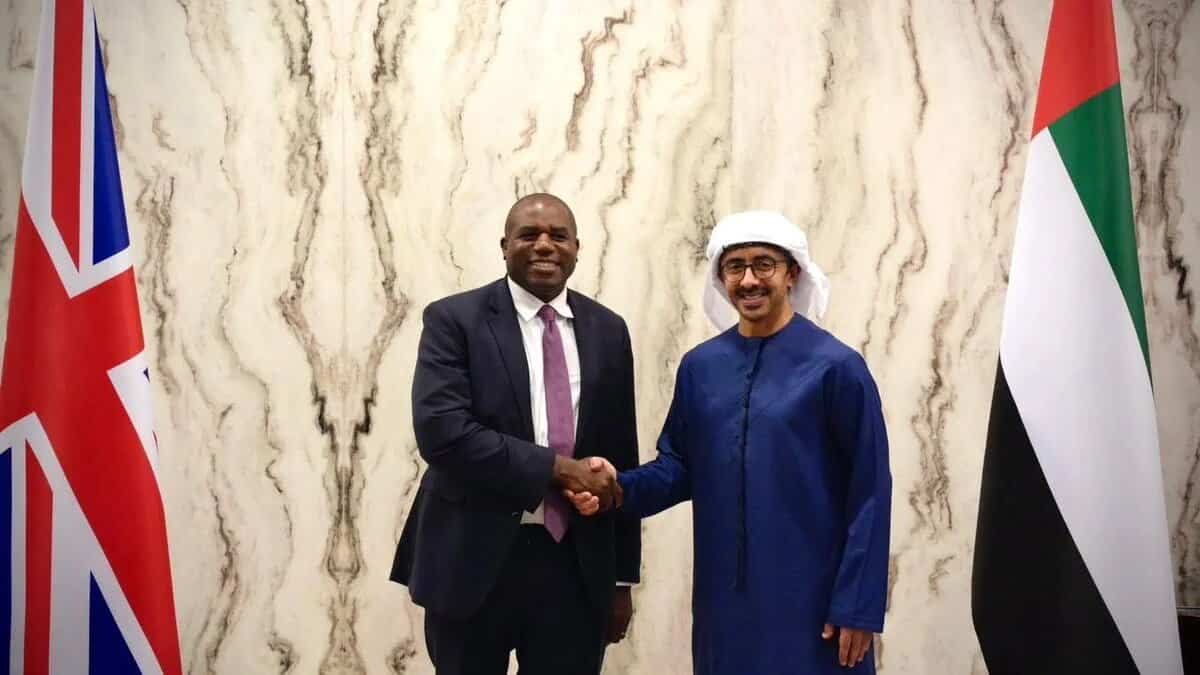
Raymond also detailed how the UAE allegedly blocked him from speaking at the UN and how, in January 2025, he warned Lammy's staff about UAE-supplied weapons bombarding Zamzam IDP Camp, south of el-Fasher, as a prelude to an RSF attack. In April 2025, the RSF seized Zamzam during a donor conference hosted by Lammy, resulting in executions and enslavement.