Key facts
- Turkey is hosting the NATO Summit in Ankara, emphasizing its growing importance as an arms supplier and mediator.
- European nations are considering closer military cooperation with Turkey due to U.S. President Donald Trump's perceived wavering commitment to NATO.
- Turkey's defense industry has seen significant growth, with exports reaching $10 billion last year, positioning it as the 11th largest global weapons provider.
- Despite its military strengths, concerns remain among allies regarding Turkey's human rights record and its ties to Russia and China.
- Turkey is leveraging this situation to strengthen its defense partnerships, with recent deals involving the UK, Italy, Romania, and Spain.
Turkey is hosting the NATO Summit in Ankara, a gathering that underscores its increasing significance within the alliance, particularly as an arms supplier and mediator. This heightened importance comes as European nations, concerned by U.S. President Donald Trump's perceived wavering commitment to NATO's mutual defense clause, are reassessing closer military cooperation with Ankara.
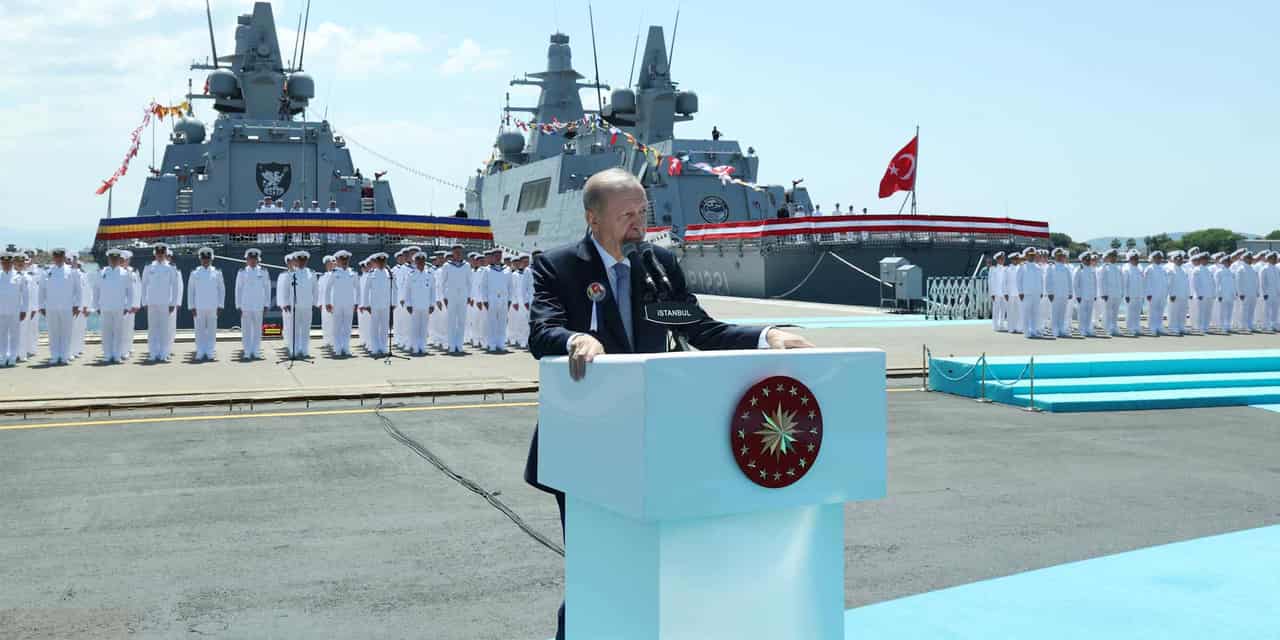
European capitals view Turkey's robust defense industry, substantial military, and extensive experience in the Middle East as valuable assets, especially as they seek to rearm, support Ukraine, and fill capability gaps left by a potential U.S. pullback. Turkey's defense industry has experienced rapid growth, with exports increasing by 50 percent to $10 billion last year, making it the world's 11th largest weapons provider. The country offers capabilities such as its prototype Thunderbolt anti-ballistic missile and innovative drone technology, with naval corvettes taking only two to three years to build.
Despite these military strengths, unease persists among some European allies due to Turkey's human rights record and its perceived close ties with Russia and China. These concerns are compounded by Turkey's long-standing, yet frozen, bid to join the European Union, which Ankara continues to link to any deepening defense cooperation. Turkish Defense Minister Yaşar Güler stated that interest from European allies and cooperation with Turkey are steadily increasing, while also insisting that the U.S. would not quit NATO. He emphasized that Europe's security cannot be fully ensured without Turkey's contributions.
Ankara is actively seizing this opportunity. Recent collaborations include a new strategic partnership with the U.K., a joint venture with Italy's Leonardo to coproduce drones, the delivery of an offshore patrol vessel to Romania, and Spain's agreement to purchase light training jets. NATO chief Mark Rutte has acknowledged Turkey's defense industrial revolution as beneficial to the alliance. Furthermore, a reduction in tensions related to the Kurdistan Workers' Party has eased a significant source of friction.
However, fundamental disagreements persist. Turkey's exclusion from the EU’s SAFE program and its ideological stance on sharing classified military requirements with Brussels, partly due to Cyprus's veto power over Ankara's EU accession bid, remain obstacles. The perception that "we cannot separate democracy and security" continues to be a point of contention for some allies, particularly in light of Turkey's democratic and press freedom indexes.