HomeEverythingEducation
Equities & FundsCrypto & Digital AssetsAI & TechnologyBusiness & CorporateUS Politics & PolicyGeopolitics & Global RiskMacro, Rates & FXCommodities & EnergyEuropean Politics & MarketsAsia-PacificReal Estate & Property
← All Stories

Trump says Iran MOU is over, warns U.S. may reimpose naval blockade

Created at 8 Jul · 5:56 PM1 source↑ Market-relevant
IN SHORT

U.S. President Donald Trump declared an interim peace deal with Iran "over" and warned of reimposing a naval blockade on the Islamic Republic. The remarks followed U.S. strikes on over 80 Iranian targets in response to attacks on commercial vessels.

✉Newsletter

PiQ Daily

Pick your topics. Get only what matters, on your cadence.

Key Numbers

80+Iranian targets struck by U.S. military
60 daysMOU ceasefire extension period

Who's Involved

Donald Trump
U.S. President
Mark Rutte
NATO Secretary General
Volodymyr Zelenskyy
Ukrainian President
Trump says Iran MOU is over, warns U.S. may reimpose naval blockade

↳ Why This Matters

The breakdown of the interim peace deal and the threat of renewed military action, including a naval blockade, significantly escalate geopolitical tensions in the Middle East, potentially impacting global oil supply routes and increasing the risk of a wider conflict.

Key facts

  • U.S. President Donald Trump announced that an interim peace deal with Iran is over.
  • Trump warned that the U.S. administration might reimpose a naval blockade of Iran.
  • The U.S. military conducted strikes on over 80 Iranian targets in response to recent attacks on commercial vessels.
  • The U.S. and Iran had previously signed a memorandum of understanding (MOU) to extend a ceasefire and initiate negotiations.
  • Trump downplayed concerns about a potential return to full-scale war with Iran.

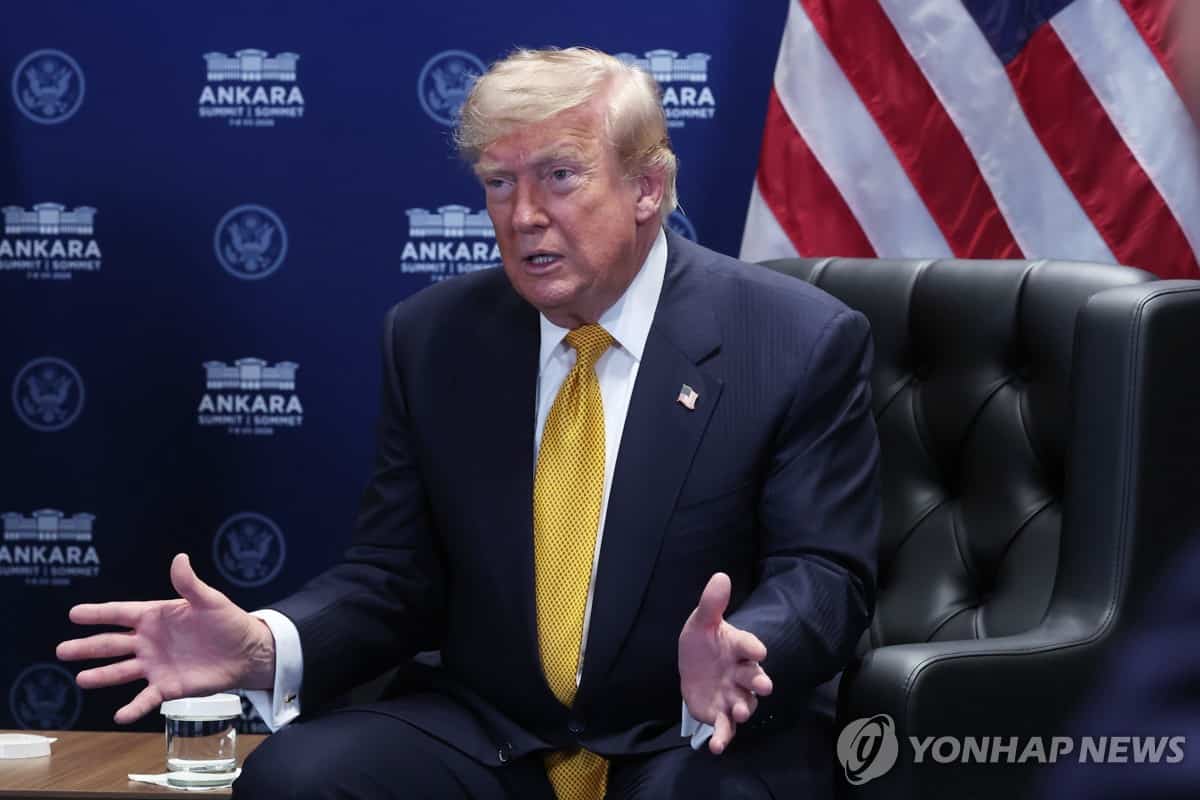
U.S. President Donald Trump declared on Wednesday that an interim peace deal with Iran is "over," signaling a potential return to harsher measures, including the reimposition of a naval blockade against the Islamic Republic. These statements were made during the NATO summit in Ankara, Turkey, following U.S. military strikes on more than 80 Iranian targets. The U.S. stated these strikes were a response to Iran's recent attacks on commercial vessels transiting the Strait of Hormuz.

Trump's remarks came as he met with NATO Secretary General Mark Rutte, where he strongly criticized Iranian leaders. He was responding to a reporter's question about the status of a memorandum of understanding (MOU) signed last month between the U.S. and Iran. This MOU had extended a ceasefire for 60 days, allowing free passage of vessels through the Strait of Hormuz and initiating negotiations for a final agreement to end a protracted war.

Despite the escalating tensions, Trump sought to downplay fears of a full-scale war resuming. He stated, "I don't think it's going to start again," and added that the U.S. had retaliated much more forcefully after Iran's actions. The U.S. Treasury Department had previously revoked a general license authorizing Iranian oil sales, preceding the military strikes. The United Kingdom Maritime Trade Operations Centre had reported incidents involving three tankers being struck by unidentified projectiles near the Strait of Hormuz.

During a press conference, Trump defended the U.S. operation as a "tremendous military success" and reiterated the U.S. objective of preventing Iran from acquiring nuclear weapons. He also indicated that further strikes against Iran were probable, stating, "We will probably hit them hard again tonight."

Earlier, on the sidelines of the NATO summit, Trump met with Ukrainian President Volodymyr Zelenskyy and reiterated his warning about the potential for the U.S. Navy to reinstate a blockade on Iranian ports, a measure that had been lifted following the MOU signing.

Frequently asked questions

The U.S. and Iran signed a memorandum of understanding (MOU) to extend a ceasefire for 60 days, allowing vessels to transit the Strait of Hormuz freely and initiating negotiations for a final agreement to end their war.

The U.S. military struck over 80 Iranian targets in response to what it called Iran's latest attacks on commercial vessels transiting the Strait of Hormuz.

A naval blockade is an act of war whereby one party prevents the passage of all ships into and out of the ports of the opposing party.

What Happens Next

01U.S. military may conduct further strikes on Iran.
02Negotiations between Washington and Tehran for a final agreement are uncertain.

Get the newsletter.

Pick the topics you actually care about. We'll email when there's news worth your time, on the cadence you choose. Cancel any time from your account.

Cadence

How It Developed

The U.S. military struck over 80 Iranian targets.
President Trump stated the interim peace deal with Iran is over.
Trump warned the U.S. might reimpose a naval blockade on Iran.
Trump downplayed concerns about a potential return to full-scale war with Iran.
Trump stated the U.S. would likely strike Iran again on Wednesday night.

Sources

T1
Trump says Iran MOU is over, warns U.S. may reimpose naval blockadeYonhap News Agency

Related Stories

Trump says Iran ceasefire is over
8 Jul · 9:00 AM
Pakistan urges Iran and US to uphold commitments under regional MoU
8 Jul · 5:13 PM
Iranian lawmaker warns no US soldier will return alive
8 Jul · 5:50 PM
US Strikes Iran, Revokes Oil Waiver After Hormuz Attacks
7 Jul · 7:55 PM
Oil prices jump 5% after U.S. revokes Iran oil sanctions waiver
7 Jul · 9:05 PM