All NewsEducationTV
Equities & FundsCrypto & Digital AssetsAI & TechnologyBusiness & CorporateUS Politics & PolicyGeopolitics & Global RiskMacro, Rates & FXCommodities & EnergyEuropean Politics & MarketsAsia-PacificReal Estate & Property
Story archiveAll categories
← All Stories

Trump says he will declare Strait of Hormuz U.S. territory 'pretty soon'

Created at 14 Aug · 8:36 PM6 sources↑ Market-relevant4 events
IN SHORT

President Donald Trump stated he will declare the Strait of Hormuz a U.S. territory soon, citing naval blockade control and linking higher gas prices to preventing Iran's nuclear program. Iran's deputy foreign minister responded that Tehran would not be intimidated by U.S. threats.

✉Newsletter

PiQ Daily

Pick your topics. Get only what matters, on your cadence.

Key Numbers

$4/USGaverage gasoline price in the US
6mn b/dpipeline exports from Mideast Gulf
8mn-9mn b/dtanker exports through Strait of Hormuz
14mn-15mn b/dtotal leaving Arabian Gulf region
20mn b/dpre-conflict Arabian Gulf exports
4mn-5mn b/dshortfall from Mideast Gulf region

Who's Involved

Donald Trump
President threatening indefinite blockade and territorial claim on Strait of Hormuz
Kazem Gharibabadi
Iran's Deputy Foreign Minister responding to U.S. threats
Pete Hegseth
U.S. defense secretary pledging indefinite naval blockade
Ali Azami
Islamic Revolutionary Guard Corp Navy commander claiming control over Hormuz traffic
Michael Doran
Hudson Institute senior fellow commenting on conflict complexity
Chris Wright
U.S. energy secretary on Mideast Gulf export data
Trump says he will declare Strait of Hormuz U.S. territory 'pretty soon'

↳ Why This Matters

President Trump's declaration to claim the Strait of Hormuz as U.S. territory, coupled with an indefinite naval blockade, significantly escalates tensions in the Middle East, potentially impacting global oil supplies and trade routes, while Iran asserts its authority over the strategic waterway.

Key facts

  • President Donald Trump announced plans to declare the Strait of Hormuz a U.S. territory.
  • Trump cited naval blockade control and linked higher gas prices to preventing Iran's nuclear program.
  • The U.S. has resumed its naval blockade against Iran.
  • Iran's Deputy Foreign Minister Kazem Gharibabadi stated Tehran would not be intimidated by U.S. threats.
  • Gharibabadi asserted that Iran holds authority over the Strait of Hormuz.

President Donald Trump has threatened to declare the Strait of Hormuz a U.S. territory, citing naval blockade control and linking higher gas prices to preventing Iran's nuclear program. The U.S. has resumed its naval blockade against Iran, aiming to increase economic pressure following the collapse of a ceasefire deal.

Trump stated on Friday that he would "pretty soon" designate the waterway, a crucial chokepoint for global trade through which about a fifth of the world’s seaborne oil supplies typically pass, a U.S. territory. This escalation follows failed peace talks with Iran, which has refused to reopen the strait, largely closed since the U.S. and Israel launched their war on Iran in February.

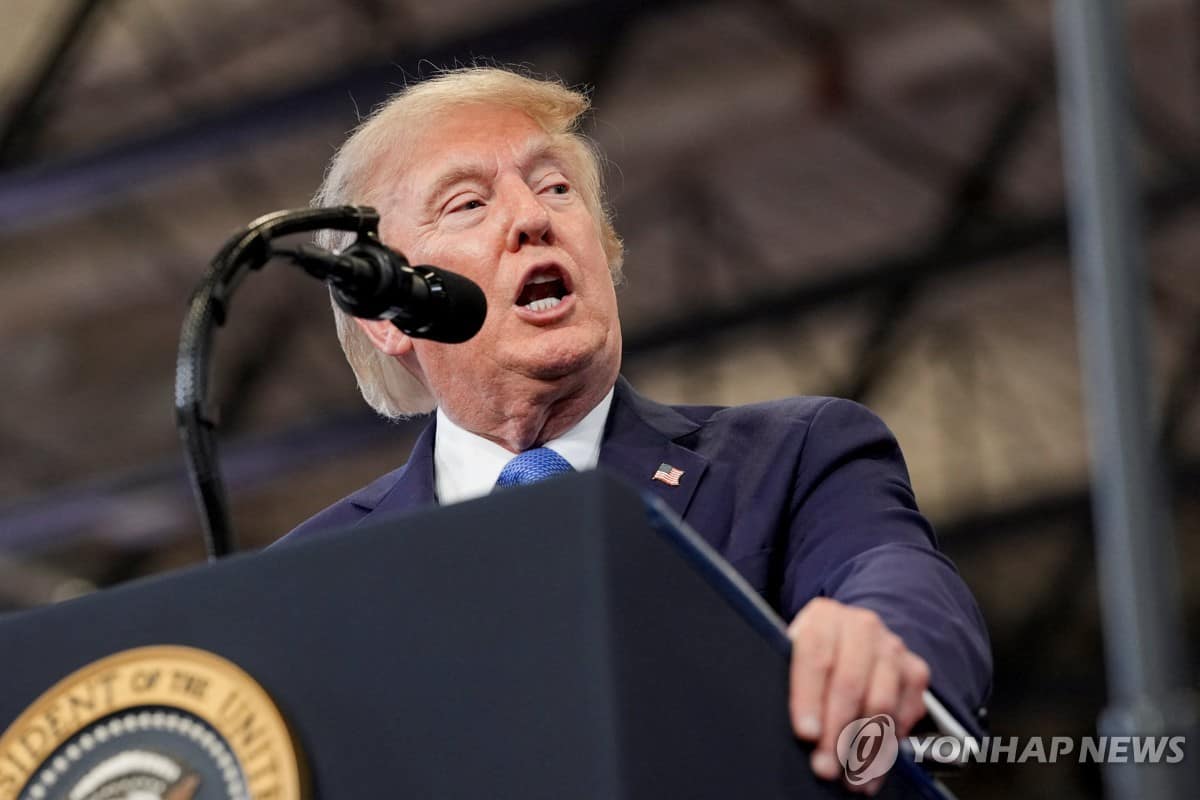
"After we finish defeating Iran, which is being very badly defeated, pretty soon I’ll be declaring the Hormuz strait a territory of the United States," Trump said. "Essentially, that’s what it is. We have the blockade. No ships get through unless we want them to."

Earlier in the week, Trump claimed the U.S. had "total control" over the strait and said "I think we will keep it," despite the waterway being an internationally navigable strait bordered by Iran and Oman. U.S. defense secretary Pete Hegseth confirmed that the blockade could be maintained "indefinitely."

Iran, however, also claims authority over vessel traffic in the strait. Islamic Revolutionary Guard Corp Navy commander Ali Azami posted on X that "The strait of Hormuz is closed. Our control over all movements is complete and decisive." Iran has employed sporadic drone and missile attacks to disrupt traffic through the strait. On Friday, the UAE reported that Iran had attacked two vessels linked to the state-owned oil company Adnoc while they were transiting the Strait of Hormuz.

Analysts suggest that stopping such attacks might be nearly impossible for the U.S. without a significant escalation of the conflict or a ceasefire agreement. Michael Doran, a senior fellow at the Hudson Institute, noted that "We have a messy conflict, which is going to be with us for many, many months, and probably years to come."

Trump remarked that U.S. consumers paying an average of $4 per gallon for gasoline should recognize this higher price as providing a "great service" globally, enabling the prevention of a "very evil country" from acquiring a nuclear weapon.

Trump administration officials maintain that crude exports from the Mideast Gulf are higher than ship tracking data indicates. U.S. energy secretary Chris Wright stated that pipelines are exporting 6 million barrels per day, with tankers exporting an additional 8-9 million barrels per day through the Strait of Hormuz. "In round numbers today, 14-15 million b/d are leaving the Arabian Gulf region, versus the 20 million b/d pre-conflict," Wright said, indicating a shortfall of 4-5 million b/d from the region.

Frequently asked questions

The Strait of Hormuz is a vital chokepoint for global oil transit, connecting the Persian Gulf to the Gulf of Oman and the open sea. Approximately one-fifth of the world's seaborne oil supply passes through it.

The U.S. has resumed a naval blockade against Iran, aiming to increase economic pressure. Iran claims control over vessel traffic and has attacked ships transiting the strait. Peace talks remain at an impasse.

Such a declaration could significantly escalate regional tensions, potentially leading to further conflict and impacting global oil prices and trade routes.

What Happens Next

01The Trump administration is expected to unveil new economic sanctions against Iran next week.
02The U.S. plans to maintain a naval blockade against Iran indefinitely.

Get the newsletter.

Pick the topics you actually care about. We'll email when there's news worth your time, on the cadence you choose. Cancel any time from your account.

Cadence

How It Developed

President Donald Trump stated he will declare the Strait of Hormuz a U.S. territory soon.
Trump linked higher gas prices to preventing Iran's nuclear program.
The U.S. resumed its naval blockade against Iran.
Trump claimed the U.S. has 'total control' over the Strait of Hormuz.
Iran's Deputy Foreign Minister Kazem Gharibabadi stated Tehran would not be intimidated by U.S. threats.
Gharibabadi asserted that the strategic waterway would only be opened or closed under Iran's authority.

Sources

T1
Trump urges Americans to accept higher gas prices as he escalates Iran rhetoricReuters
T1
Trump threatens to declare strait of Hormuz ‘territory of the United States’The Guardian
T1
Trump says he’ll soon declare Strait of Hormuz to be US territorySouth China Morning Post
T1
US threatens indefinite blockade on Iran: UpdateArgus Media
T1
Trump says he will declare Strait of Hormuz U.S. territory 'pretty soon'Yonhap News Agency
T1
Iran's deputy foreign minister says won't be intimidated by US threats after Trump's statements on HormuzMiddle East Eye

Related Stories

Trump says he will 'soon' declare Strait of Hormuz US territory
14 Aug · 6:41 PM
Russia UN envoy says US 'ruined' Hormuz navigation, vetoes UN resolution
14 Aug · 12:56 PM
Vance: Lower US oil prices now top priority in Iran strategy
14 Aug · 3:51 AM
Jared Kushner may visit Israel for Gaza talks
14 Aug · 12:50 AM
US lost 25% of Reaper drones in Iran war: Report
14 Aug · 8:21 PM