Key facts
- Mount Pinatubo erupted on June 12, 1991, with multiple massive explosions.
- Tens of thousands of people evacuated their homes.
- The eruption sent ash plumes up to 25 km into the atmosphere.
- Pyroclastic flows and lahars caused widespread destruction, destroying bridges and burying towns.
- The eruption caused global cooling due to the release of sulfur dioxide.
- The event led to the evacuation of over 15,000 people from Clark Air Force Base.
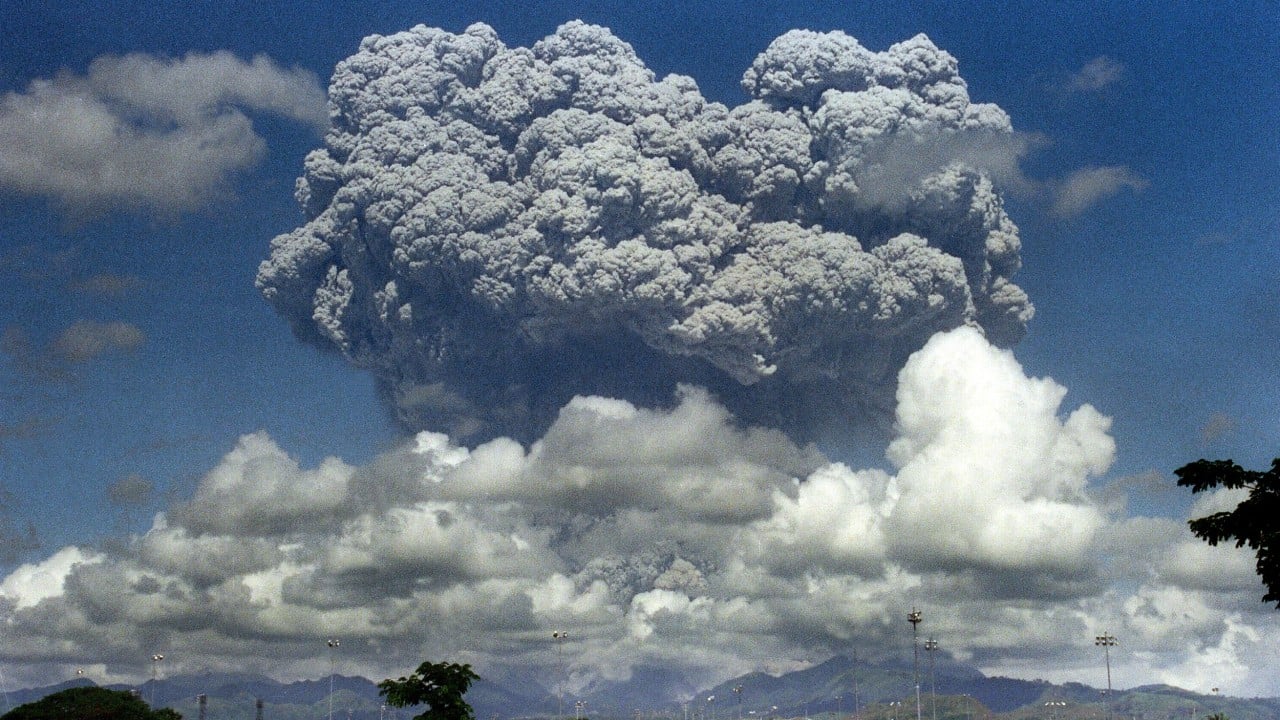
Mount Pinatubo in the Philippines experienced a cataclysmic eruption on June 12, 1991, following a series of smaller events and a significant earthquake the previous year. Massive explosions, described as atomic blasts, ripped the top off the volcano, sending ash plumes up to 25 kilometers into the atmosphere. Tens of thousands of residents, including Theresita Santiago and her neighbors, fled their homes, walking up to 20 kilometers to seek sanctuary in cities like Olongapo.
The eruption, the second-largest of the 20th century, blanketed the countryside in ash and pumice. Pyroclastic flows inundated valleys with deposits up to 200 meters thick, and lahars destroyed nearly every bridge within 30 kilometers of the volcano. The event resulted in hundreds of deaths, primarily from collapsing roofs under heavy, wet ash, and left approximately 10,000 people homeless. The release of 17-20 megatons of sulfur dioxide into the atmosphere caused a global cooling effect of about 0.5 degrees Celsius between 1991 and 1993.
In preparation for the eruption, the U.S. military evacuated over 15,000 service personnel and dependents from Clark Air Force Base. Volcanologists from the Philippine Institute of Volcanology and Seismology, with assistance from the Volcano Disaster Assistance Program, had installed monitoring networks and estimated the potential for a major eruption. These efforts are credited with saving thousands of lives and hundreds of millions of dollars worth of equipment.