Key facts
- Taiwan's largest shipbuilders, CSBC and Jong Shyn Shipbuilding, are developing unmanned surface vessels (USVs).
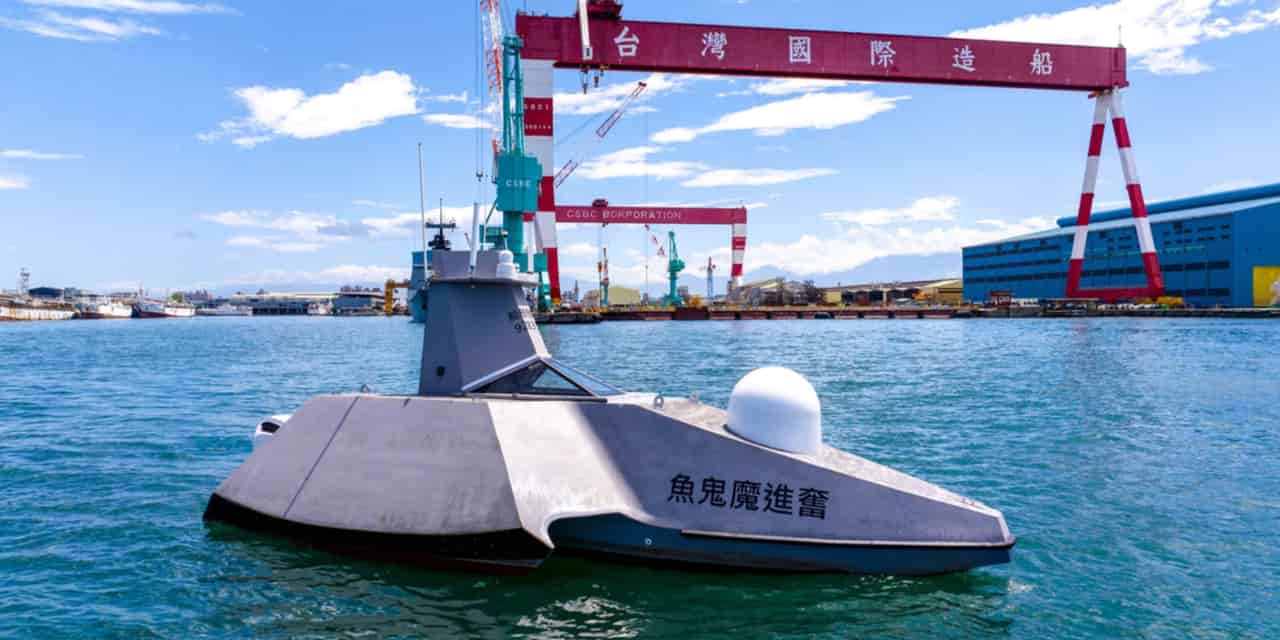
- CSBC's USV prototype is designed for ISR roles and can be reconfigured for combat or decoy missions.
- Jong Shyn is developing smaller USVs for swarm tactics, potentially integrating loitering munitions.
- These USVs are designed with dual-use applications for both military and civilian purposes.
- CSBC's chairman highlighted the need to counter China's naval presence and urged legislative support for drones.
Taiwan's leading shipbuilders, China Shipbuilding Corporation (CSBC) and Jong Shyn Shipbuilding, are accelerating the development of unmanned surface vessels (USVs) with dual-use military and civilian applications. This strategic pivot aims to bolster Taiwan's asymmetric defense capabilities against China's expanding naval presence in the Taiwan Strait.
CSBC, the state-owned naval prime contractor, has unveiled a 12-meter USV prototype featuring autonomous navigation and modular payload bays, designed for intelligence, surveillance, and reconnaissance (ISR) roles, with potential for weaponization or decoy missions. Jong Shyn Shipbuilding is focusing on smaller, high-speed USVs for swarm tactics in littoral zones, reportedly working with the National Chung-Shan Institute of Science & Technology (NCSIST) to integrate loitering munitions.
CSBC's chairman, Jeng-Horng Chen, emphasized the need to counter China's vessels that are "constantly lurking around" and urged legislative backing for drone development. He also announced strategic reforms for CSBC, which holds an order book valued at NT$1.3 trillion, signaling a commitment to capitalize on emerging defense and commercial maritime opportunities. The dual-use strategy is intended to ensure economic sustainability for the shipbuilders during peacetime while maintaining production readiness.