HomeEverything
Equities & FundsCrypto & Digital AssetsAI & TechnologyBusiness & CorporateUS Politics & PolicyGeopolitics & Global RiskMacro, Rates & FXCommodities & EnergyEuropean Politics & MarketsAsia-PacificReal Estate & Property
← All Stories

South Africa: Anti-immigrant sentiment fuels protests amid economic woes

Created at 29 Jun · 6:02 AM1 source↑ Market-relevant
IN SHORT

Protests targeting undocumented foreigners are escalating in South Africa, fueled by claims of job scarcity, strain on public services, and high crime rates. However, data suggests migrants constitute a small portion of the population and contribute positively to the economy, with underlying issues attributed to poor governance and high unemployment.

✉Newsletter

PiQ Daily

Pick your topics. Get only what matters, on your cadence.

Key Numbers

3.1 millionmigrants in South Africa
4.1%migrant population as percentage of total
5.6%migrant population percentage a decade ago
17%migrant proportion in Britain
22%migrant proportion in Canada
30%migrant proportion in Australia
42%South African adults welcoming no foreigners
7 out of 10South Africans see immigrants' economic impact as negative
85%South Africans want authorities to cut or stop refugee numbers
11,842foreigners in South African prisons in 2017
6%foreigners as percentage of prison population in 2017
1.5 trillion randlost to corruption during Jacob Zuma's term
$91.27 billionequivalent of lost funds to corruption
1 billion randspent on investigating corruption

Who's Involved

Tim Cocks
Reuters journalist reporting on South Africa
March and March
organizer of anti-immigrant protests
Musa Hlongwa
president of United South Africa, an anti-migrant civil group
United South Africa
anti-migrant civil group
Human Sciences Research Council
conducted poll on anti-immigrant sentiment
Afrobarometer
conducted survey on immigrant economic impact
Ipsos
conducted survey on trust in immigrants
StatsSA
South Africa's national statistics office
Anthony Kaziboni
senior researcher at the University of Johannesburg's Centre for Social Development in Africa
Loren B. Landau
Professor of Migration and Development at the University of Oxford
World Bank
published report on migrant economic impact
Lauren Gilbert
director of political science data at GeoQuant
Jacob Zuma
former president of South Africa
African National Congress
ruling political party in South Africa
Andrew Heavens
editor at Reuters
South Africa: Anti-immigrant sentiment fuels protests amid economic woes

↳ Why This Matters

The protests highlight deep-seated xenophobia in South Africa, exacerbated by economic hardship and poor governance, despite data suggesting immigrants contribute positively and do not disproportionately strain public resources or contribute to crime.

Key facts

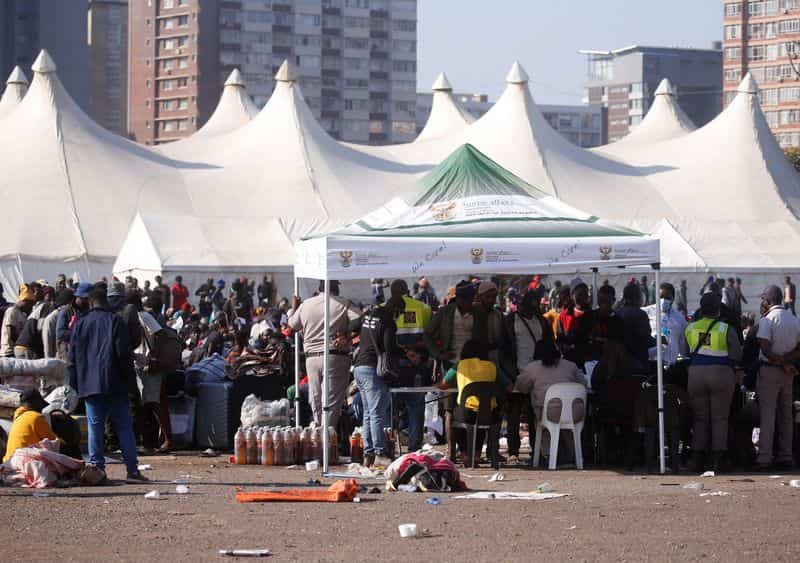
  • Thousands of foreign Africans are reportedly heading home or seeking refuge in camps due to fear of attacks.
  • Anti-immigrant groups claim illegal immigrants are responsible for taking jobs, straining public services, and contributing to high crime rates.
  • Recent surveys show a significant increase in anti-immigrant sentiment, with a majority of South Africans viewing immigrants' economic impact negatively.
  • Official statistics indicate migrants comprise approximately 4.1% of South Africa's population, a figure lower than a decade ago and below international averages.
  • Evidence suggests immigrants are largely law-abiding, with their primary offenses often related to immigration violations.
  • A World Bank report found that employed migrants create approximately two jobs for South Africans through their economic activities.
  • Underinvestment and corruption are identified as the main drivers of South Africa's struggling public services, rather than immigrant usage.
  • High unemployment rates and historical labor policies contribute to xenophobia, with politicians sometimes exploiting these sentiments.

Protests targeting undocumented foreigners are escalating in South Africa, with organizers demanding their departure by Tuesday. Thousands of foreign nationals are reportedly fleeing or seeking shelter amid fears of violence, though the organizing group, March and March, claims peaceful intentions.

Anti-foreigner groups cite concerns that illegal immigrants are taking jobs, straining public services, and contributing to high crime rates. Musa Hlongwa, president of the civil group United South Africa, specifically mentioned competition for jobs and services, and alleged drug-dealing by Nigerians.

Recent surveys indicate a significant rise in anti-immigrant sentiment. A Human Sciences Research Council poll found only one in six South African adults would welcome all foreigners, while 42% would welcome none. An Afrobarometer survey revealed seven out of ten South Africans perceive immigrants' economic impact as negative, with 85% advocating for reduced or halted refugee intake. Ipsos data showed nearly three-quarters of respondents did not trust African immigrants at all.

However, official statistics from StatsSA show that migrants constitute about 4.1% of South Africa's population, a decrease from 5.6% a decade ago and low by international standards. Campaigners argue these figures do not capture undocumented arrivals, but StatsSA's census data is designed to include them. Anthony Kaziboni, a researcher at the University of Johannesburg, stated that data contradicts the impression of overwhelming numbers of immigrants.

Regarding crime, police do not release data on the nationalities of convicts. However, 2017 justice department figures showed foreigners comprised about 6% of the prison population, with a fraction imprisoned for illegal entry. Loren B. Landau, a Professor at the University of Oxford, suggests immigrants are disproportionately law-abiding, with most offenses being immigration violations.

The World Bank reported in 2018 that for every employed migrant, approximately two jobs are created for South Africans due to migrant spending on local goods and services. Lauren Gilbert of GeoQuant noted that increased customer bases for businesses like restaurants benefit locals.

Undocumented migrants are unlikely to utilize public hospitals or schools due to fear of detection, according to Kaziboni. Economists attribute the strain on health and education services to chronic underinvestment and corruption, not immigrant usage. Kaziboni highlighted that 1.5 trillion rand was lost to corruption during former president Jacob Zuma's tenure.

Experts suggest historical policies that used migrant labor to suppress wages, coupled with South Africa's high unemployment rate (around one-third of the population) and poor service delivery, fuel anger that is easily directed at migrants. Politicians are also noted to stoke these sentiments, particularly around election periods.

Frequently asked questions

Protesters claim that illegal immigrants take jobs from South Africans, overuse scarce public services, and are responsible for high crime rates.

A 2023 survey indicated about 3.1 million migrants, representing 4.1% of the population, a decrease from a decade prior and low compared to countries like Britain, Canada, and Australia.

While police do not release data by nationality, foreigners constituted about 6% of the prison population in 2017, and experts suggest immigrants are largely law-abiding, with most offenses related to immigration violations.

A 2018 World Bank report suggested that employed migrants create jobs for South Africans by spending money locally on goods and services produced by locals.

High unemployment, poor service delivery attributed to underinvestment and corruption, and historical policies related to migrant labor contribute to anger that is easily directed at immigrants.

What Happens Next

01Protesters have demanded undocumented foreigners leave by Tuesday.
02Further anti-immigrant rallies are anticipated.

Get the newsletter.

Pick the topics you actually care about. We'll email when there's news worth your time, on the cadence you choose. Cancel any time from your account.

Cadence

How It Developed

Protesters demanded undocumented foreigners leave South Africa by Tuesday.
Anti-foreigner groups claim immigrants take jobs, use scarce public services, and cause high crime rates.
Surveys indicate a rise in anti-immigrant sentiment among South Africans.
Official data shows migrants represent about 4.1% of South Africa's population, a decrease from a decade ago.
Statistics suggest immigrants are disproportionately law-abiding, with most crimes being immigration violations.
A World Bank report indicated migrants create jobs for South Africans through business activity.
Undocumented migrants are unlikely to use public services due to fear of detection.
Chronic underinvestment and corruption are cited as primary causes for struggling health and education services.

Sources

T1
What is behind South Africa's anti-immigrant protests?Reuters

Related Stories

Turkey detains hundreds, bans protests ahead of NATO summit
28 Jun · 10:25 AM
Serbians Protest After President Vucic Vows to Step Down
28 Jun · 9:10 PM
Malaysia acts to avert Johor causeway chaos amid state election
29 Jun · 6:30 AM
Iran cyberattacks on Israel surged in 2026, Israeli cyber chief says
29 Jun · 5:06 AM
Australia, Vanuatu Sign Security Pact Amid China Influence Battle
29 Jun · 3:51 AM