Key facts
- A Palestinian community near Ein al-Auja in the occupied West Bank has been displaced due to settler attacks and water diversion.
- The Ein al-Auja spring, historically a significant water source, has drastically reduced its flow.
- Over 100 families were forced to leave their homes and relocate to al-Balqa in the Jordan Valley.
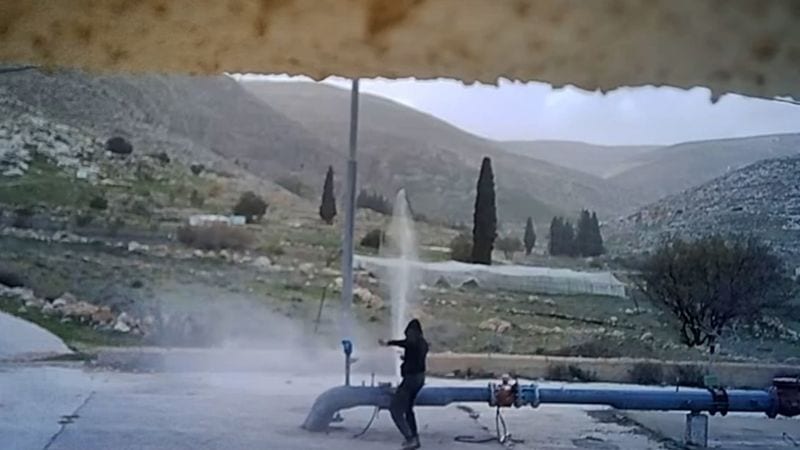
- Attacks on water infrastructure, including pipes and pumping stations, have escalated.
- The United Nations has documented a sharp increase in settler violence in the region.
Haitham Rashaidh was among the last to leave his home near Ein al-Auja, a natural spring and waterfall north of Jericho in the occupied West Bank. His family, along with over 100 other families, packed their belongings and relocated to al-Balqa, a sparsely populated area of the Jordan Valley, after settler attacks and the diversion of water made their community untenable.
Rashaidh described the departure as losing a part of themselves. The spring, which once flowed at thousands of cubic meters daily and supported a Bedouin community, has been reduced to a trickle. Palestinians had cherished Ein al-Auja as an oasis, but Israel's actions, including repeated restrictions, attacks, and reduced access to water, forced the community's hand.
Since the events of October 7, 2023, the situation has escalated. While forced displacement was minimal before this period, the establishment of new illegal Israeli settlement outposts in early 2024 has led to a surge in settler attacks. The United Nations Office for the Coordination of Humanitarian Affairs (Ocha) reported at least 38 documented cases last year, with settlers targeting water infrastructure, blocking access roads, and intimidating residents. In one instance earlier this year, 26 families comprising 124 people were forcibly displaced amid ongoing violence.
The decline of the Ein al-Auja spring mirrors the disappearance of the community. Its water flow has dropped by 50 to 70 percent in recent years, sometimes running dry. Similar attacks have targeted other vital water hubs, such as the Ein Samia pumping station, which supplies around 100,000 Palestinians. These attacks, which include vandalism of equipment and infrastructure, have led to prolonged water outages for Palestinian communities, exacerbating an already water-scarce region.